Zinc Pyrithione Separation and Stability in Shampoo
Question
I formulated a shampoo with the following ingredients: 1. distilled water 43%, 2. Sulfate Free Shampoo Base (pH 7, Clear, Foaming) 30%, 3. Cetrimonium Chloride (CTAC) 2%, 4. Pure-Biotin™ 0.10%, 5. Poly-Conditioner Eco 2%, 6. Mild Preserved Eco™ (Preservative-Free) 1%, 7. Zinc Pyrithione (Dandruff, Sebderm) Liquid 2%, 8. Dandruff-Guard™ (Piroctone Olamine) 0.5%, 9. Cocamidopropyl Betaine (Coco Betaine) 15%, 10. Centella Leaves Liquid 2%, 11. Flora Fix™ 0.3%, 12. Cotton Blossom (Compare to Bath & Body) 1%, 13. color powder 0.1%. When mixed, the Zinc Pyrithione separates, appearing as white particles in the foam. When the foam subsides, it separates from the shampoo base. Also, is Cocamidopropyl Betaine necessary in this formula, and if so, what is a good usage percentage?
Answer
Shampoo Formulation Issue with Zinc Pyrithione
You've encountered a common challenge when formulating with Zinc Pyrithione: separation. This often happens due to incompatibilities between ingredients, particularly surfactants and active ingredients.
Based on your formula, the separation is most likely caused by the interaction between Zinc Pyrithione (Dandruff, Sebderm) Liquid, the Sulfate Free Shampoo Base (pH 7, Clear, Foaming), and Cetrimonium Chloride (CTAC). Here's why:
- Zinc Pyrithione is a solid particle dispersed in liquid and can be sensitive to certain ingredients and pH levels.
- Your Sulfate Free Shampoo Base operates at a neutral pH (6.5-7.5), while Zinc Pyrithione is generally more stable and effective in a slightly acidic range (pH 4.5-6).
- Cetrimonium Chloride (CTAC) is a cationic (positively charged) conditioning agent. Cationic ingredients are often incompatible with anionic (negatively charged) surfactants, which are likely present in your Sulfate Free Shampoo Base, and can also cause precipitation or instability with Zinc Pyrithione.
This combination of a particulate active, a neutral pH base, and a cationic ingredient is highly prone to instability and the separation you're observing.
Regarding Cocamidopropyl Betaine:
- Is it necessary? While not essential for basic cleansing (the shampoo base provides this), Cocamidopropyl Betaine is a valuable co-surfactant. It significantly improves foam quality (making it richer and finer) and can help with viscosity and mildness.
- How much to use? 15% is a typical and effective concentration for Cocamidopropyl Betaine in shampoo formulations, contributing well to foam and feel.
To fix the separation issue, consider these adjustments:
- Remove or Replace Cetrimonium Chloride: This is the most probable cause of the incompatibility. If you need conditioning, consider using a non-ionic or amphoteric conditioning polymer instead of a cationic one like CTAC.
- Adjust the pH: After mixing all ingredients, lower the final pH of your shampoo to a range of 4.5-6 using a suitable acid (like Citric Acid solution). This will improve the stability and efficacy of Zinc Pyrithione and is also beneficial for scalp health.
- Evaluate Base Compatibility: If removing CTAC and adjusting pH doesn't fully resolve the issue, the specific Sulfate Free Shampoo Base might not be the best choice for a Zinc Pyrithione formula. Some bases are formulated to handle these active ingredients better.
- Ensure Proper Dispersion: Make sure the Zinc Pyrithione Liquid is thoroughly dispersed throughout the formula, perhaps using adequate mixing, and ensure the final viscosity is sufficient to keep the particles suspended over time.
Cocamidopropyl Betaine at 15% is a good addition for foam and texture once the primary incompatibility issues are resolved.
Updated Review: May 2026
This section was added after reviewing the original answer against current product availability and formulation knowledge at the stated point in time.
Update 2026-05-24
The original diagnosis is still broadly appropriate, but the mechanism should be stated more precisely. In this formula, the highest-risk incompatibility is Cetrimonium Chloride (CTAC), a cationic conditioner, used in a Sulfate Free Shampoo Base that contains anionic/amphoteric surfactants. At this level, CTAC can destabilize the surfactant system and cause haze, precipitate, or separation.
Also, Zinc Pyrithione Liquid should not be treated as a dissolved active. It is an insoluble dispersion/suspension: it must be well wetted, deagglomerated, dispersed, and held by sufficient viscosity/yield value. White material in the foam and separation after the foam collapses are consistent with poor dispersion/suspension and/or CTAC–surfactant incompatibility.
Practical troubleshooting order:
- Make a simplified test batch without CTAC first.
- If stable, add Zinc Pyrithione Liquid only after the base is uniform, then check whether the formula has enough viscosity to keep it suspended.
- Keep final pH around 5–6 as a practical mild shampoo target, but do not rely on pH alone to make Zinc Pyrithione dissolve or stop settling.
- Do not automatically add 15% extra Cocamidopropyl Betaine, because the selected Sulfate Free Shampoo Base already contains Cocamidopropyl Betaine. Start with a lower trial level such as 0–5% additional Cocamidopropyl Betaine, then adjust only if foam, viscosity, and mildness require it.
- Add fragrance, Flora Fix, color, Centella, and extra conditioners only after the base + anti-dandruff active system is stable.
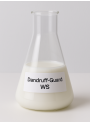
If an easier anti-dandruff route is preferred, Dandruff-Guard™ / Piroctone Olamine, especially Dandruff-Guard™ WS (water-dispersible), is usually easier to incorporate than maintaining a stable Zinc Pyrithione suspension in a clear shampoo. This is a formulation-simplification option, not a guarantee of identical final efficacy; the finished formula should still pass stability testing.
Related Products Mentioned
Cocamidopropyl Betaine
Cetrimonium Chloride (CTAC)