Browse Questions and Answers
Avg response: 24 HrsFilter Questions
20 of 14228 results
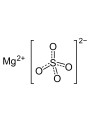
Can high-purity Magnesium Sulfate (Cosmetics Grade), typically used as an emulsion stabilizer in Water-in-Oil (W/O) formulations, be used in a facial cleansing foam, which is generally an Oil-in-Water (O/W) system, even if a homogeneous process is used?
What thickeners or gelling agents are suitable for use in oil and silicone bases to effectively suspend glitter or mica particles and prevent them from settling over time?
How can I thicken or gel an oil and silicone base containing gold glitter mica to prevent the mica from settling and ensure it remains suspended?
What is the difference in efficacy between using Repair Activator™ (or similar Bifida Ferment Lysate product like Bifida Repair Complex™ High Conc) in powder/high concentration form at 1% versus the liquid form (Repair Activator™ BG/WS) at 15% in a formulation, and which would be more effective?
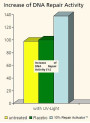
Could you explain the difference between Repair Activator Powder (which may be a concentrated liquid like Bifida Repair Complex) and the standard Repair Activator Liquid? Specifically, which would be more effective in a formulation: 1% of the 'powder' form or 15% of the standard liquid form?
What is the percentage of the active ingredient, PEG-6 Caprylic/Capric Glycerides, in the product MakeUp-Wash™? The MSDS states 100%, but the COA does not specify the percentage, and I want to confirm the concentration of the product received.
Regarding the raw material MakeUp-Wash (PEG-6 Caprylic/Capric Glycerides), the MSDS states 100% composition, but the COA does not specify a percentage. How should the percentage of active ingredient in the received product be understood based on these documents?
Can Marine Plankton extract be mixed with a water-based serum, specifically a hyaluronic acid serum? Are they compatible?


Can Marine Plankton extracts (Lifting, Tightening, Artemia) be mixed into a water-based serum, such as a hyaluronic acid serum? What are the recommended mixing procedures, pH range, and potential texture issues?
How to properly disperse Silica Dimethyl Silylate in an oil-based lip gloss formula using an overhead stirrer to avoid lumps and air bubbles, and which blade type (propeller or sawtooth) is recommended?
Hello, I am preparing a light-colored lip gloss and having trouble dispersing **Silica Dimethyl Silylate** in the formula. It is included at 1% in the formula to increase viscosity and provide suspension for D&C pigments. I made a small test batch using my small **Norpro mixer**, but there are too many very small air bubbles that won't disappear. The result looks lumpy and not smooth. I haven't tried dispersing using an **Overhead stirrer** yet because it's a small test batch. I need advice on the correct way to disperse **Silica Dimethyl Silylate** in oil before I try my **Overhead stirrer**. Would you recommend a **propeller blade** attachment or a **saw-tooth/dispersion blade** attachment? I read that very high shear force, like a **rotor-stator homogenizer**, is needed for complete dispersion, but there is a sample lip gloss formula from Sensient using 3.5% **Silica Dimethyl Silylate** where the instructions say to mix in a **propeller mixer**. Any thoughts? Thank you!
Can 0.1% Retinal be dissolved in 1% LipidSoft Lite? What other solvents are suitable for dissolving Retinal?
Can Retinal 0.1% be dissolved in LipidSoft Lite 1%? What are other suitable oil-based solvents for dissolving Retinal, and are there any special considerations during the process?
I am trying to make a gel using Sugar Gel (Product ID 661) and Oil Soap (100% oil base with Oil Soap surfactant). I followed these steps: 1. Mixed Glycerin and Sugar Gel and heated until a thick, opaque cream formed. 2. Added a small amount of water (about 1 bottle cap) to this mixture. 3. Heated the Oil Soap separately. 4. Added the heated Oil Soap to the Sugar Gel mixture while stirring. However, the mixture became liquid instead of gelling. Did I follow the correct procedure?
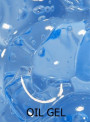
I attempted to create an oil gel using Sugar Gel and Oil Soap™ WW-CF in a 100% oil formula. I mixed Glycerin and Sugar Gel, heated it, added a small amount of water, heated again, and then added heated Oil Soap™ WW-CF. However, the mixture became liquid instead of forming a gel. What went wrong with my process?
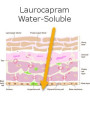
User wants to modify a favorite serum formula (containing Copper Peptide, Glycosaminoglycans, Ectoine, ATP, Niacinamide, Ethylhexylglycerin, Ethoxydiglycol, Laurocapram) by mixing it into a Hyaluronic Acid Gel Base to increase hydration and achieve a coating feel without being sticky or creamy. They ask about ingredient compatibility issues with the HA gel base, the need for additional thickener (specifically Hydroxyethyl Acrylate/Sodium Acryloyldimethyl Taurate Copolymer) and its usage rate, and the appropriate mixing temperature and speed.
We really like the results from the Gly-Cu-Ec Serum by onc B12 formula, but we want the formula to provide more hydration and a more 'coated' feel, without being a cream or sticky. We have some additional questions: 1. Regarding the original formula ingredients listed on the website, if we mix them into the Hyaluronic Acid Gel Base from your store according to the formula below, are there any ingredients that would not be compatible with this gel base? * Copper Peptide (GHK-Cu) 3.00% * Glycosaminoglycans Complex 3.00% * Ectoine (Ectoin) 2.00% * Adenosine Triphosphate 3% * Safe-B3™ (Vitamin B3, Niacinamide) 5% * Mild Preserved Eco™ (Ethylhexylglycerin) 1% * Ethoxydiglycol 2% * Laurocapram (Water Soluble penetration enhancer) 2% * Hyaluronic Acid Gel Base Remaining % (up to 100%) 2. Is it necessary to add an additional thickener to the formula above? If so, can Hydroxyethyl Acrylate/Sodium Acryloyldimethyl Taurate Copolymer be used in this formula, and at what percentage? 3. Can this formula be mixed at room temperature, or is heat or special mixing speed required?

How to enhance a water-based physical sunscreen formulation using water-dispersible Titanium Dioxide to achieve broad-spectrum protection, and what other water-dispersible physical filters can be added?
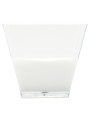
I made a lip balm using Beeswax, natural oil, shea butter, and colorant. After pouring into the stick tubes, the color is uneven throughout the stick, as shown in the picture. 1. What could be the reason for this uneven color? 2. What ingredients or process adjustments should I make to achieve a uniform color throughout the stick? 3. Can I add @Rose(Rosa Damascena) Extract (Product ID: 6861) to this lip balm formulation to add fragrance?
I attempted to create an oil gel using Sugar Gel and Oil Soap in a 100% oil base, following a specific heating and mixing procedure involving glycerin and water, but the mixture did not gel and remained liquid. What went wrong?