Browse Questions and Answers
Avg response: 24 HrsFilter Questions
20 of 14228 results
I am inquiring about the **Stabilized Vitamin C (Natural-C Glycol™) Serum (ID: 486)**. Could you please provide detailed information regarding the following aspects of this highly concentrated Vitamin C liquid? 1. **Product Characteristics and Texture:** * What is the overall appearance and texture? * Is it easy to use? Is it clear? * Does it absorb quickly or is it difficult to penetrate the skin? 2. **Storage:** * What are the recommended storage conditions to maintain its stability and efficacy? 3. **Expected Skin Benefits:** * What specific results can be expected on the skin from using this serum?
Can **Oil Thick™ Clear S (ID: 1599)** be used to formulate a body oil product, or is its application limited solely to lip products?
I would like to confirm the composition of the product **Food Anti-Foaming / Defoamer (Powder, Silicone Based)** (Product ID: 31008). Is this product chemically equivalent to **Silicon Dioxide (INS 551)**, as defined by the Ministry of Public Health announcement?
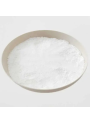
I am looking to incorporate Vanillic Acid into a cosmetic formulation. * What is the physical form of Vanillic Acid (powder or liquid)? * What is the solubility profile of Vanillic Acid, particularly in water (cold/hot), ethanol, and glycols (Propylene Glycol, Butylene Glycol)? * What are the recommended solvents and dissolution methods (including temperature guidelines, typically around 40-50°C) for successfully incorporating Vanillic Acid powder into a cosmetic formulation? * What are the primary cosmetic benefits (e.g., antioxidant, anti-inflammatory) and typical usage rates (in %) for Vanillic Acid in skincare products?
I am developing hair care cosmetics and require recommendations for peptides suitable for repairing **dry, damaged hair and split ends**. 1. Is **Acetyl Tetrapeptide-3** effective specifically for treating dry, damaged hair and split ends? 2. Are there other peptide complexes available that clearly demonstrate efficacy (supported by clinical or *in vitro* test results) for nourishing and repairing damaged hair/split ends? Please recommend appropriate peptides for hair care cosmetics, including usage information and supporting test data.
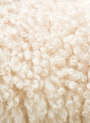


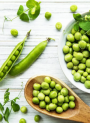
# Emulsion Thickening and Texture Optimization for Lightweight, Residue-Free Finish I am developing a cosmetic formula and need guidance on two different thickening approaches to achieve a lightweight, quick-absorbing, and residue-free finish: 1. **Using Xanthan Gum with Sucrose Cream Maker:** If I use `Sucrose Cream Maker` as the primary emulsifier in a formula containing **3% wax** and **12% oil**, what percentage of `Xanthan Gum` should I use as a co-stabilizer to ensure the cream achieves a stable "set gel" texture? 2. **Creating a Wax-Free Formula:** If I want to completely eliminate wax and rely only on the oil phase (12% oil), can I use `Aristoflex AVC` to stabilize and thicken the emulsion? The goal is specifically to achieve a very lightweight texture that absorbs quickly and leaves absolutely no residue on the skin.
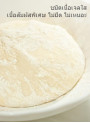
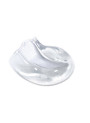
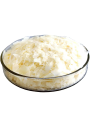
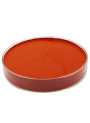
I am interested in using **Chili Extract Capsicum Red Color (Natural Food Colorant)** to provide color for a powdered drink mix. Could you please confirm the following details: 1. Does the Chili Extract Capsicum Red Color have a spicy taste? 2. Is this natural food colorant suitable for mixing directly into powdered drink formulations?
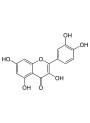
I am inquiring about the cosmetic ingredients **Pure-Quercetin™ (98% Purity, Powder, product ID 760)** and **Pure-Kaempferol™ (98%, product ID 10279)**. Could you please provide information regarding the following: 1. **HPLC Analysis:** Are these high-purity powders compatible with standard HPLC columns? Do you have recommended HPLC methods or specifications for their analysis? 2. **Plant Source:** From which specific plant sources are they extracted? 3. **Research Documentation:** Are there any external research articles or studies that have utilized these specific MySkinRecipes products?
I would like to know if using the **Silky Serum Base (eye/face)** (ID: 498) or the **Silky Serum Base Plus (Face/Eye, Oil)** (ID: 710) can result in the creation of a perfectly clear serum product?
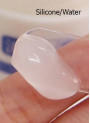
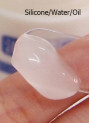
# Formulation Challenge: Incorporating CysWhite™ (Cysteamine HCL) into an Anhydrous Face Oil Serum I am developing a long shelf-life formula using **CysWhite™ (Cysteamine HCL)**. Due to the low stability of CysWhite™ when dissolved in water, I have decided to proceed with an anhydrous (water-free) formula, specifically a face oil serum. Given that CysWhite™ (Cysteamine HCL) is a water-soluble powder, how can I successfully dissolve and incorporate it into an oil base to create a stable, clear face oil serum?
I am looking to create a semi-permanent hair dye product in a **dark brown** shade, formulated as a **thick creamy shampoo**. I intend to use the following natural ingredients as the primary colorants and additives: * Henna (Lawsonia inermis) * Butterfly Pea Flower (ดอกอันชัญ) * Black Coffee Powder * Kaffir Lime (ลูกมะกรูด) Could you provide a conceptual formula structure, including recommended ingredient groups, percentage ranges, and critical formulation considerations necessary to achieve the desired color balance (dark brown, neutralizing Henna's red tones) and ensure the stability and suspension of the natural powders in the creamy shampoo base?
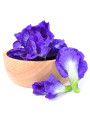

I would like to use **Gold Pellet Beads, gold flake beads, 1-5mm** (Product ID 33183) in a serum formulation. 1. Can these beads be used as a visual substitute for 24K gold flakes? 2. Can they be incorporated directly into the serum, or is a **suspending agent** necessary to ensure they remain dispersed and floating?
I am formulating a **Body Oil** and require a deep red, oil-soluble color that exhibits excellent stability, specifically regarding the following issues: * It must **not precipitate** (no sedimentation) over time. * It must **not fade** (maintain color intensity). I am currently considering the product **D&C Red 17 (CI 26100) Oil-Soluble EasyDissolve**. Can you provide a strong recommendation on whether this specific color product is the best choice for achieving optimal stability in a body oil formulation?
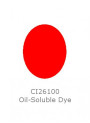
I would like to inquire about the technical specifications of **Lactic Acid (AHA) Neutralized (Deodorized) (Product ID 6376)**. Specifically: * Can this ingredient be used effectively and stably in a final product formulated at **pH 5.0**? * What are the functional implications (e.g., exfoliation vs. moisturization) of using this AHA at pH 5.0, considering its pKa? * Are there any additional technical recommendations or considerations for its use at this pH level?
What is the best approach for formulating a gentle, high-foaming shampoo focused on natural ingredients, specifically designed to reduce hair tangling and provide conditioning benefits?
# Recommended Oil-Soluble Whitening Agents for Body Oil I am looking for effective whitening ingredients that are suitable for use in a **Body Oil** formulation. * Which oil-soluble whitening agents are recommended? * What are their key benefits (e.g., stability, absorption, anti-aging properties)? * What are the recommended usage rates for achieving noticeable whitening effects?
Why is the active ingredient `Climbazole` generally not recommended for use in rinse-off cleanser formulations? Specifically, can `Climbazole` be successfully incorporated into and remain effective within a face wash gel formula?

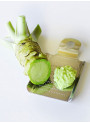
Can **SOD-Wasabi™ (Wasabi Ferment Extract)**, which has the INCI name *Lactobacillus/Wasabia Japonica Root Ferment Extract*, be utilized as an active ingredient in a toothpaste formulation?
Regarding the product **Schizophyllan (Extracted from Mushroom Mycelia)**, what other chemical components are included besides Schizophyllan, and what solvent is used in this solution?
# Comparison and Industrial Application of Amylase Enzymes 1. What are the key differences between `Alpha Amylase Enzyme` and `Glucoamylase Enzyme` (Amyloglucosidase), particularly regarding their function in starch hydrolysis (Liquefaction vs. Saccharification) and cleavage sites ($\alpha-1,4$ and $\alpha-1,6$ glycosidic bonds)? 2. For the industrial production of glucose syrup from tapioca starch, which enzyme or combination of enzymes is the most suitable and cost-effective for commercial manufacturing?