Browse Questions and Answers
Avg response: 24 HrsFilter Questions
20 of 14228 results
สารสกัดที่ อุณหภูมิ 25-40 องศา เก็บไวในห้อง ไม่ต้องแช่เย็นได้ใช่ไหมคะ ส่วนสารสกัดที่อุณหภูมิจัดเก็บ 1-25 องศา อันนี้ต้องเก็บไว้ในตู้เย็นใช่ไหมคะ; Customer is asking about storage conditions for extracts (สารสกัด): For extracts recommended at 25-40°C, can they be stored at room temperature without refrigeration? For extracts at 1-25°C storage temperature, do they need to be kept in the refrigerator? If not stored in the fridge, will they spoil? Assuming cosmetic or food extracts, provide guidance on proper storage to maintain stability.
Customer wants to formulate hair serum and shampoo using Minoxil Aqua, targeting pH 6-7, for batch sizes of 100-500 ml. Please provide usage calculations and recommendations for Minoxil Aqua in these products. Additionally, explain how to calculate and incorporate Clover Flower Extract (Biochanin A 98%) as a powder into a water-based serum formula. Finally, suggest alternatives to finasteride at 0.25% concentration for hair loss prevention in these formulations, considering natural/vegan options if possible.
Is Sucrose Cocoate suitable and safe for use in oral care formulations, such as toothpaste and mouthwash? What are its primary functions (e.g., surfactant, emulsifier) when incorporated into products intended for the mouth?
Can Polyquaternium-7 (Poly-Conditioner Eco) be used effectively to increase the slipperiness and conditioning feel in a liquid body soap formulation?
I am formulating a lip balm and plan to incorporate the ingredient **LipX®-Baby (Amino Acids For Lip Care)**. I have observed that the mixture does not pour well when the temperature is below 50°C. Given that this ingredient is highly heat-sensitive with a recommended maximum processing temperature of 40°C, I need to know: If I add LipX®-Baby at 50°C and immediately pour the lip balm into the tubes (assuming rapid cooling), will this brief exposure to 50°C damage or compromise the stability and efficacy of the active, heat-sensitive components?

For standardized skin irritation testing, where capsaicin is used to induce erythema (redness) before applying a cream and measuring the results instrumentally (e.g., using a chromameter or spectrophotometer), what specific grade or type of capsaicin is recommended to ensure reproducible and accurate scientific results?
I am formulating a cooling body powder (100g batch) using rice talc as the base, but the resulting powder has poor flowability due to clumping after incorporating liquid components. The initial formulation details are: * Rice Talc Base: 86.7 g * Anti-caking silica: 5 g * Menthol crystals: 5 g (pre-dissolved in 75% Alcohol 1 g) * Fragrance: 3 g * Thymol: 0.3 g The mixing process involves dry blending the talc and silica first, then adding the liquid solution (menthol/alcohol), fragrance, and thymol, leading to clumping, followed by grinding and blending in a household blender. How can I modify the formulation and/or mixing procedure to significantly improve the powder's flowability while maintaining a strong cooling sensation and minimizing the overall strong odor? (Note: Previous trials with liquid menthol resulted in a stronger odor and weaker cooling effect compared to menthol crystals or Long-Cool.)
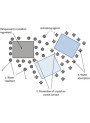

I purchased Solid Perfume beads/aroma diffuser beads (Product ID 6243) to create scented beads (Objective: ทำเม็ดหอม). I mixed them with an oil-based perfume (Base/solvent: น้ำหอม) at a concentration of approximately **5%** of the bead weight. However, the beads are not absorbing the perfume directly, and the liquid remains unabsorbed. Is there an alternative method, or do I need to mix the perfume with another solvent before adding it to the beads?
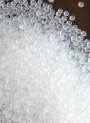
Regarding the product **Red Vitamin E Beads 1-2mm (Dry)**, why is the INCI name listed as a complex combination of ingredients (Mannitose, Microcrystalline Cellulose, Tocopheryl Acetate, Color) instead of the simpler name, "Jojoba Beads," which is often associated with similar products?
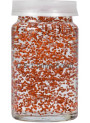
What is the recommended percentage of `Whitecare™ Turmeric Extract (Curcuminoids Water Soluble)` to add to a **skin-whitening cream formulation** for achieving skin whitening effects?
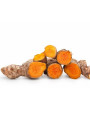
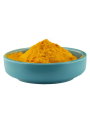
We are incorporating Silica into our body powder formulation to prevent caking. The main ingredients are: * Rice powder (main base) * Menthol * Fragrance (liquid component) Could you please advise on the appropriate mixing step for adding Silica (such as Anti-Caking Silica or MatteSilica) to ensure the final powder product does not clump or cake, especially considering the addition of the liquid fragrance?
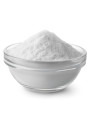
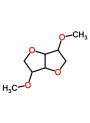
I am developing a **whitening cream for freckles** with the following key ingredients: * DMI (Dimethyl Isosorbide) 3% * Encapsulated 4-Butylresorcinol * Tranexamic Acid * Niacinamide * Allantoin * Ceramide * Matrixyl 3000 * Retinal-EZ My primary concern is: **Will using DMI at 3% concentration potentially disrupt or destroy the encapsulation structure of the Encapsulated 4-Butylresorcinol (e.g., liposomal system)?**

What is the composition of the cosmetic ingredient Ceramide 3 (Ceramide NP, Optimized)? Specifically, what chemical components is it made from, and what is its origin? Is this ingredient considered to be of natural origin, or is it synthesized/biotechnologically derived?
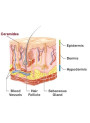
I am comparing three amphoteric surfactants for use in cosmetic formulations: Coco-Foam-50™ (Cocamidopropyl Hydroxysultaine), Laura-Foam-50™ (Lauramidopropyl Hydroxysultaine), and Lauryl Hydroxysultaine. Could you explain the key differences in their properties, focusing on: * Chemical structure (Amidopropyl vs. Alkyl) * Fatty chain source and purity (e.g., mixed C8-C18 from Coconut vs. uniform C12) * Performance characteristics, such as foam boosting, viscosity building, clarity, and hydrotroping ability?


I am developing a toothpaste formulation. I am considering using **LipX-Sweet**, which is described as a natural sweetener in oil form for lip balm and lipstick formulas, noted for mixing immediately with oil. Is it technically possible and advisable to use this specific oil-based sweetener (LipX-Sweet) in a standard toothpaste formulation, which is typically a water-based/hydrophilic gel system?
I have a highly technical question regarding the material Styrene/Acrylates Opacifier (e.q. OP301). Could you please provide information on the following points? * Where do you source your styrene from? * Where does the acrylic acid that is reacted with the styrene and an ester (to make the styrene acrylates copolymer) come from? * Do you know what reaction type is used to make these polymers?
I am using the product `Pineapple Juice Flavor (Water & Oil Soluble, Propylene Glycol Base)`, which is categorized as a FRAGRANCE/FLAVOR for food. Does this specific flavor product impart both the aroma (smell) and the taste (flavor) to the final formulation?
The user is inquiring about the application and methodology of the Centrifuge Emulsion Stability Test, specifically using the parameters: `4000rpm`, `30Min`, `40C Controlled`, and `6 Samples 10ml`. 1. Is this test suitable for testing **cream** groups (O/W and W/O emulsions)? 2. Is it suitable for **W/O makeup** (like foundation) and various **lip products** (balms, sticks, glosses)? 3. What is the extent and limitation of stability testing using centrifugation? Is it a replacement for long-term testing? 4. Regarding the parameters: What range of RPM and minutes are commonly used? Is heating (e.g., 40°C) necessary or recommended during the test? 5. After testing, how do we visually determine if the formula has failed due to separation, creaming, or sedimentation?
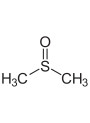
I am planning to use **Dimethyl Sulfoxide (DMSO, 99.9%)** (Product ID 6854) as a solvent in my research work to dissolve turmeric extract powder. However, the product description includes a strict warning: "Do not use in cosmetics." Is it acceptable to use DMSO for dissolving the extract powder in a laboratory research setting, or does this violate the usage restrictions?
I am looking for a non-silicone substitute for **Yerba Santa (Eriodictyon californicum)** to use in a hair conditioning product. The substitute must provide similar properties, specifically: * Softness and smoothness * Protection of hair from heat * Protection of hair from pollution Please recommend suitable alternatives for cosmetic formulation.