Formulation and Mixing for Very Dry, Sensitive Skin Cream
Question
I am developing a cream for sensitive, very dry, flaky skin. My proposed formula includes the following ingredients with approximate percentages:
- Sodium PCA (2%)
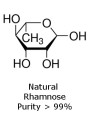
- Rhamnose (2%)
- Betaglucan (3%)
- Moist 72 (2%)
- Sea Kelp Extract (3%)
- Japanese Cedar (1%)
- Natto Gum (3%)
- Ceramide Complex (10%)
- Phospholipid (3%)
- SkindefenseV (1%)
- Bisabolol (1%)
- Shiso Extract (1%)
- Glycyrrhetinic Acid (1%)
- Silk Cream Maker (2%)
- Lipid Soft Lite (2%)
- Snow Algae (percentage not specified)
- Ezerrawax (percentage not specified)
- Boswellia Serrata Extract (percentage not specified)
- Butylene Glycol (for dissolving Boswellia, ratio 1:6)
- Vitamin B12 (5%)
- Mild Preserved Eco (0.5%)
- Coenzyme Q10 (percentage not specified)
- Second Skin (3%)
- Water (remaining percentage, I thought it was 46%)
I have several questions regarding this formulation and the mixing process:
- Are all these ingredients compatible with each other in this formula? I am particularly concerned about Sodium PCA.
- What should be the correct percentage of water in the formula? I calculated 46%, but is that correct?
- Can I mix this formula at home, or do I need to order from a manufacturer? What tools are necessary, especially for ingredients like Phospholipid?
- What is the correct mixing procedure for this formula, considering the different phases (A, B, C)? What temperatures should I use for heating the water and oil phases?
- Should I add the final phase (Phase C) immediately after emulsification, or wait for the cream to cool down?
- Where should Vitamin B12 be added in the mixing process?
- How long should I stir the cream after adding Coenzyme Q10?
- Is this formula suitable for sensitive, very dry, flaky skin? Are there any alternative ingredient suggestions or reference formulas I could consider for this skin type?
Answer
Subject: Re: Inquiry about formula and mixing for sensitive, very dry, flaky skin
Hello,
Thank you for your detailed inquiry about formulating a cream for sensitive, very dry, and flaky skin. Based on your proposed ingredients and the staff's feedback, here are the answers to your questions:
Regarding the formula with percentages:
- Active agent compatibility and percentages: The active ingredients you've chosen are generally compatible and suitable for sensitive, dry skin. However, as the staff mentioned, Sodium PCA (2%) is an electrolyte that can make emulsification more challenging and potentially less stable, especially with home mixing equipment. For easier mixing and better stability, it is recommended to remove Sodium PCA from the formula. The percentages for the remaining ingredients (45.5% - 2% = 43.5%) are reasonable starting points.
- Remaining percentage: The remaining percentage (100% - 45.5% = 54.5%) should be filled with water (preferably distilled or deionized water).
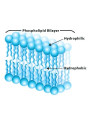
- Home mixing and tools: Yes, you can mix this formula at home. However, achieving a stable, smooth cream texture, especially with ingredients like Phospholipid which benefits from high shear, might be difficult with just hand stirring. Hand mixing is suitable for testing the formula, but for better stability and texture, a high-shear mixer (like a homogenizer or a strong lab mixer) is recommended. You do not necessarily need to order from a manufacturer unless you require large-scale production or professional-grade stability and testing.
Mixing instructions: Based on your ingredients and standard cream making procedures, here is a suggested mixing method:
- Phase A (Water Phase):
- Combine the water (54.5%) with the water-soluble ingredients: Rhamnose (2%), Betaglucan (3%), Moist 72 (2%), Sea Kelp Extract (3%), Japanese Cedar (1%), Natto Gum (3%).
- Separately, dissolve Snow Algae (percentage not specified, use recommended usage rate) in a small amount of water. Add this solution to Phase A.
- Heat Phase A to 60-70°C.
- Phase B (Oil Phase):
- Combine the oil-soluble ingredients: Ceramide Complex (10%), Phospholipid (3%), SkindefenseV (1%), Bisabolol (1%), Shiso Extract (1%), Glycyrrhetinic Acid (1%), Silk Cream Maker (2%), Lipid Soft Lite (2%).
- Separately, warm Ezerrawax (percentage not specified, use recommended usage rate) in a small amount of a suitable oil or part of the oil phase until dissolved. Add this to the rest of Phase B.
- Heat Phase B to 70-80°C.
- Emulsification:
- While continuously blending Phase A (using a mixer if possible), slowly add Phase B to Phase A.
- Continue blending until a uniform emulsion (cream) is formed.
- Phase C (Final Phase - Add during cooling):
- Without waiting for the cream to cool down completely, begin adding the final phase ingredients one by one while stirring.
- Separately, dissolve Boswellia Serrata Extract (percentage not specified, use recommended usage rate) in Butylene Glycol (ratio 1:6 as you mentioned). Add this solution to the cream.
- Add Vitamin B12 (5%).
- Add Mild Preserved Eco (0.5%).
- Separately, dissolve Coenzyme Q10 (percentage not specified, use recommended usage rate) in a suitable oil or solvent. Add this solution to the cream.
- Add Second Skin (3%).
- Cooling and Final Stirring:
- Continue stirring the cream while it cools down to room temperature.
- Regarding Coenzyme Q10 (and the final phase addition in general), continue stirring until the cream texture is smooth and uniform. You can stir a bit longer to ensure everything is well incorporated.
- Phase A (Water Phase):
Regarding your initial mixing steps and questions:
- Your initial grouping of ingredients into A, B, and C phases was generally correct based on solubility, but the mixing procedure described (especially Q8 about adding the water phase after the oil phase forms a cream) is not the standard method for creating a stable emulsion. The method described above (adding oil phase to water phase while blending) is the recommended approach.
- Q4 (Mixing water phase): Yes, combine water phase ingredients with water and mix.
- Q5 (Oil for B phase): The oil phase consists of the listed oil-soluble ingredients and emollients/emulsifiers. Ezerrawax needs warming within this phase to dissolve.
- Q6 (Cooling before adding next step): No, add the final phase during the cooling process after emulsification, as described in the steps above.
- Q7 (Hand vs Machine for Phospholipid): As mentioned in point 3, hand mixing is possible but less effective for ingredients like Phospholipid compared to a high-shear mixer.
- Q8 (When to add water phase): The water phase is typically prepared first, and the oil phase is added to it during emulsification.
- Q9 (Add C after A+B): Yes, the final phase (C) is added after the water and oil phases have been combined and emulsified, typically during the cooling phase.
- Q10 (Stirring time for Q10): Stir until the cream is smooth and uniform.
The staff also recommended looking at the sample formula for Cholesterol/Palmitamide MEA/Ceramide Cream for dry/flaky skin as a reference.
I hope this clarifies your questions and helps you create your cream!
Related Products Mentioned
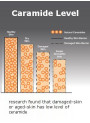
Ceramide Complex (CeraTouch™, Cream)

Sea Kelp Extract

Natural Bisabolol (Brazil Chamomile)
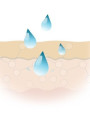
Sodium PCA 50%
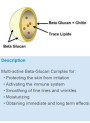

MOIST72™
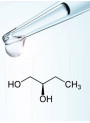
Butylene Glycol
Natto Gum Extract

Coenzyme Q10 Extra

SKIN-DEFENSE® V ลดระคายเคืองจากธรรมชาติ
Rhamnose (rhamnose sugar)

Phyto Glycyrrhetinic Acid
Mild Preserved Eco™ (Preservative-Free)
Snow Algae
Phospholipid
SkinLipid™
Silk Cream Maker™
