Formulation and Raw Materials for Semi-Permanent Hair Color Changing Treatment and Shampoo
Question
Could you please provide information on the formulation and raw materials for:
- Hair color changing treatment
- Hair color changing shampoo
Specifically for semi-permanent hair color products?
Answer
Raw Materials and Formulations for Hair Color Changing Treatment and Shampoo
Semi-permanent hair color changing products, both in treatment and shampoo forms, typically consist of two main components: coloring agents and the product base (shampoo or treatment/conditioner).
1. Coloring Agents
For semi-permanent hair color products, Direct Dyes are commonly used. These dyes can adhere directly to the hair without the need for a developer. Examples of coloring agents in this group include:
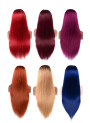
- Basic Red 51: A reddish-purple color.
- Acid Red 33: A dark red color.
- HC Blue 7: A blue color.
A consideration when using Direct Dyes is that these colors often have a positive charge or are acidic, which may not be compatible with anionic surfactants commonly found in shampoos. Therefore, it is advisable to use non-ionic or amphoteric surfactants to ensure better color deposition and prevent precipitation.
2. Product Base
- For Hair Color Changing Shampoo: You can use a shampoo base specifically designed for semi-permanent hair color, such as Semi-Permanent Hair Color Shampoo Base, which is a ready-to-use base that can be mixed directly with the color at the recommended ratio. Other shampoo bases like SweetWash™ Hair (Shampoo Foaming Base Built-in fixative), known for its scent-fixing properties, can also be used, but they require dilution before use, and compatibility with the chosen dye should be considered.
- For Hair Color Changing Treatment/Conditioner: Use a conditioner base or create a base using conditioning agents to make the hair soft and smooth and help the color adhere better. Examples of conditioning agents that can be used include Silicone Hi-Cond, Poly-Conditioner 53 (Polyquaternium-53), or Hair-Cond™ 0949.
3. Color Fixative
To help semi-permanent hair color adhere better to the hair and last longer when washing, a color fixative such as ColorFix™ (helps hair color stick better) can be added to the formula, especially in hair color changing shampoo formulas.
When developing a formula, it is important to test the compatibility of the ingredients and the color performance on different hair types to achieve the desired product quality.
Updated Review: May 2026
This section was added after reviewing the original answer against current product availability and formulation knowledge at the stated point in time.
Update as of 2026-05-24
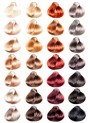
The original guidance is still generally correct: semi-permanent hair color shampoo/treatment normally uses direct dyes or semi-permanent colorants and does not require peroxide/developer. Current catalog options now include Semi-Permanent Hair Color Shampoo Base and multiple ready Semi-Permanent Hair Colorant shades, so for easier development you can start by testing the shampoo base with a selected ready colorant shade, rather than blending only single dye powders.
Important formulation notes: for cationic/basic dyes such as Basic Red 51, Basic Blue 99, Basic Blue 9, or Basic Brown 16 / SemiColor - Red Brown, avoid strongly anionic shampoo systems unless small-batch compatibility testing confirms no precipitation, viscosity loss, shade loss, or poor color deposition. Non-ionic or amphoteric surfactant systems remain the safer first choice. Treatment/conditioner formats usually give stronger and faster color deposition than shampoo formats because shampoo surfactants can rinse away part of the deposited dye. ColorFix™ may be considered to improve color adherence, and Poly-Conditioner 53 may be considered for conditioning/color-retention support, but both must be validated in the final formula.
Before production or customer use, always perform a strand test on the intended hair type and starting hair color, plus an allergy/patch test. Semi-permanent direct dye products cannot lighten natural dark hair; vivid shades normally require pre-lightened or light hair. For commercial sale, verify that every selected dye/colorant is permitted under the cosmetic colorant regulations of the target market and confirm final pH, stability, staining, wash-off, preservative adequacy, and packaging compatibility.
Related Products Mentioned
Silicone Hi-Cond

Basic Red 51 (Basic Dyes)

Acid Red 33 (Direct Dye)
Semi-Permanent Hair Color Shampoo Base

HC Blue 7 (Direct Dye)
Poly-Conditioner 53 (Polyquaternium-53)
Semi-Permanent Hair Colorant (Red)

Semi-Permanent Hair Colorant (Brown)

Semi-Permanent Hair Colorant (Pink)



Semi-Permanent Hair Colorant (Green)

Semi-Permanent Hair Colorant (Ash Pink)

Semi-Permanent Hair Colorant (Purple)


Semi-Permanent Hair Colorant (Ash)
Basic Blue 99 (Basic Dyes)