Hair Growth Spray Formulation Review and Stability
Question
I would like to create a spray that:
- Stimulates hair growth
- Nourishes and strengthens hair roots
- Has a lightweight texture
- Leaves no greasiness on the scalp
- Is gentle and non-irritating
- Can be used on all hair types
Here is the formula I am considering:
- Sandal Pentanol (Sandalore) 5%
- Biotin Express™ 1%
- Hydro Protein (Soy, Oat, Wheat, Maize Protein) 1%
- 1,2-Hexanediol 4%
- Melatonin Forte™ 1%
- Coffee Extract 3%
- Mild Preserved Eco™ (Preservative-Free) 1%
- Light Lotion Maker 2%
- Dimethicone 1Secs (How much should I add?)
Can this formula be mixed? Please provide recommendations and mixing instructions.
Answer
Hair Growth Spray Formulation Review
Your formula includes several excellent active ingredients known for their benefits to hair and scalp health:
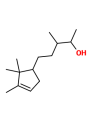
- Sandal Pentanol (Sandalore): Research suggests it can help stimulate hair growth.
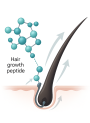
- Biotin Express™: Known to accelerate hair growth, reduce shedding, and strengthen hair roots.
- Hydro Protein (Soy, Oat, Wheat, Maize Protein): Provides nourishment and helps restore damaged hair.
- Melatonin Forte™: Has shown efficacy in stimulating hair growth and reducing hair loss.
- Coffee Extract: Stimulates scalp circulation, which can help reduce hair loss and strengthen roots.
The other ingredients serve important functions in the formulation:
- 1,2-Hexanediol: Acts as a solvent, humectant (helps retain moisture), and can boost the effectiveness of preservatives. It can also help other ingredients penetrate better.
- Mild Preserved Eco™: A gentle ingredient that helps preserve the formula against microbial growth.
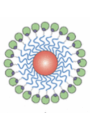
- Light Lotion Maker: An emulsifier suitable for creating light textures and sprays, helping to combine oil-soluble ingredients with water.
- Dimethicone 1Secs: A fast-evaporating silicone that provides a smooth, non-greasy feel, aligning with your goal for a lightweight texture.
Regarding Dimethicone 1Secs Usage
You asked how much Dimethicone 1Secs to include. For a lightweight, non-greasy feel in a spray, a usage rate of 1-2% is a good starting point. This concentration should provide the desired slip and fast-drying effect without leaving a heavy residue.
Important Considerations & Recommendations
- UV Protection: Both Biotin Express™ and Melatonin Forte™ are sensitive to light and can degrade upon UV exposure. It is highly recommended to add a UV filter to protect these active ingredients and maintain the product's efficacy. A water-soluble UV filter like Benzophenone-4 at 0.5-1.0% is suitable for this formula.
- Spray Stability: While Light Lotion Maker is suitable for sprays, achieving a stable spray emulsion often requires a combination of emulsifiers and a thickener to prevent separation over time. The description for Light Lotion Maker specifically recommends using Light Lotion Maker (3-4%) together with Polysorbate 80 (1%) and a small amount of Xanthan Gum (around 0.2%) for spray formulations. Your current formula uses Light Lotion Maker at 2% and does not include Polysorbate 80 or Xanthan Gum. The proposed formula can be mixed, but it may require vigorous shaking before each use or could potentially separate. For better stability as a spray, consider adjusting the Light Lotion Maker percentage and adding Polysorbate 80 and Xanthan Gum.
- Melatonin Solubility: Pure-Melatonin™ is soluble in some glycols (like 1,3-Propanediol) and some oils. While 1,2-Hexanediol is a glycol, its ability to fully dissolve Melatonin may vary. Ensure Melatonin is fully dissolved or very well dispersed before adding it to the main mixture.
- Packaging: Due to the light and air sensitivity of Melatonin and the light sensitivity of Biotin, the final product should be stored in an air-tight, opaque container (not clear glass or plastic) to help maintain ingredient stability and product effectiveness.
Mixing Instructions (Based on your proposed list + Recommended Dimethicone 1Secs and UV Filter)
Assuming you are making a total of 100% of the product, you will need to add water to reach 100% after accounting for all ingredients.
- Water Phase: In a clean beaker, combine the required amount of water. Add Biotin Express™ (1%), Hydro Protein (1%), Coffee Extract (3%), 1,2-Hexanediol (4%), Mild Preserved Eco™ (1%), and Benzophenone-4 (e.g., 0.5-1%). Stir or mix gently until all ingredients are dissolved. Avoid heating this phase above 60°C to protect Biotin and Hydro Protein.
- Oil/Silicone Phase: In a separate beaker, combine Sandal Pentanol (5%), Light Lotion Maker (2%), and Dimethicone 1Secs (e.g., 1%). Stir to mix. Avoid heating this phase above 40°C to protect Sandal Pentanol.
- Emulsification: Slowly add the Oil/Silicone Phase to the Water Phase while stirring continuously with a homogenizer or high-speed mixer. Continue mixing until a uniform, milky emulsion is formed. Since Light Lotion Maker can be used in a cold process, mixing at room temperature is ideal to protect heat-sensitive ingredients.
- Add Melatonin: Separately dissolve Melatonin Forte™ (1%) in a very small amount of a suitable solvent (like 1,3-Propanediol if available) or disperse it thoroughly in a small amount of the finished emulsion base. Add this to the main mixture and stir gently until fully incorporated. Minimize air exposure during this step.
- Final Adjustments: Check the pH of the final mixture. The recommended pH range for Biotin Express™ is 4.5-9 and for Melatonin Forte™ is 4-10. Adjust the pH if necessary to be within this range (e.g., 4.5-6.5 is generally good for scalp). Add any remaining water to reach 100% total weight.
- Packaging: Transfer the finished spray into an air-tight, opaque spray bottle.
Note on Spray Stability: As mentioned, for a more stable spray that doesn't require shaking, consider adjusting the Light Lotion Maker to 3-4% and adding 1% Polysorbate 80 and 0.2% Xanthan Gum (disperse the Xanthan Gum in the oil/silicone phase with the Light Lotion Maker and Polysorbate 80 before adding to the water phase).
Updated Review: May 2026
This section was added after reviewing the original answer against current product availability and formulation knowledge at the stated point in time.
Update as of 2026-05-24
The original answer is still generally usable, but please note these current clarifications before making or selling this scalp spray:
- The listed ingredients total only about 20%, so the remaining ~80% must be water or a suitable aqueous base q.s. to 100%.
- For a light, non-greasy scalp feel, start Dimethicone 1Secs at 0.5–1.0%. If more slip is needed, 1–2% can be tested, but higher levels may affect spray feel and emulsion stability.
- Light Lotion Maker at 2% alone may not be enough for this spray-emulsion load. For better stability, test Light Lotion Maker 3–4% with Polysorbate 80 1% and Xanthan Gum about 0.10–0.20%. For fine-mist pumps, start Xanthan Gum around 0.10–0.15% to reduce clogging risk, then increase only if separation occurs.
- Biotin and melatonin ingredients should be protected from light and air. Opaque, airtight packaging is strongly recommended. Benzophenone-4 or another compatible UV-protective system can be considered, but it is not mandatory and should be checked for formula compatibility, local regulatory allowance, and claim direction.
- Keep final pH around 4.5–6.5 after the formula is fully mixed. If melatonin cloudiness or precipitation appears, test a small batch with a suitable co-solvent such as 1,3-Propanediol before changing the full formula.
- Because this is a water-based leave-on scalp product, perform stability testing, spray-pump testing, patch/irritation testing, and preservative challenge testing before selling.
- Use cosmetic claim wording such as “helps nourish the scalp,” “supports stronger-looking hair roots,” “helps reduce hair fall due to weak/brittle hair,” or “helps hair look fuller and healthier.” Avoid drug-style claims such as treating alopecia, curing hair loss, or clinically regrowing hair unless the finished product is properly tested and registered for that claim.
Spray Maker™ may be considered only as a separate reformulation route if the current Light Lotion Maker system cannot pass stability or spray testing; it is not a direct one-to-one replacement.
References for ingredient-level rationale only: Fischer et al., International Journal of Trichology, 2012;4(4):236–245, PMID: 23766606. Chéret et al., Nature Communications, 2018;9:3624, DOI: 10.1038/s41467-018-05973-0.
Related Products Mentioned

Polysorbate 80 (Tween 80)

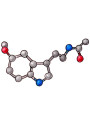
Pure-Melatonin™ (Odorless, White Powder)

Biotin Express™
Mild Preserved Eco™ (Preservative-Free)
Benzophenone-4
Dimethicone 1Secs
Sandal Pentanol (Sandalore)
Light Lotion Maker
Melatonin Forte™
Pure-Biotin™


Spray Maker™