How to properly incorporate Spirulina Powder into O/W Emulsions to avoid clumping
Question
Hello,
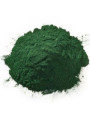
I am currently testing the incorporation of your spirulina powder into an O/W emulsion.
During the cool-down phase, I attempted to sprinkle the powder directly into the batch, but I encountered significant issues with clumping (tiny blue spots). Despite prolonged stirring, I was unable to achieve a completely smooth dispersion.
Could you please advise on the best incorporation method?
- Should the powder be pre-dispersed in a portion of the water or a humectant (like glycerin) to create a slurry before adding it to the main emulsion?
- Any guidance on the optimal temperature or mixing speed for this ingredient would be greatly appreciated.
Thanks!
Answer
To achieve a smooth, spot-free dispersion of Spirulina Extract Phycocyanin Blue Color (Natural Colorant) in an O/W emulsion, sprinkling the powder directly into a viscous base is generally not recommended as it leads to the "clumping" or "blue spots" you observed.
Recommended Incorporation Methods
For the best results, you should pre-disperse the powder using one of the following methods before adding it to your main batch:
- Glycerin Slurry (Highly Recommended):
Pre-mix the Spirulina powder with a small amount of Glycerin (USP/Food Grade) (approximately 2–5 times the weight of the powder). Stir until a smooth, uniform paste (slurry) is formed. Because glycerin is a humectant that "wets" the powder without immediately hydrating it, it prevents the formation of clumps. Once the slurry is smooth, add it to the emulsion during the cool-down phase. - Water Pre-dissolution:
Dissolve the powder in a small portion of room-temperature water reserved from your formula. Ensure it is completely dissolved and the solution is transparent blue before adding it to the emulsion.
Optimal Process Parameters
- Temperature: Phycocyanin is a natural protein-based pigment and is sensitive to heat. It is critical to add it during the cool-down phase, ideally when the temperature of the emulsion is below 40°C. Exposure to high temperatures (above 50°C) can cause the blue color to fade or shift.
- Mixing Speed: While the glycerin slurry method significantly reduces clumping, adding the dispersion to the emulsion requires thorough mixing. If you are working with a high-viscosity cream, use a high-speed stirrer or a homogenizer for a short period to ensure the color is evenly distributed throughout the base.
- pH Awareness: Phycocyanin is most stable in a pH range of 5.0 to 7.0. If your emulsion is very acidic (below pH 4.0), the pigment may become unstable or precipitate.
By using the glycerin slurry method at room temperature, you should be able to eliminate the blue spots and achieve a professional, uniform finish.
Related Products Mentioned
Glycerin (USP/Food Grade)