Hyaluronic Acid Serum Formulation: Concentration Limits and Adding Actives
Question
I have questions regarding the concentration limits of Hyaluronic Acid (Hya) in serum formulations and the effect of layering products with high Hya concentrations.
1. There seems to be conflicting advice on the total percentage of different Hyaluronic Acid types allowed in a formula. Some sources recommend the total combined percentage should not exceed 1%, while others suggest each type can be up to 1%, totaling up to 2%. Could you clarify this? For example, if a formula contains `Hyaluronic Acid nano 0.5%` and `Hyaluronic Acid normal 1%` (total 1.5%), would this cause the Hya to draw water out of the skin?
2. If I use one product containing Hya at a concentration exceeding 1%, followed by another product also containing Hya at a concentration exceeding 1%, is this too much? Could applying multiple layers of products with high Hya concentrations cause the Hya to absorb water from the skin?
Answer
Advice on Formulating a Facial Serum
Based on your questions and the information exchanged with the MySkinRecipes staff and user C7, here is a summary of advice for formulating the facial serum you are interested in:
Calculation of Ingredient Proportions
Your understanding that the calculation of ingredients is based on weight, and that the sum of the percentages of added ingredients (5+5+5+3+3+3+3 = 27%) means the remaining 73% is the base gel, is correct.
Concentration of Hyaluronic Acid in the Gel Base
The Double Hyaluronic Gel base already contains Hyaluronic Acid. When you add other ingredients totaling 27%, the amount of the gel base in the final formula is reduced to 73%. Therefore, the concentration of the nano-sized Hyaluronic Acid in the base gel (originally 0.5% in the base) will be lower when calculated as a percentage of the final 100% formula, proportional to the amount of base used. However, the resulting amount is still sufficient to provide good hydration.
Use of Preservative
If the Double Hyaluronic Gel base you are using already contains a preservative, you do not need to add an additional preservative.
Adding Other Ingredients (Peptides, Alpha Arbutin, Vitamin B3)
You can add other ingredients such as peptides (Sesaflash, Argireline), Alpha Arbutin, and Vitamin B3 down in the formula. These ingredients offer additional skin benefits:
- Argireline (Acetyl Hexapeptide-8): This peptide helps reduce muscle contractions that cause wrinkles, especially around the forehead and eyes. The recommended usage rate is 3-10%. It should be added in the final step at a temperature below 40°C, and the formula's pH should be between 3.5-6.5.
- Alpha Arbutin: Helps to brighten the skin and even out skin tone by reducing melanin production. The recommended usage rate is 0.2-2% (2% is recommended for skin brightening effects). It should be added in the final step at a temperature below 30°C and the pH should be between 3.5-6.5. Do not use in formulas with a pH higher than 8.
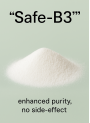
- วิตามินบี 3 (Niacinamide): Has various skin benefits, including reducing wrinkles, reducing redness/hyperpigmentation, adding moisture, strengthening the skin barrier, reducing oiliness, and helping with acne. The recommended usage rate is 1-10% (5% is recommended, and the Safe-B3™ grade can be used up to 10% without causing irritation). It can be mixed in the water phase and is heat resistant, but should not be heated for prolonged periods. The optimal pH range is 3-8 (best at 4.0-7.0).
Consideration: Adding multiple ingredients, especially at high percentages (e.g., your original 27% plus several more actives), will increase the total percentage of active ingredients in the final formula. This may make the product texture more sticky, depending on the type and amount of ingredients added. It is recommended to consider the desired texture. If you are concerned about stickiness, you might start by using the lower end of the recommended usage range for each ingredient.
Regarding Sesaflash, information was not found in the current system, so specific recommendations on usage rate or precautions cannot be provided.
Adding Cucumber Extract and Natural Betaine
You can add the Cucumber Extract and Natural Betaine you already have to your formula.
- Cucumber Extract: Helps to soften the skin and reduce irritation. The recommended usage rate is 3-5%. It should be mixed in water, avoiding heat above 50°C, with a pH between 5-7.
- Natural Betaine: Provides moisture, reduces irritation, and is not sticky like Glycerin. It can also help increase the solubility of Allantoin. The recommended usage rate is 2-10% (not exceeding 10%). It can be mixed in the water phase.
Since the gel base has a pH of approximately 6-7, and most of the other ingredients you are using have compatible pH ranges, adding Cucumber Extract (pH 5-7) and Natural Betaine is unlikely to significantly alter the overall pH of the formula to a problematic level for the other ingredients. You can add them.
Understanding the Composition of Double Hya Gel Base and Adding Hyaluronic Acid
The Double Hyaluronic Gel base is a ready-to-use base designed for ease of use. It typically contains Hyaluronic Acid of various molecular weights to provide hydration to both the upper and lower layers of the skin, as well as ingredients that help form the gel texture. Your understanding that it might contain 0.5% nano Hya and 0.5% gel-forming Hya (total 1%), with other ingredients added before adjusting to 100g with distilled water, is close to general formulation principles.
Regarding adding more Hyaluronic Acid:
- Adding additional Hyaluronic Acid (approx. 0.2-0.5%): If this is standard or large molecule Hyaluronic Acid powder, adding more will increase the total concentration of Hyaluronic Acid in the formula, which may make the product texture more sticky, as advised by C7 and the staff. While it won't cause the Hyaluronic Acid to draw water out of the skin as long as the concentration of each type doesn't exceed 1%, the effect on texture is something to consider.
- Making your own base using 1% gel-forming Hyaluronic Acid (excluding the nano type): Using 1% of Standard or Large Molecule Hyaluronic Acid will result in a thicker gel compared to using a lower percentage. This is an option if you prefer a thicker serum texture, but you should still be mindful of potential stickiness at 1% or higher, especially with standard/large molecule Hya.
Generally, commercial products with Hyaluronic Acid often use a total concentration of no more than 0.5% and still provide good efficacy. Using higher amounts may not provide significantly better results compared to the increased stickiness.
pH Value of Lab-Made Gel Base
As informed by C7, the pH of a gel base from the lab is typically adjusted and is usually within the skin-friendly range of approximately 6-7. If you plan to make your own formulas in the future, having a pH meter will help you control the quality and stability of your formulations.
I hope this information is helpful for developing your serum formula.
Related Products Mentioned
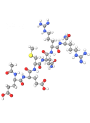
Acetyl Hexapeptide-8 (eq Argireline)
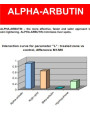
Alpha Arbutin (Switzerland)
Safe-B3™ (Vitamin B3, Niacinamide)

Allantoin
Phenoxyethanol (Extra Pure)
Natural Betaine (Crystal)
Cucumber Extract (France)
Hi-EGCG™ (Green Tea Extract)