Oil-Soluble Fragrance Fixatives and Perfume Oil Formulation Guide
Question
I would like to inquire about oil-soluble fixatives for an oil-based formula that does not contain alcohol. Specifically, which fixatives can dissolve in oil and essential oils?
If possible, please provide a formula guide for an oil-based perfume, including the ingredients and approximate percentages.
(The intended product is a spot application oil with long-lasting scent.)
Thank you.
Answer
Oil-Soluble Fixatives and Perfume Oil Formula Guide
For an alcohol-free perfume oil base, several natural resins and absolutes can act as effective fixatives that are soluble or dispersible in oils. Based on the search, the following can be considered:
These ingredients help to anchor the more volatile fragrance components, making the scent last longer on the skin.
Basic Perfume Oil Formula Structure
For a long-lasting spot application oil, a simple formula structure involves a carrier oil, your fragrance blend, and a fixative. Here is a general guide with typical percentage ranges:
- Carrier Oil (e.g., Jojoba Oil, Fractionated Coconut Oil, Sweet Almond Oil): 70-90%
- This forms the base of your perfume oil. Choose a light, non-greasy oil with little to no scent of its own.
- Fragrance Blend (Essential Oils, Absolutes, Fragrance Oils): 10-30%
- This is where you create your desired scent profile using a mix of top, middle, and base notes. The total concentration will affect the intensity and longevity.
- Fixative (e.g., Styrax Resinoid, Labdanum Absolute): 1-5%
- Include one or a blend of the oil-soluble fixatives mentioned above to help extend the wear time of the fragrance.
Example Formula Guide:
- Carrier Oil: 80%
- Fragrance Blend: 18%
- Fixative: 2%
Instructions:
- Measure your carrier oil into a clean container.
- Carefully measure and add your fragrance blend.
- Add your chosen fixative(s).
- Stir gently or swirl to combine. Avoid vigorous shaking which can introduce air bubbles.
- Allow the mixture to macerate (sit) for a period (days to weeks) in a cool, dark place. This helps the fragrance components meld together and the scent to develop.
- Pour into your final packaging (e.g., rollerball bottles).
Remember that these are starting points, and you may need to adjust percentages based on the strength of your fragrance materials and desired intensity. Always perform a small patch test before applying widely.
Updated Review: May 2026
This section was added after reviewing the original answer against current product availability and formulation knowledge at the stated point in time.
Update as of 2026-05-24
The 2019 guidance is still a useful starting framework, but for an alcohol-free, oil-based perfume applied to skin, please treat “oil-soluble” and “oil-compatible/dispersible” as different checks. Always make a small pre-mix of the fragrance/essential-oil blend plus fixative first, then confirm it is clear, uniform, and free of haze, sediment, or separation after dilution into the chosen carrier oil.
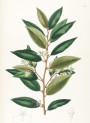
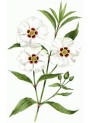
Current catalog-grounded options to consider for oil-based perfume trials include Styrax Resinoid, Styrax Absolute, Labdanum Absolute, and Labdanum Resinoid as resin/absolute base-note materials. Some lots may be viscous or only partly compatible, so warm gently only if needed and avoid prolonged heating because top notes can evaporate.
Ready fixative options can also be considered according to odor direction and process: 12H Fix™ should be pre-dissolved with LipidSoft™ Lite at about 2 times the 12H Fix™ amount and heated around 60–70°C until dissolved before adding to the perfume/oil blend. Musk Fix™ or Sugar Fix™ can be trialed around 1–5% and typically need brief warming around 50–60°C to combine uniformly; too much may flatten the main scent. Flora Fix™ is better trialed lower, around 0.20–2.00%, especially for floral/clean drydown support.
The old starting structure—carrier oil 70–90%, fragrance/essential-oil blend 10–30%, fixative about 1–5%—should be read only as a trial range, not a final safety recommendation. Example trial: Sweet Almond Oil or another suitable carrier oil 80%, fragrance/essential-oil blend 18%, fixative 2%. For any leave-on perfume oil, the final fragrance level must be checked against the IFRA limit, allergen/sensitizer content, and the safety data for every essential oil/fragrance material used. After mixing, macerate, then re-check odor, clarity, sediment, separation, and skin tolerance.
References: IFRA Standards; Sell, The Chemistry of Fragrances; Tisserand & Young, Essential Oil Safety.
Related Products Mentioned
Styrax Resinoid
Elemi Gum
Labdanum Absolute
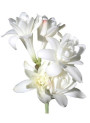
Tuberose Absolute

Frangipani Absolute
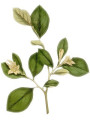
Styrax Absolute
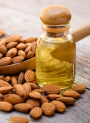

Flora Fix ™ (long lasting fragrance)
Sugar Fix ™ (long lasting fragrance)
Musk Fix ™ (long lasting fragrance)

12H Fix™ (Fragrance Fixative)