Optimization and Surfactant Alternatives for Pre-wash Scalp Cleansing and Bond Repair Shampoos
Question
I am developing two shampoo formulations and would like a review and optimization of the surfactant systems.
1. Pre-wash Scalp Cleansing Shampoo
(Liquid, low-viscosity, applied to dry scalp, rinsed before regular wash. Goals: thorough cleansing, high tolerability, pleasant foaming on dry scalp).
- Phase A:
Aquaq.s. ad 100,Sodium Methyl Cocoyl Taurate(90% solids) 10.0% (heat to ~60°C in water until clear). - Phase B:
Niacinamide5.0%. - Phase C:
Piroctone olamine1.0% (pre-dissolved in 10%Ethanolif needed). - Phase D:
Cocamidopropyl Betaine2.0% ORCond-Foam™(Sodium Lauroyl Sarcosinate) 5.0-8.0%. - Phase E:
PQ-70.2%. - Phase F:
Sodium PCA(50%) 1.5%. - Phase G:
Panthenol(75%) 1.5%. - Phase H:
Gluconolactone2.0%. - Phase I: Perfume oil 0.3% in
Isopentyldiol5.0% ORPolysorbate 201.0-1.5%.
2. Bond Repair Shampoo
(Hydrating formula).
- Phase A:
Aquaq.s.,Sodium Methyl Cocoyl Taurate10.0%. - Phase B:
Niacinamide5.0%. - Phase C:
Itaconic Acid0.15%. - Phase D:
L-Arginine0.1%. - Phase E: Bond repair blend 2.0%.
- Phase F:
PQ-70.2%. - Phase G:
Sodium PCA(50%) 1.5%. - Phase H:
Panthenol(75%) 1.5%. - Phase I:
Cocamidopropyl Betaine3.0% ORCond-Foam™5.0-8.0%. - Phase J: Perfume oil 0.3% in
Isopentyldiol5.0% ORPolysorbate 201.0-1.5%.
Requests:
- Review both formulations for corrections and improvements, specifically regarding the surfactant systems (stability, foaming, mildness, and viscosity).
- Provide 3 variants for both products by replacing
Sodium Methyl Cocoyl Taurate(10%) with:- Variant 1:
Gluta-Clean™(Disodium Cocoyl Glutamate) - Variant 2:
AminoWash™(Sodium Lauroyl Glutamate, Fine) - Variant 3:
Decyl Glucoside
Please include optimal use levels and formulation tips.
- Variant 1:
- Confirm if
Gluta-Clean™,Decyl Glucoside, andCond-Foam™are self-preserving systems in these water-based formulations.
Answer
1. Formula Review & Optimization
Your base formulations for both the Pre-wash Scalp Cleansing Shampoo and the Bond Repair Shampoo are well-structured, but there are a few points to optimize for performance and stability:
- Surfactant Concentration: Using 10% Sodium Methyl Cocoyl Taurate (90% Solid) provides 9% Active Surfactant Matter (ASM). When combined with 8% Cond-Foam™ (Liquid) (approx. 2.4% ASM), the total ASM is ~11.4%. This is excellent for a standard shampoo. For a "Pre-wash" applied to a dry scalp, this high concentration might feel slightly "tacky" during massage. You may consider slightly increasing the water content or using the Glutamate variants for better spreadability on dry hair.
- Piroctone Olamine (1.0%): This is the maximum recommended dosage for rinse-off products. It is highly effective but must be completely solubilized to prevent crystallization. While Ethanol works, using Isopentyldiol or Propanediol is often preferred for scalp health to avoid the drying effect of high alcohol content.
- pH Management: Gluconolactone is a Polyhydroxy Acid (PHA) that slowly hydrolyzes into gluconic acid, which will lower the pH over time. You must monitor the pH of the final formula over 2-4 weeks. Target a pH of 5.0–5.5 for optimal scalp health and Piroctone Olamine stability.
- Viscosity: Since you desire a low-viscosity "liquid" system for the pre-wash, the Taurate and Glutamate surfactants are ideal as they do not thicken as easily as traditional sulfates, maintaining a "water-like" flow for easy scalp application.
2. Surfactant Variants (Replacing 10% Sodium Methyl Cocoyl Taurate)
To maintain similar cleansing power while adjusting for the specific characteristics of each surfactant, use the following replacement levels:
Variant 1: Gluta-Clean™ (Disodium Cocoyl Glutamate)
- Replacement Level: 25.0% – 30.0% (Note: This is a liquid surfactant, so reduce the Water/Aqua in Phase A accordingly).
- Characteristics: Extremely mild, anionic, and produces a fine, creamy foam. It is excellent for "high tolerability" and "minimal drying."
- Tip: It performs best at pH 5.0–6.0. It will significantly lower the viscosity, making it perfect for your liquid pre-wash.
Variant 2: AminoWash™ (Sodium Lauroyl Glutamate, Fine)
- Replacement Level: 9.0% – 10.0% (Powder form).
- Characteristics: Similar to the Taurate but even milder. It leaves a very soft, hydrated after-feel on the scalp, making it the best choice for the Bond Repair Shampoo.
- Tip: Like the Taurate, this requires heating (approx. 60-70°C) in water to dissolve completely.
Variant 3: Decyl Glucoside
- Replacement Level: 15.0% – 18.0% (Liquid form).
- Characteristics: A non-ionic surfactant with very high foaming power and excellent "flash foam" on dry hair.
- Tip: Decyl Glucoside has a high natural pH (~11-12). You will need more Gluconolactone or Citric Acid to bring the final formula pH down to 5.5. It can be slightly more drying than Glutamates, so it is best suited for the Pre-wash for thorough cleansing.
3. Preservation & Self-Preserving Status
Are they self-preserving?
- No. While Decyl Glucoside has a high pH that inhibits microbial growth in its concentrated form, and Gluta-Clean™ / Cond-Foam™ are stable, they are not self-preserving once diluted in your water-based formula (which contains ~70-80% water).
- Furthermore, ingredients like Panthenol, Sodium PCA, and Niacinamide are excellent "food" for bacteria and mold.
Recommendation:
You must add a broad-spectrum preservative system. For these mild, amino-acid-based systems, we recommend:
- Phenoxyethanol SA (Phenoxyethanol, Ethylhexylglycerin) at 1.0%.
- Alternatively, Mild Preservative Eco (Benzyl Alcohol, Salicylic Acid, Glycerin, Sorbic Acid) at 1.0% if you prefer a "natural-compliant" system (ensure pH is below 5.5).
Summary Table for Adjustments
| Feature | Taurate (Base) | Gluta-Clean™ | AminoWash™ | Decyl Glucoside |
|---|---|---|---|---|
| Foam Type | Dense/Rich | Fine/Creamy | Soft/Silk | Large/Bubbly |
| Mildness | High | Very High | Very High | Moderate |
| Viscosity | Medium-Low | Very Low | Low | Low |
| Best For | All-round | Pre-wash (Mild) | Bond Repair | Pre-wash (Deep Clean) |
Mixing Tip: When using Cond-Foam™ (Sodium Lauroyl Sarcosinate), always add it last and stir slowly to minimize air entrapment, as it is a very high-foaming agent.
Follow-up Replies
Question:
Thank you for the detailed answer. I have a few follow-up questions regarding the optimization of my shampoo formulations:
- Is there any available data on the solubility of
Piroctone OlamineinIsopentyldiol? - Regarding the use of
EDTAfor the clarity ofAminoWash™: since I understand it is not soluble in ethanol or water, could you recommend water-soluble alternatives? - If there are alternatives, do you recommend using them, and what is their effectiveness compared to
EDTA?
Answer:
Solubility and Chelating Agent Optimization
1. Piroctone Olamine Solubility in Isopentyldiol
While Isopentyldiol is an excellent solvent for many active ingredients (such as Salicylic Acid), specific solubility data for Dandruff-Guard™ (Piroctone Olamine) in Isopentyldiol is not standardly provided. Typically, Piroctone Olamine requires Ethanol or surfactants for complete dissolution.
Optimization Tip:
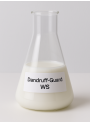
To avoid solubility issues in your water-based shampoo, we highly recommend switching to Dandruff-Guard™ WS (Water Dispersible). This is a liquid version specifically designed to disperse directly into the water phase without needing pre-dissolution in alcohol or glycols, ensuring a clear and stable formula without the risk of crystallization.
2. EDTA Solubility and Alternatives
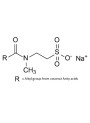
There may be a misunderstanding regarding EDTA solubility. While "EDTA Acid" is poorly soluble, the salts used in cosmetics are water-soluble:
- Disodium EDTA: Soluble in water (pH 4-5).
- Tetrasodium EDTA: Highly soluble in water (pH 8-12).
However, if you are looking for more modern, biodegradable, or easier-to-use alternatives for your AminoWash™ or Gluta-Clean™ systems, the following are excellent water-soluble options:
GLDA (Tetrasodium Glutamate Diacetate):
- Effectiveness: Highly effective and biodegradable. It is a "green" chelator that works exceptionally well in amino acid-based surfactant systems.
- Form: Liquid (47% solution), making it very easy to mix into the water phase.
- Recommendation: This is the top choice for maintaining clarity in premium shampoos.
Phytic Acid:
- Effectiveness: A natural chelator derived from rice. It is slightly more effective than EDTA in some tests and also offers mild scalp benefits.
- Form: Liquid (50% solution).
- Note: It has a very low pH (~1.0), so you must adjust the final pH of your formula after adding it.
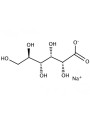
Sodium Gluconate:
- Effectiveness: A milder chelator that also acts as a pH stabilizer.
- Form: Powder, easily soluble in water.
Summary Recommendation for your Formulations:
For the best clarity and stability in your Pre-wash and Bond Repair shampoos, use GLDA at 0.1-0.2%. It is specifically designed to prevent the cloudiness that can sometimes occur when using amino acid surfactants like AminoWash™ in the presence of hard water ions. Additionally, using Dandruff-Guard™ WS will simplify your production process by removing the need for a pre-dissolution step.
Related Products Mentioned
Dandruff-Guard™ (Piroctone Olamine)
Gluta-Clean™ (Disodium Cocoyl Glutamate)
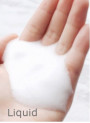
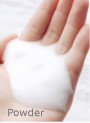
Decyl Glucoside
Disodium EDTA
Isopentyldiol
Phytic Acid (50% Liquid, Natural)
Sodium Gluconate