Yes—there is supporting research, but it should be positioned correctly. The evidence is mainly for EGF / sh-Oligopeptide-1 and broader topical growth-factor preparations, not proof that every finished cosmetic formula using Epidermal Growth Factor (EGF, Recombinant) will produce the same clinical results.
Evidence summary
- Skin barrier support: Research on topical EGF reported increased barrier-related markers such as filaggrin, involucrin, loricrin, and occludin in a barrier-impaired/inflammatory skin model. These markers are relevant to epidermal barrier quality.
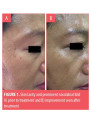
- Anti-aging / photoaging appearance: A 2023 systematic review of topical growth-factor preparations for facial rejuvenation found that many studies reported improvement trends in skin texture, fine lines/wrinkles, and overall skin appearance. However, results depend on the delivery system, concentration, test design, and finished formula.
- Clinical-use context: Some small clinical reports/studies used growth-factor preparations in specific protocols, including procedure-adjacent settings, and observed improvements in texture and wrinkle appearance. These should be used as supportive evidence only, not as a guarantee of results for ordinary daily-use cosmetics.
For this raw material
Epidermal Growth Factor (EGF, Recombinant) is a cosmetic active suitable for positioning around anti-aging, skin-barrier support, and healthier/smoother-looking skin. It should not be claimed as a drug or medical treatment.
Catalog INCI: Water (and) Collagen (and) sh-Oligopeptide-1 (and) sh-Oligopeptide-2 (and) sh-Polypeptide-1 (and) sh-Polypeptide-9 (and) sh-Polypeptide-11 (and) Sodium Chloride (and) Glycerin (and) Butylene Glycol (and) 1,2-Hexanediol. It is therefore a growth-factor complex, not only pure EGF.
Practical use guidance
- General use level: 1–5%, with anti-aging formulas often starting around 3% for lab trials.
- Add at the final cool-down step, when the formula is below 40°C; around 25°C is preferred.
- Suitable pH range for the raw material: about 3.5–6.5; catalog guidance notes pH 3–5 as most stable.
- Store the raw material refrigerated at 4–8°C, protected from light.
- Final product performance still depends on formula pH, preservation, packaging, peptide stability, storage, and actual stability/compatibility testing.
Recommended cosmetic claim direction: “helps support skin renewal,” “helps improve the appearance of fine lines,” “supports smoother-looking skin,” and “helps support the skin barrier.” Avoid claims such as wound healing, treating dermatitis/acne, scar repair, injection use, or medical post-procedure use unless the finished product is specifically tested and regulated for that purpose.