Shampoo Formula for Soft, Smooth, Tangle-Free Hair
Question
Could you provide a formula for a shampoo that focuses on making hair soft, smooth, and tangle-free?
Answer
Shampoo Formula for Soft, Smooth, and Tangle-Free Hair
To create a shampoo formula that focuses on making hair soft, smooth, and tangle-free, you need to incorporate conditioning agents into your shampoo base. These ingredients help to coat the hair shaft, reduce friction, and improve manageability.
Here are some key conditioning ingredients suitable for shampoo formulations:
- Silicone Hi-Cond: A liquid silicone that easily mixes with water. It provides excellent conditioning, making hair soft, smooth, and helping to prevent tangling by coating the hair fibers. Typical usage in shampoo is 0.5-1.5%.
- Hair-Cond™ SM (Small Particle Dimethicone Emulsion): This silicone emulsion is designed to mix with water and is effective for improving dry combing, reducing tangling, and adding softness to the hair. Typical usage in shampoo is 0.5-1.5%.
- HairSoft™ 843: An organosilicone copolymer that offers excellent conditioning without build-up. It significantly improves wet combability, provides silky softness, and helps control fly-aways. It is suitable for clear shampoo formulations. Recommended usage in conditioning shampoo is around 3% (can be used from 0.1-5%).
- Hair-Cond™ XL (Large Particle Dimethicone Emulsion): Similar to Hair-Cond™ SM, this silicone emulsion mixes with water and is good for reducing frizz, adding shine, and making wet hair easier to comb. Typical usage in shampoo is 0.5-1.5%.
- Hair-Cond™ 0949: A cationic silicone emulsion that is an effective conditioning additive for shampoos. It helps reduce wet combing time and leaves a lightweight feel on dried hair. Typical usage in shampoo is 0.1-5%.
- Hair-Cond™ Silk PMF: A microemulsion of a quaternized silicone that provides lightweight conditioning, reduces wet and dry combing forces, and gives a silk-like softness without heaviness. Suitable for shampoos at 3-5% as-received.
Other conditioning options include:
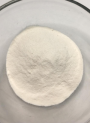
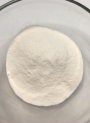
- Poly-Conditioner Pro (400 mPa.s or 30000 mPa.s): A silicone-free option (Polyquaternium-10) that acts as a conditioning and thickening agent. It helps coat the hair for softness and smoothness, suitable for silicone-free formulas or in combination with silicones. Usage rate is typically 0.1-0.5%.
- Clear-Cond™ (Quaternium-80): A highly effective, water-soluble conditioning agent that provides good performance and can be used in clear formulas. Usage in shampoo is typically 0.2-2%.
- Chito-HD™: A natural hair conditioner derived from Chitosan that can coat the hair well and helps prevent tangling. Usage rate is typically 0.1-2.0%.
- Cola-Cond™: A conditioning agent that brings beneficial fatty acids and has a positive charge to adhere well to hair for long-lasting conditioning. Usage rate in shampoo is typically 0.1-3.0%.
Basic Shampoo Formula Structure:
A typical shampoo formula consists of:
- Surfactants: The main cleansing agents (e.g., SLES, CAPB, or a sulfate-free base). These form the base of your shampoo.
- Conditioning Agent(s): Add one or more of the ingredients mentioned above to provide softness, smoothness, and detangling properties.
- Thickener: To achieve the desired viscosity.
- pH Adjuster: To set the pH to a suitable range for hair and scalp (usually slightly acidic).
- Preservative: To prevent microbial growth.
- Fragrance and Colorant (Optional): For aesthetic appeal.
- Water: The main solvent.
When formulating, you would typically mix the surfactants and water first, then add the conditioning agent(s) according to their recommended mixing instructions (some mix directly in water, others might need specific conditions), followed by thickeners, pH adjusters, preservatives, and finally fragrance and colorant.
Choosing the right conditioning agent(s) and their concentration will depend on the desired level of conditioning and the overall shampoo formula. Experimentation is often needed to find the optimal balance.
Updated Review: May 2026
This section was added after reviewing the original answer against current product availability and formulation knowledge at the stated point in time.
Update 2026-05-24
The 2016 guidance is still usable, but conditioner choice should now be selected according to the shampoo target. If the shampoo must remain clear, do not assume every water-dispersible silicone will be clear; silicone emulsions such as Silicone Hi-Cond, Hair-Cond™ SM, Hair-Cond™ XL, Hair-Cond™ 0949, and Hair-Cond™ Silk PMF can give strong slip and detangling, but may make the formula milky/cloudy and can feel heavy if overdosed. For clear or silicone-free formulas, consider water-soluble or cationic-polymer options such as HairSoft™ 843, Clear-Cond™, Poly-Conditioner Pro, Polyquaternium-67, Chito-HD™, or Cola-Cond™ depending on the desired feel and formula type.
Start at the low end of the recommended use range and increase only after wet-combing, dry-combing, foam, rinse feel, clarity, viscosity, pH, and stability tests. For cationic polymers, hydrate/dissolve properly in the water phase before combining with the main surfactant phase unless the product instructions specify otherwise. Keep the finished shampoo in a mild hair-compatible range, commonly around pH 5–6 when compatible with the selected ingredients, and always stay within each ingredient’s stated pH range. Polyquaternium-67 is a useful current option for modern conditioning shampoos because it can support detangling, slip, antistatic benefit, clarity, and low-buildup feel, but it should still be bench-tested in the actual surfactant system.
References: Robbins, Chemical and Physical Behavior of Human Hair, 5th ed.; Godwin, Applied Polymer Science in Personal Care.
Related Products Mentioned
Silicone Hi-Cond
Poly-Conditioner Pro (400 mPa.s)
Poly-Conditioner Pro (30000 mPa.s)
Clear-Cond™ (Quaternium-80)

Hair-Cond™ Silk PMF