Simple Solid Perfume Formula for 100 Tins and Fixing Separation
Question
Requesting a simple solid perfume formula
I want to make a simple, most cost-saving solid perfume to use as conference souvenirs, total 100 tins, 5 grams each. What do I need to use and how much?
Thank you.
Additional questions
- Do I need to use a preservative too?
- Which preservative should I use?
- Can I use coconut oil for cooking?
- Or can I use palm oil?
Thank you.
- Can I use olive oil?
- And what about almond oil, can it be used?
Problem after trying to make it
I tried making it already. The perfume and oil separated. After pouring into the tins, the perfume was at the bottom, and the wax hardened as a white layer on top. How should I fix this?
Formula and method I tried
- coconut oil 50 %
- beeswax 25%
- fragrance compound 24.5%
- Vitamin E acetate 0.5 %
I melted the wax and oil together using a microwave. After taking it out of the oven, I measured the temp ~ 60 c, added the fragrance and vitamin E, kept stirring, then dropped it into aluminum tins.
Answer
Simple Solid Perfume Formula (for 100 pieces, 5g each)
Based on your goal to create simple, cost-effective solid perfumes for your conference souvenirs and the issue you encountered with separation, the key to achieving a stable mixture is to use an emulsifier or blender like Oil Blender.
The formula provided previously, with the addition of Oil Blender to help combine the oil/fragrance phase with the wax, should resolve the separation issue. Here is the adjusted formula and the quantities needed for a total batch of 500g (enough for 100 pieces of 5g each):
Formula (Total 100%)
- Fractionated Coconut Oil: 47% (235 g)
- Natural White Beeswax: 25% (125 g)
- Fragrance Compound: 24.5% (122.5 g)
- Vitamin E (Tocopheryl Acetate): 0.5% (2.5 g)
- Oil Blender: 3% (15 g)
Total: 100% (500 g)
Instructions:
- Combine Fractionated Coconut Oil, Natural White Beeswax, and Oil Blender in a heat-safe container.
- Gently heat the mixture (e.g., using a microwave or double boiler) until the beeswax is completely melted and all ingredients are combined. Aim for a temperature around 60°C as you did before.
- Remove from heat and let the mixture cool slightly, but not so much that it starts to solidify.
- Add the Fragrance Compound and Vitamin E (Tocopheryl Acetate) to the warm mixture.
- Stir well to ensure all ingredients are evenly distributed.
- Quickly pour the mixture into your aluminum containers before it cools and hardens.
- Allow to cool completely at room temperature until solid.
Regarding Preservatives:
As mentioned previously, since this formula does not contain water, a preservative is generally not necessary for microbial growth. However, if the packaging or usage exposes the product to moisture, you may consider adding a preservative for extra security.
If you choose to add a preservative, Mild Preserved Eco is recommended at a rate of 1% of the total formula. If you add 1% Mild Preserved Eco, you would reduce the Fractionated Coconut Oil by 1% to maintain the total at 100%.
- Mild Preserved Eco: 1% (5 g)
- Adjusted Fractionated Coconut Oil: 46% (230 g)
Recommended Oils:
For the oil component, it is crucial to use an oil that does not go rancid easily to avoid affecting the fragrance over time. Recommended options include:
Using cooking oils like regular coconut oil or palm oil is not recommended due to their tendency to develop rancid odors.
Updated Review: May 2026
This section was added after reviewing the original answer against current product availability and formulation knowledge at the stated point in time.
Update 2026-05-17
While the traditional beeswax and oil system remains a workable approach, modern formulation standards and safety regulations have evolved.
Fragrance Safety and Compliance: A 24.5% fragrance level cannot be confirmed safe from the percentage alone; we need the latest IFRA document for the exact fragrance compound. Solid perfume is treated as IFRA Category 4, so the fragrance supplier must confirm that this exact fragrance compound is allowed at 24.5% or higher in Category 4. If the maximum allowed level is lower, the formula must reduce the fragrance level or change to a fragrance compound designed for higher Category 4 use. Note that an IFRA certificate supports fragrance-use compliance but does not replace the finished-product cosmetic safety assessment or local labeling requirements.
Modern Base Alternatives: For a modern solid perfume, a purpose-built Oil Stick Base is usually a better development direction than relying only on beeswax, carrier oil, and a blender. It is designed for high fragrance compatibility and provides a smoother, more professional application. However, it still needs compatibility and stability testing with your chosen fragrance.
Clarity and Appearance: Beeswax systems are often naturally opaque or waxy. If your target is a clear, elegant, professional-feeling stick, the base system must be selected and tested for that appearance rather than assuming beeswax will give clarity.
Longevity and Fixatives: Fixatives such as Flora Fix™ or Musk Fix™ may improve the scent profile or perceived longevity, but they do not guarantee longer wear and must also be checked for IFRA compliance and total fragrance-load contribution.
Stability and Process: Oil Blender can help the old beeswax/oil system stay more uniform, but it does not make a high-fragrance formula automatically safe or compliant. If using the beeswax system, pre-mix the fragrance with the liquid oil phase and Oil Blender before combining with the melted wax. Always perform physical stability testing for "sweating" (oil separation), fragrance bleeding, and package compatibility.
The safest update is to first confirm IFRA Category 4 allowance, then run stability and sensory trials comparing the old beeswax system against the newer stick-base approach.
References:
- IFRA, Guidance for the Use of IFRA Standards, 51st Amendment, 2023.
- IFRA Standards documentation page, 2026.
Related Products Mentioned
Vitamin E (Tocopheryl Acetate)
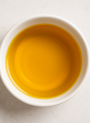
Jojoba Oil (Golden - Deodorized)
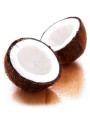
Fractionated Coconut Oil
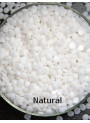
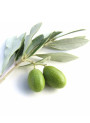
Olive CLEAR (Hydrogenated Olive Oil)
Mild Preserved Eco™ (Preservative-Free)

Flora Fix ™ (long lasting fragrance)