Solving White Surface Issues in Liquid Foundation
Question
Hello, I added Titanium Dioxide 400nm WaterProof™ (Super Coverage) in my foundation. I have dispersed it with pigment in oil, but the white colour still appears on the product surface. May I ask is there any way to solve it? Thank you.
Mixing Process:
- Mix water and oil parts using an overhead stirrer.
- Add the water part to the oil part.
- Homogenize for 5 minutes.
- Return to the overhead stirrer to add the preservative and the last two ingredients.

Answer
The issue of white color appearing on the surface of your foundation is likely caused by pigment separation or incomplete dispersion of the powders, particularly those added at the end of your process.
Potential Causes and Solutions
Inappropriate Titanium Dioxide Grade:
The Titanium Dioxide 400nm WaterProof™ (Super Coverage) you are using is specifically optimized for compact and pressed powders to provide maximum coverage and skin adhesion. In a liquid foundation (Water-in-Oil/Silicone emulsion), this grade can be difficult to stabilize and may settle or "float" if not perfectly dispersed.- Solution: Consider switching to a grade designed for liquid systems, such as Titanium Dioxide FoundationPro™, which uses an Isopropyl Titanium Triisostearate treatment for better compatibility and stability in liquid foundations.
Post-Addition of Powders without Homogenization:
You are adding Polymethylsilsesquioxane and Aluminum Starch Octenylsuccinate (total 6%) at the final stage using only an overhead stirrer. These are very light, fine white powders. Overhead stirring is often insufficient to properly "wet" and incorporate these powders into a finished emulsion, causing them to remain on the surface or form a white film.- Solution: Move these powders to the oil phase and homogenize them along with your pigments before emulsification. Alternatively, if you must add them at the end, you must homogenize the formula again to ensure they are fully incorporated.
Pigment Dispersion in the Oil Phase:
Even though you are using Lauryl PEG-10 Tris(Trimethylsiloxy)silylethyl Dimethicone (which acts as both an emulsifier and a dispersant), pigments require high-shear force to break down aggregates.- Solution: Ensure the Titanium Dioxide and color pigments are ground or homogenized into the oil phase (C12-15 Alkyl Benzoate, Diisostearyl Malate, etc.) for at least 10–15 minutes before adding the water phase.
Suspension Stability:
Your formula contains Disteardimonium Hectorite, which is excellent for suspending pigments. However, if the white color is appearing after the product sits, it indicates the "yield value" (suspension power) of the oil phase is too low.- Solution: Ensure the Hectorite is fully "activated" by the high-shear homogenization process to create a proper network that holds the pigments in place.
Recommended Process Adjustment
- Combine all Oil Phase ingredients, including all pigments and white powders (Polymethylsilsesquioxane and Aluminum Starch Octenylsuccinate).
- Homogenize this oil/pigment mixture at high speed to ensure complete dispersion.
- Slowly add the Water Phase to the Oil Phase while stirring.
- Homogenize the final emulsion for 5–10 minutes to ensure stability and uniform color.
- Add the preservative at the end with gentle stirring.
Related Products Mentioned
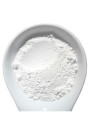
Titanium Dioxide FoundationPro™