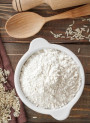
Techniques for dispersing Rice Starch in emulsions without clumping
Question
I incorporated the rice starch during the cool-down phase of the manufacturing of an emulsion, but it created a lot of clumps that took much time to dissolve.
Do you have any advice for easier dissolution of the rice starch? Thanks!
Answer
To ensure a smooth incorporation of Ricesorb™ (Rice Starch) into your emulsion without clumping, it is important to understand that starch does not "dissolve" in the traditional sense; rather, it disperses as fine particles. When added directly to a finished, viscous emulsion, the powder particles often clump together because the outer layer hydrates quickly, forming a barrier that prevents the inside from wetting (often called "fish eyes").
Here are the recommended techniques for easier dispersion:
1. The Slurry Method (Highly Recommended)
Instead of adding the dry powder directly to the emulsion, pre-mix the Ricesorb™ with a small amount of a "carrier" liquid from your formula before adding it to the main batch.
- Polyol Slurry: Mix the rice starch with a polyol like Glycerin or Butylene Glycol in a 1:1 or 1:2 ratio. Stir until it forms a smooth, lump-free paste (slurry), then pour this slurry into your emulsion during the cool-down phase while stirring.
- Oil Slurry: If your formula has a high oil content, you can also disperse the starch in a small portion of the oil phase (at room temperature) before adding it to the emulsion.
2. Sifting and High-Shear Mixing
- Slow Addition: If you must add it directly, use a fine sieve to sift the powder slowly into the emulsion while using a high-speed stirrer or homogenizer.
- Homogenization: Using a homogenizer (high-shear mixer) for a short period after adding the starch will help break down any small aggregates that may have formed.
3. Temperature Control
- Stay below 70°C: As noted in the Ricesorb™ specifications, avoid heating the starch above 70°C unless you specifically want to create a gel texture. For oil-absorption and a powdery skin feel, it should remain in its granular form. Adding it during the cool-down phase (around 40°C) is ideal.
4. Water Phase Incorporation
- If you are not heating your water phase above 70°C, you can disperse the Ricesorb™ in the water phase at the very beginning using a high-speed stirrer before adding thickeners or emulsifiers.
Note on Ectoine
Since you are also using Ectoine (Ectoin, from Bio-fermentation), please note that Ectoine is highly water-soluble and stable. It can be dissolved in the water phase at any stage (it can withstand up to 80°C). It will not interfere with the dispersion of the rice starch, but ensuring the starch is properly slurried will result in a much more professional and stable final texture.
Related Products Mentioned

Glycerin (USP/Food Grade)
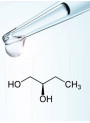
Butylene Glycol