Tips for Using pH Paper vs. Digital pH Meter in Cosmetic Formulations
Question
I'm having trouble using pH paper to measure the pH of cosmetic formulations, especially with different textures like liquids (essences, serums) and creams. The 4-color strips are confusing when the colors don't match the chart exactly, and I'm unsure how to interpret values that aren't whole numbers. I've also noticed color bleeding from the paper. Could you provide guidance on:
- The correct method for using pH paper with different product textures.
- How to accurately read and interpret the 4-color strip, especially for decimal pH values.
- Whether color bleeding from the paper during testing is normal and safe.
- Comparing the practicality and precision of pH paper versus a digital pH meter, particularly for small batch formulations (e.g., 30g), considering the need to potentially dilute thick formulas with
Purified Waterfor measurement and the cleaning requirements for a digital meter.
Answer
Hello! I understand that using pH paper for different product textures can be confusing. The advice from chalermlap and cosmeceutical7 is very helpful. Here's a summary and some additional guidance:
How to Use pH Paper:
- For liquids (e.g., essences, serums): Dip the paper into the liquid briefly (no need to soak for the full 5 seconds as some instructions might suggest). Just ensure the paper is thoroughly wet, then remove it immediately.
- For thicker products (e.g., creams): If direct dipping isn't possible, you can dab a small amount of the cream onto the paper covering the color pads. Alternatively, you can mix a small amount of the cream sample with Purified Water to make it liquid enough to dip the paper (measuring the water phase before forming the cream, as suggested by chalermlap, is also a good method).
- After dipping or dabbing, remove the paper and let it sit for about 15-30 seconds for the color to fully develop (no need to wait until completely dry). Then, compare the colors to the chart on the box.
Issue of Color Bleed:
- It's normal for some color from the paper to bleed when it gets wet. These colors are the indicators used for pH measurement. In the small amounts that bleed during testing, they are generally not harmful to cosmetic products (as anticipated by chalermlap).
Reading the 4-Color Strip:
- Since product pH values are often not exact whole numbers (e.g., might be 4.5, 5.2), the colors on the paper strip usually won't match a single row on the color chart perfectly across all 4 pads.
- The way to read the value is to find the row on the chart where the colors on your test strip are the closest overall match across all (or most) 4 pads. You might need to compare between two pH values to estimate a decimal value (e.g., if the colors are halfway between pH 4 and 5, you might estimate the pH is around 4.5).
- Even if the top color pad doesn't match as well as the bottom ones, try to look at the overall pattern of all 4 pads. However, if the bottom pads show a clearer match, you can use them as a primary guide for estimation. With practice, you'll become more skilled at comparing the colors.
-
- As other members suggested, a digital pH meter provides more precise values and reads out a number directly, which is very convenient.
- Considerations for digital meters include the need for proper care of the electrode (e.g., storing in a dedicated solution like pH Electrode Storage Solution) and regular calibration with standard solutions to ensure accurate readings.
I hope this information is helpful for using your pH paper! Feel free to ask if you have more questions.
Updated Review: May 2026
This section was added after reviewing the original answer against current product availability and formulation knowledge at the stated point in time.
Update 2026-05-24: pH paper / 4-color strips are still useful for quick approximate screening, especially for very small batches where using a meter may waste too much sample. For liquids such as essence or serum, wet all color pads evenly, wait the strip manufacturer’s specified reading time, and read under good white light. If the color falls between two chart values, report it as an approximate range or estimated midpoint, for example pH 4–5 or about pH 4.5; do not treat strip readings as exact decimal values.
For creams, gels, and viscous emulsions, direct strip testing can be affected by uneven wetting, opacity, pigments, oil phase, surfactants, and texture, so it should be considered only an estimate. A small sample may be diluted or dispersed with Purified Water to make checking possible, but the result is the pH of the diluted dispersion, not necessarily the exact pH of the original undiluted cream.
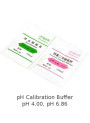
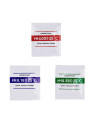
For preservative selection, active stability, irritation-risk control, product release, or troubleshooting, use a calibrated Digital pH meter instead of relying only on pH paper. Calibrate with pH Calibration Buffer solutions near the expected range, rinse the electrode between samples, and store the electrode in pH Electrode Storage Solution (3M KCL); do not leave the electrode dry or store it long-term in purified water. Slight color bleeding from pH paper can occur because the indicator dyes are designed to wet/dissolve during testing, but do not dip used pH paper back into the main batch and discard the tested sample portion. If a formal measured value is needed, a pH Measurement Report service can be used with a submitted sample.
References: ASTM E70 / glass-electrode pH measurement; USP <791> pH measurement and buffer calibration principles.
Related Products Mentioned

Purified Water, TDS Limit 1PPM)
pH Electrode Storage Solution (3M KCL)
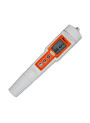
Digital pH meter (For Laboratory)