Troubleshooting Pigment Dispersion and Sedimentation in Foundation Sunscreen
Asked by: sarisa.200347
On: May 13, 2026
Product Type:
Cosmetics
Answered
Question
Please provide detailed instructions for using Iron Oxides EasyMix. I tried using them in a foundation sunscreen formula, but the black pigment settled, and there were red streaks in the beaker when stirring.
I would like advice on:
- What can these pigments be dissolved in?
- Is a homogenizer required? If so, what speed should be used?
- Recommendations for the ingredient percentages and the process for creating the foundation sunscreen.
- How to improve pigment dispersion, as my current trial separated and had black sediment after centrifuging.
Current Formula (W/O):
Part A
- Water: 41.20%
- Disodium EDTA: 0.2%
- Glycereth-26: 0.5%
- Butylene glycol: 1%
- Carbopol Ultrez 21: 0.2%
- TEA: 0.2%
Part B
- Uvinul A Plus Granular: 3.5%
- Uvinul T 150: 2.5%
- C12-15 Alkyl Benzoate: 4%
- Lipidsoft lite: 2%
- Milk lotion maker: 3.5%
- Cutina GMS SE: 1%
- Eumulgin B2: 2.5%
- BHT: 0.2%
- Foundation Color: 0.5% (Yellow Iron Oxides EasyMix™: 83.5%, Red Iron Oxides EasyMix™: 13.7%, Black Iron Oxides EasyMix™: 2.8%)
Part C
- Tinosorb A2B: 5%
Part D
- Sicare 2955: 8%
- KSP-100: 5%
- Mirasil Cetyl DM: 3%
Part D (Repeated in original)
- CreamMaker EG: 2%
Part F
- Water: 5%
- Niacinamide: 3%
- Double Hyaluron Liquid: 0.5%
- Aloe Vera Extract: 0.5%
- Natural Extract: 1%
Part G
- Fragrance: 0.5%
- Phenoxyethanol & Ethylhexylglycerin: 1%

Answer
Troubleshooting Your Foundation Sunscreen Formula
The issues you are experiencing—black pigment settling and red streaks—are common when working with high-load pigmented systems. Based on your formula and the characteristics of the ingredients, here is a technical analysis and a recommended process.
1. Understanding the Pigment Behavior
- Insolubility: It is important to note that Yellow Iron Oxides EasyMix™, Red Iron Oxides EasyMix™, and Black Iron Oxides EasyMix™ are insoluble solid pigments. They do not "dissolve" in water or oil; instead, they must be wetted, dispersed, and deagglomerated.
- Surface Coating: EasyMix™ pigments are methicone-coated (hydrophobic). This means they are designed to be compatible with oils and silicones, not water.
- Red Streaks: This usually indicates incomplete deagglomeration or "color development" of the red iron oxide. The pigment particles are still clumped together and break apart only when sheared (like during stirring or application), leaving streaks.
- Black Sediment: Black iron oxide is very dense. Settling occurs if the particles are not fully wetted or if the final emulsion lacks sufficient "yield value" (the ability of a thickened fluid to suspend heavy particles).
2. Formula Observations
- Emulsion Type: Although you mentioned this is a W/O formula, the combination of Carbomer U21, Triethanolamine 99%, CreamMaker EG™, and Milk Lotion Maker™ indicates an Oil-in-Water (O/W) emulsion.
- Formula Total: Your current percentages sum to 97.5%. You should adjust the water content to reach 100.0% before finalizing stability tests.
- BHT Level: The usage of Butylated Hydroxytoluene (BHT) at 0.2% is higher than the typical catalog recommendation of 0.01–0.1%. Consider reducing this to 0.1%.
- UV Filter Handling: Bisoctrizole (Tinosorb A2B) is a water-dispersed particulate filter. It should be handled as a water-phase addition, while DHHB Ultra-Pure™ and Ethylhexyl Triazone must be fully dissolved in the oil phase with heat.
3. Recommended Manufacturing Process
To achieve a smooth, stable dispersion, do not add dry pigments directly to the main batch. Follow these steps:
Prepare a Pigment Paste (Concentrate):
- Pre-blend the dry iron oxides.
- Mix them into a portion of your oil/silicone phase (e.g., LipidSoft™ C1215, LipidSoft™ Lite, and Cetyl Dimethicone). A trial ratio of 1 part pigment to 3–5 parts vehicle is a good starting point.
- Homogenization: Use a rotor-stator homogenizer on this paste. A lab-trial starting point is 3,000–6,000 rpm for 3–10 minutes. This step is critical to break down agglomerates and prevent streaks.
Oil Phase Preparation:
- Combine the remaining oils, emulsifiers like Glyceryl Stearate SE, and oil-soluble sunscreens (DHHB Ultra-Pure™, Ethylhexyl Triazone).
- Heat to 70–75°C and stir until the sunscreens are completely dissolved.
- Incorporate the pre-homogenized pigment paste into this oil phase.
Water Phase Preparation:
- Prepare the water phase with Carbomer U21, Safe-B3™, and other water-soluble components. Heat to a similar temperature as the oil phase.
Emulsification:
- Add the oil phase to the water phase while mixing under high shear to form the primary emulsion.
- Neutralize the Carbomer with Triethanolamine 99% to reach the desired pH (typically 6.0–7.0 for this system) and viscosity.
Cool Down and Post-Addition:
- Add Bisoctrizole, Double Hyaluron Liquid, extracts, and preservatives (Phenoxyethanol and Ethylhexylglycerin) during the cool-down phase (below 40°C).
4. Improving Stability
If settling persists in the centrifuge:
- Increase Yield Value: Try increasing Carbomer U21 to 0.3–0.5% to provide better suspension power.
- Pre-wet Powders: Ensure silicone powders like KSP-100 are pre-dispersed in silicone/oil before addition to prevent lumps.
Relevant References
Sources supporting the key technical claims in this answer
Harry’s Cosmeticology, 9th ed., Chemical Publishing, 2015.
Tadros, T. F., Emulsion Formation and Stability, Wiley-VCH, 2013.
Barnes, Hutton, and Walters, An Introduction to Rheology, Elsevier, 1989.
Related Products Mentioned

Safe-B3™ (Vitamin B3, Niacinamide)
Cosmetics
Triethanolamine 99%
Cosmetics
Phenoxyethanol (Extra Pure)
Cosmetics
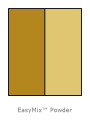
Yellow Iron Oxides EasyMix™
Cosmetics
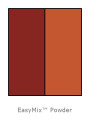
Red Iron Oxides EasyMix™
Cosmetics
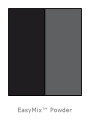
Black Iron Oxides EasyMix™
Cosmetics
Double Hyaluron Liquid
Cosmetics
Ethylhexylglycerin
Cosmetics

Milk Lotion Maker™
Cosmetics
Butylated Hydroxytoluene (BHT)
Cosmetics
CreamMaker EG™ (e.q. Simulgel EG)
Cosmetics