Vitamin C Ester Stability and Comparison with Vitamin C E Ferulic
Question
# Inquiry about Vitamin C Ester (Ascorbyl Palmitate)
1. Is it necessary to include `Protec™ OX` and `Protec™ UV` in the formulation to protect `Vitamin C` from degradation? If so, how do they help?
2. How does this ingredient differ from `Vitamin C E Ferulic`, and which of the two is considered the best?
Answer
Regarding your questions about Vitamin C Ester (Ascorbyl Palmitate) and Vitamin C E Ferulic, here are the details:
1. Is it necessary to use Protec™ OX and Protec™ UV?
Yes, it is highly recommended.
Although Vitamin C Ester (Ascorbyl Palmitate) is more stable than pure Vitamin C (L-Ascorbic Acid), it is still an oil-soluble derivative that can undergo oxidation and degrade when exposed to light and air.
- Protec™ OX: Helps prevent the oxidation process (free radicals) of the ingredients in the formula.
- Protec™ UV: Protects the ingredients from degradation caused by UV light, especially important if using transparent packaging.
2. Difference between Vitamin C Ester and Vitamin C E Ferulic
| Feature | Vitamin C Ester (Ascorbyl Palmitate) | Vitamin C E Ferulic |
|---|---|---|
| Form of Vit C | Ascorbyl Palmitate (Derivative) | L-Ascorbic Acid (Pure Vitamin C) |
| Solubility | Oil-soluble | Water-soluble |
| Stability | High stability | Low stability (requires stabilizers) |
| Efficacy | Moderate (mainly antioxidant) | Highest (immediate skin use) |
| Best for | Oil-based formulas, sensitive skin | Water-based serums, maximum results |
- Vitamin C E Ferulic uses a specific technology combining 15% L-Ascorbic Acid with Vitamin E and Ferulic Acid. This combination significantly increases the stability of pure Vitamin C and boosts its antioxidant effectiveness by several times compared to using Vitamin C alone.
3. Which one is the "Best"?
The "best" choice depends on your formulation goals:
- Choose Vitamin C E Ferulic if you want the maximum anti-aging and brightening results. It is the gold standard for efficacy because the skin can use it immediately without conversion.
- Choose Vitamin C Ester if you are making an oil-based product (like a face oil or anhydrous balm) or if you have very sensitive skin that cannot tolerate the low pH required for pure Vitamin C.
Note: Vitamin C Ester (Ascorbyl Palmitate) should not be used in the same formula as Vitamin B3 (Niacinamide).
Related Products Mentioned
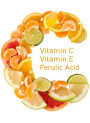
Vitamin C E Ferulic