Browse Questions and Answers
Avg response: 24 HrsFilter Questions
20 of 14228 results
How do I adjust the pH of **Oil Soap™ WW-CF (MIPA-Laureth sulfate, High Foaming Oil-Based Liquid Soap)**? * The product description mentioned to check instructions below, but I couldn't find any information provided. * Could you please explain the procedure for lowering the pH of this ingredient?
I would like to create a **Whipped Body Butter** with a texture similar to whipped cream. I'm looking for an economical, simple, and straightforward process. The base should be **Shea Butter** with a natural, soft scent like **Warm Vanilla** or **Coconut**, focusing on a buttery aroma that doesn't feel synthetic or irritating. The goal is to nourish dry and itchy skin after a warm bath. I want the formula to lock in moisture effectively by including a complete set of **Occlusives**, **Humectants**, and **Emollients** to keep the skin soft all day and provide a relaxing scent for sleep. I have the following questions: * How is this formula? Should I add or remove anything? * Which oil should I choose from my list? * Between **Panthenol** and **Sodium PCA**, which one is better? * Which preservative should I use? * If there are any alternative ingredients that are cheaper or easier to work with, please suggest them. * What are the step-by-step instructions? * If the "Butter" texture is too difficult to make, I am open to a cream texture in a squeeze tube. **Planned Formulation:** **Water Phase – 55%** * `Distilled Water` — 52% → 52 g * `Glycerin` — 3% → 3 g **Oil Phase – 35%** * `Shea Butter` — 20% → 30 g * `Jojoba Oil` or `Grape Seed Oil` or `Sweet Almond Oil` or `Coconut Oil` — 5% → 5 g **Emulsifier – 5%** * `Olivem 1000` — 5% → 5 g **Cool-Down Phase – 5%** * `Preservative` — 1% → 1 g * `Vitamin E (Tocopheryl Acetate)` — 0.5% → 0.5 g * `Vanilla Oleoresin / Fragrance` — 0.3–0.5% → 0.3–0.5 g * `Panthenol (B5)` — 1% → 1 g **OR** `Sodium PCA` — 0.5% → 0.5 g

Could you please provide a formulation guide for a foundation sunscreen with the following specifications: * `SPF 50` protection * High coverage to conceal wrinkles and replace the use of pressed powder * Texture: Silicone-based * Sunscreen type: Hybrid (Mixed Physical and Chemical)
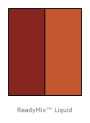
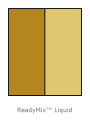
I have the following questions regarding the product's specifications: 1. What is the percentage of natural origin of the product according to **ISO 16128**? 2. In your "Halal statement" document, you indicate that it is 100% synthetic, while in the description you state that it is partly of natural origin. Which information is correct? 3. If it is from natural origin, is it palm oil free?
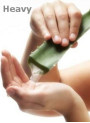
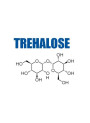
If I use other liquids instead of water to prepare a jelly mask, will it affect the ability to peel off properly? Example liquids I am considering: * `Hyaluronic Acid` * `Aloe Juice` * `Trehalose` * `Glycerin` * `Moisturizing Amino Acids` Are there any specific ingredients I should avoid adding because they are incompatible? When I tried mixing some of these into my water base at a 3:1 ratio, the mask did not peel well.
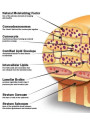
I am planning to use `Oil Soap™ WW-CF` (MIPA-Laureth sulfate, High Foaming Oil-Based Liquid Soap) in my formulation and have the following questions: * Is it mandatory to add Vitamin E to the formula, or can it be omitted? * Is there a version of `Oil Soap™ WW-CF` available that already contains Vitamin E in the mixture?
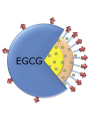
I have the following questions regarding the purchase and application of `ActiveRelease™ EGCG (Epigallocatechin Gallate 20% Encapsulation)`: * **Lot Availability:** Once the current lot of this ingredient reaches its expiration date, will a new lot be made available for purchase to ensure continuity? * **Product Expiration:** If I use this ingredient in a formulation, is it mandatory to consume the finished product before the original expiration date of the raw material?
I would like to inquire about the technical specifications and origin of **Oil Thick™ Soft (Dextrin Palmitate)**: * Is this ingredient of natural origin? If so, what is the specific source or origin of the material? * What is the percentage of natural origin (Natural Origin Index) for this product? * Is this ingredient palm-oil free?
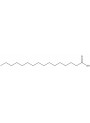
I have a batch of `Ambroxan` with a listed expiration date of **2026-07-17**. I would like to clarify the following regarding its stability and storage: * Does the expiration date (2026-07-17) indicate true chemical degradation, or is it typically a re-test date in the fragrance industry? * What is the expected shelf life for `Ambroxan` in its **neat (crystal) form** if stored under optimal conditions? * If I prepare a **10% dilution** of `Ambroxan` in `Dipropylene Glycol (DPG)`, how does this impact the expiration date and overall stability? * Approximately how long can I realistically stock this material in both its neat form and as a dilution in `DPG`?

I would like to request assistance regarding the formulation developed under **Order 252011**. Specifically, I need help with the following: 1. **Cost Calculation:** How can I calculate the approximate production cost of the raw materials per 1 kilogram of the finished product? I would like to know the average cost based on the ingredients used. 2. **Claim Verification:** Based on the ingredients in this custom formulation, can I make marketing claims such as: * **Paraben-free** * **Silicone-free** * **Alcohol-free** * **Fragrance-free** * **Mineral oil-free** Please provide a guideline or method for determining these costs and verifying these claims.
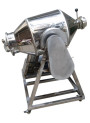
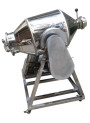
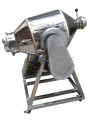
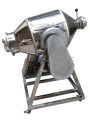
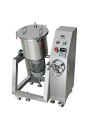
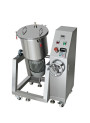
I am looking for a recommendation for a machine suitable for producing a body scrub. The product will be a salt-based scrub. Could you please suggest which type of mixer would be best for this type of formulation to ensure good dispersion of oils and actives while maintaining the integrity and texture of the salt crystals?
I am developing a **water-based lip serum** with a target **pH of 3.5**. I plan to use `K940 Preservative` in this formulation. * Is `K940 Preservative` stable and effective at a pH of 3.5? * Given that it is a water-based formula, are there any solubility issues I should be aware of, especially at the recommended usage rates (1.0% – 1.5%)? * What are the best practices for incorporating this preservative into the serum to ensure it dissolves completely?
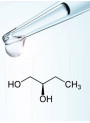
Is `Preserve-BSB™` (equivalent to `Optiphen BSB-W`) suitable for use in a lip serum formulation? Please provide details on the following factors: * **Formulation Type:** Can it be used in both water-based and oil-based (anhydrous) lip serums? * **pH Requirements:** What is the necessary pH range for this preservative to remain effective? * **Sensory Profile:** Are there any concerns regarding taste or scent when applied to the lips? * **Usage Rate:** What is the recommended percentage for the formulation?
I am using `IseFoam™` (Sodium Lauroyl Methyl Isethionate), which comes in flake/pastille form, in a bath bomb formulation. I have a few questions regarding its application: 1. **Mixing Method:** Should I grind the flakes into a fine powder and mix them directly with the dry ingredients, or do I need to dissolve them in water first? 2. **Sticking Issue:** When using a machine mold (mechanical press), the mixture sticks to the mold, although this does not happen when using a manual mold. Could this issue be caused by the `IseFoam™`? How can I resolve this sticking problem in the machine press? 3. **Alternative Surfactants:** Are there any other surfactants recommended for bath bombs that provide high foam and are easier to incorporate into dry-pressed formulations?
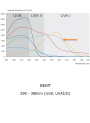
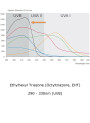
I would like to develop an **anhydrous sunscreen** formulation using the following sun filters and concentrations: * `DHHB` (Diethylamino Hydroxybenzoyl Hexyl Benzoate): 3.5% * `EHT` (Ethylhexyl Triazone): 2.0% * `BEMT` (Bis-Ethylhexyloxyphenol Methoxyphenyl Triazine): 2.2% * `HMS` (Homosalate): 7.0% * `OS` (Octisalate): 4.5% * `Isododecane` (IDD) as the main volatile base Please evaluate if this solvent system is sufficient to keep the formulation stable, particularly regarding the solubility of the powder filters. Do I need to modify the formulation or add specific polar solvents to prevent recrystallization and ensure long-term stability?
I am interested in using `Iso E Super (Anthamber)` in my scented candle formulations to improve scent throw and diffusion. I have a few specific questions regarding its application: * Should I mix `Iso E Super` with the fragrance oil (FO) before adding it to the wax, or can it be added directly during the candle-making process? * Is it compatible with all types of fragrances, or is it limited to specific categories like woody or floral scents? * What is the recommended usage percentage for candle applications?
What is the maximum concentration of `PEG-6 Caprylic/Capric Glycerides` (such as **MakeUp-Wash™**) that can be safely used in leave-on products? Are there different recommendations for general skincare versus cleansing products like Micellar Water?
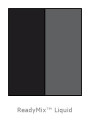
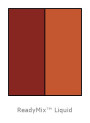
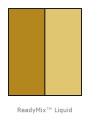
I am developing a W/O (Water in Oil) sunscreen formulation with the following oil phase and active ingredients: * **Oil Phase:** `Coco-Caprylate/Caprate`, `Hydrogenated Polydecene`, `Squalane`, `Isododecane`. * **UV Filters (dissolved with heat):** `DHHB (Diethylamino Hydroxybenzoyl Hexyl Benzoate)`, `Ethylhexyl Triazone`. * **Powders/Dispersants:** `Zinc oxide`, `Titanium dioxide`, `Polyhydroxystearic Acid`. Which type of **ReadyMix™ Iron Oxides Yellow** should I use between the **Polyglyceryl-2 Triisostearate Based** and the **Cyclopentasiloxane Based** version? Please provide the technical reasoning for the recommendation regarding compatibility and stability.
I have purchased the following sunscreen ingredients (Order 255695) and would like to know their optimal pH stability ranges and any specific formulation requirements to ensure their effectiveness: 1. **BEMT** (Bis-Ethylhexyloxyphenol Methoxyphenyl Triazine, e.q. Tinosorb S, Product ID: `772`) 2. **Avobenzone** (Butyl Methoxydibenzoylmethane, Product ID: `267`) Specifically, I need information on: * What is the stable **pH range** for each ingredient in a cosmetic formulation? * Are there any **incompatibilities** with other common sunscreen agents like Zinc Oxide or Titanium Dioxide? * What are the recommended **stabilizers or solvents** for these ingredients to prevent degradation?

I am looking for recommendations for a **water-based hair pomade** formulation. Specifically, I need suitable options for the following components: * **Coloring Agents**: Natural, water-soluble options that maintain formula clarity. * **Antioxidants**: Water-soluble ingredients to prevent oxidation and provide hair benefits. * **Preservatives**: Effective broad-spectrum preservatives compatible with water-based systems. Please suggest specific products that would be appropriate for these requirements.