Browse Questions and Answers
Avg response: 24 HrsFilter Questions
20 of 14228 results
Could you please recommend ingredients or active substances that effectively reduce facial oiliness (sebum control) while ensuring they do not negatively impact the skin's **microbiome**? I am looking for a solution that: - Regulates excess oil production. - Supports or maintains the balance of beneficial bacteria on the skin. - Provides a healthy skin environment without using harsh chemicals that could disrupt the skin's natural ecosystem.


## Request for Pet Perfume Formulations and Recommended Ingredients The user is seeking guidance on creating safe and effective perfumes for pets. The request includes: 1. **Key Ingredients:** What are the recommended products for neutralizing pet odors and providing a safe fragrance base? 2. **Formulation Examples:** Please provide detailed formulas for: * A **Gentle Deodorizing Water-Based Spray** using ingredients like `Pet-O-Clean™`, `Zinc Ricinoleate A30`, and `PEG-40 Hydrogenated Castor Oil`. * A **Long-Lasting Fragrance Spray** utilizing a ready-to-use base like `8 Hours Fragrance Spray Base (Musk-Free)`. 3. **Mixing Instructions:** Step-by-step procedures for combining these ingredients correctly. 4. **Safety Guidelines:** Important precautions regarding pet sensitivity, alcohol content, and application methods.


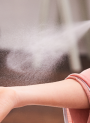
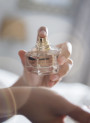
I am formulating an alcohol-based perfume using the following ingredients: * `12H Fix™`: 3% * `LipidSoft™ Lite`: 6% * Perfume Oil * Alcohol I dissolved the `12H Fix™` in `LipidSoft™ Lite` and then added the mixture to the perfume oil and alcohol. However, the resulting solution is slightly cloudy. I would like to ask: 1. Is my mixing method correct? 2. Is `12H Fix™` intended only for oil-based perfumes, or can it be used in alcohol-based formulations as well?
What is the recommended daily dosage for `Krill Oil (Antarctic, 40% Phospholipids, 30% Phosphatidylcholines)`? Please provide specific guidelines for: * General health and maintenance * Heart health or managing lipid levels * Optimal usage instructions and safety precautions
Are `Polyglyceryl-4 Oleate` and `Glyceryl Caprylate` considered to be of natural origin? Please provide a detailed explanation covering: - Their raw material sources - Their primary functions in cosmetic formulations - Their status according to natural certification standards (e.g., **COSMOS**, **Ecocert**)
Does `Carbomer 980` (Benzene-free) require the use of an alkaline substance (neutralizing agent) to form a gel? I would like to clarify the following points: * Is it necessary to add an alkali to create the gel texture? * What is the step-by-step process for creating a clear, thick gel using this ingredient? * Which neutralizing agents are recommended for different types of formulations, such as standard water-based gels versus high-alcohol formulations?
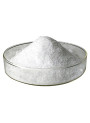
Can `Titanium Zinc NanoLiquid™ DEC` (non-white, low viscosity) be used effectively in an **Oil-in-Water (O/W)** cream formulation? I have attempted to incorporate it into a cream, but the resulting texture is not aesthetically pleasing and lacks smoothness. * What are the specific challenges or limitations of using this mineral dispersion in an O/W system? * How can I improve the stability and appearance of the final product? * Are there specific stabilizers, thickeners, or processing techniques recommended to ensure a smooth, premium feel when using this ingredient?
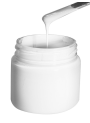
Can the `Antiperspirant / Deodorant Base Cream` be used directly as a finished underarm deodorant or antiperspirant? Does it provide effective sweat and odor control on its own, or does it require the addition of specific active ingredients to function effectively?
I am using `ReadyMix™ Iron Oxides Black` mixed with hair oil, but I am encountering the following issues: 1. **Separation:** After standing for a while, the pigment and the oil separate, with the pigment settling at the bottom. 2. **Poor Adhesion:** The color does not adhere well to white hair as expected. 3. **Color Transfer:** The color rubs off easily onto hands when touching the hair. Could you please recommend additional ingredients for this hair oil formulation (either as a leave-on or rinse-off treatment) that would help the black color stay on the hair longer, prevent transfer, and provide a dry, non-greasy finish?
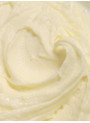
I would like to create a **Whipped Body Butter** using `Shea Butter (Ultra Soft)` as the primary base because I love its natural scent, but I find using it pure to be too sticky on the skin. My requirements for the formulation are as follows: * **Texture:** I want a texture that is fluffy like whipped cream, easy to spread, and absorbs well without leaving a heavy or sticky residue. However, I would still like a slight "glow" similar to the finish of a **Body Oil**. * **Scent:** I am looking for a warm, gourmand scent similar to *Warm Vanilla Sugar* from Bath & Body Works. I am considering adding `Cocoa Butter` to see if its natural aroma will complement a Vanilla fragrance oil to achieve this. * **Benefits:** The product should focus on skin nourishment, keeping the skin smooth, hydrated, and healthy-looking. * **Skin Type:** It must be suitable for **sensitive skin**. Please provide a recommended formula and the specific process required to achieve the desired whipped consistency.
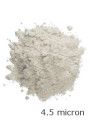
I am planning to formulate an **Essence Pad** and would like to know the recommended usage percentage for **MakeUp-Wash™ (PEG-6 Caprylic/Capric Glycerides)**. Specifically, I am looking for guidance on: 1. The appropriate concentration for a **Cleansing Essence Pad** (Morning Pad or Makeup Remover). 2. The appropriate concentration for a **Treatment Essence Pad** (Leave-on or Toner Pad). 3. Any technical advice regarding the mixing procedure, solubility, and pH adjustment for this specific ingredient in an essence-based formula.
I am planning to formulate a shampoo using **SweetWash™ Hair** as a foaming base, adding **Hair Collagen (Laurdimonium Hydroxypropyl Hydrolyzed Collagen)** and **Hydrolyzed Silk Protein**. I have two technical concerns regarding this formulation: 1. **Compatibility:** The Cationic Collagen is specified as incompatible with anionic surfactants. The **SweetWash™ Hair** base contains `Sodium Xylenesulfonate` (an anionic hydrotrope). Even with a 1:1 water dilution, will this combination cause precipitation, loss of viscosity, or inactivation of the collagen’s cationic charge? Can the `Cocamidopropyl Hydroxysultaine` (amphoteric) in the base prevent complex formation between the anionic and cationic components? 2. **Preservation:** The base contains `Phenoxyethanol` and `Chlorphenesin`. However, I plan to dilute the base with 50% water and add 2% natural proteins (Silk and Collagen). Is the existing preservative system sufficient for this high water and protein load, or should I add a broad-spectrum preservative like `Saliguard AZ` or extra `Phenoxyethanol`?

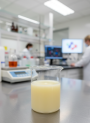

I am planning to formulate a body scrub and would like to know the correct mixing sequence for the following ingredients to ensure a stable and effective product: 1. `Purified water` 2. `Glycerin` 3. `Caprylic/Capric Triglyceride` 4. `AnyGel™` 5. `Phenoxyethanol` 6. `Chlorphenesin` 7. `Sodium chloride (High Purity)` 8. `Vitamin E (Tocopheryl Acetate) Water Soluble` 9. `Extreme B3™ (Niacinamide)` 10. `Honey Extract` 11. `Yogurt Extract` 12. `Centella Asiatica Extract` 13. `GalaWhite™ (Fermented Gallic Acid)` 14. `EllaWhite® (Water soluble Ellagic Acid)` 15. `Allantoin` 16. `Bioactive 2FL™ (Fucosyllactose Milk Extract)` 17. `Jojoba Esther (water soluble)` 18. `Beet root powder` 19. `Ammonium Lauryl Sulfate (ALS)` 20. `Walnut Scrub` Could you please provide a step-by-step guide on which ingredients should be mixed first and which should be added later? Are there any specific precautions for this formulation?

Could you please provide the detailed scent profile for the **Beach Boy** fragrance? Specifically, I would like to know the breakdown of its olfactory notes: * **Top Notes** * **Middle Notes** * **Base Notes**

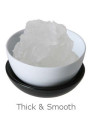
I am interested in using **Silicone Gel (Thick & Smooth, Cyclopentasiloxane Base)** and have the following questions regarding its application and formulation: * Can this product be used at 100% concentration (pure) as a base for adding extracts? I have tried using it alone and experienced "pilling" or flaking on the skin. * Is it necessary to mix this silicone gel with a **Base Gel** or **Base Cream**? * What are the solubility requirements for adding extracts to this base? Can water-soluble extracts be added directly?
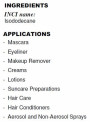
I am formulating a shampoo with a total batch size of 150 ml. I have planned the following ingredients, but I realized the total percentage exceeds 100%. I would like to know how to correctly adjust this formula and whether I need to add an additional preservative or if the ones in the base are sufficient. ### Current Formulation: - `HairWash` (Shampoo base): 93.2% - `Foam Built-in` (fixative): 9.2% - `Silicone Water`: 3% - `HairPLEX`: 1.5% - `Bis-Aminopropyl Diglycol Dimaleate`: 1% - `Pro-Vit` (Panthenol): 1% - `Silk Protein`: (Amount not specified) ### Questions: 1. How should I adjust these percentages to total 100%? 2. Are `HairPLEX` and `Bis-Aminopropyl Diglycol Dimaleate` the same ingredient? 3. Do I need to add a separate preservative for this 150 ml batch, or is the preservative already included in the `HairWash` base sufficient?
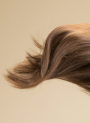
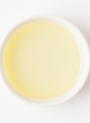
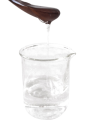
I am formulating a product using **emulPearl™ (Pearlizer, Flakes/Pellets)** at a concentration of 4%, but it is not producing the desired pearlescent effect. My goal is to create a product similar to a reference image: a light green, clear, thick gel with a slightly 'slimy' or mucus-like texture. I would like to know: * What are the correct processing steps (e.g., heating, cooling, stirring) required to ensure `emulPearl™` develops a proper pearl sheen? * Is `emulPearl™` suitable for maintaining a clear gel base, or will it result in an opaque product? * What specific ingredients or polymers should be added to achieve the thick, 'slimy' texture described? * If I want a transparent gel with sparkles instead of an opaque pearl look, what alternative ingredients should I use?
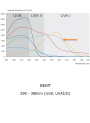
I would like to know the pH stability range for `BEMT (Bis-Ethylhexyloxyphenol Methoxyphenyl Triazine)`, also known as Tinosorb S. Specifically, I have the following questions: * What is the effective pH range for this ingredient within a formulation? * Are there any specific considerations regarding its stability or its compatibility with other sunscreen filters (both physical and organic)? * What are the requirements for its solubility in a formula?
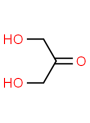
Can the following ingredients be used in an **anhydrous oil-based** formulation? * `Dihydroxyacetone (DHA)` * `Encapsulated Dihydroxyacetone (DHA, Timed-Release)` Are there specific methods to incorporate them into oil, or are they strictly water-soluble? If they are not compatible with oil, what are the recommended formulation types and stability requirements (such as pH and temperature) for these ingredients?
I am planning a formulation using `Phenoxyethanol SA` as a preservative and `Light Cream Maker` as the emulsifier, along with various botanical extracts that contain electrolytes. I have the following questions regarding the process: * Is `Phenoxyethanol SA` compatible with `Light Cream Maker` and ingredients containing electrolytes? * Do I need to increase the dosage of the preservative to compensate for the presence of electrolytes? * Can I mix `Phenoxyethanol SA` into the water phase from the initial blending step with the oil phase, or does it need to be added later? * Will the combination of these ingredients affect the final viscosity or thickness of the cream?