Browse Questions and Answers
Avg response: 24 HrsFilter Questions
20 of 14228 results
I am using `SweetWash™ Hand (Hand Wash Foaming Base)` to create a hand wash. I followed the recommended ratio of 47% base to 53% water as suggested on the product page. However, when using it with a Kirei-style foaming pump, no foam is produced. ### Current Setup: - **Product:** `SweetWash™ Hand (Hand Wash Foaming Base)` - **Current Ratio:** 47% Base / 53% Water - **Packaging:** Foaming pump head (Kirei type) ### Issue: - The mixture does not produce foam when pumped. How should I adjust the ratio or the formulation to ensure it works correctly with a foaming pump? Are there any specific technical requirements for the viscosity of the liquid when using this type of pump?
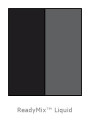
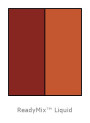
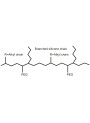
I am formulating a thick cream (not a fluid) using **ReadyMix™ Iron Oxides** and would like to clarify the mixing process and stability. My formulation uses the following specific products and components: ### Ingredients * **Pigments:** - `ReadyMix™ Iron Oxides Black (Polyglyceryl-2 Triisostearate Based)` - `ReadyMix™ Iron Oxides Red (Polyglyceryl-2 Triisostearate Based)` - `ReadyMix™ Iron Oxides Yellow (Cyclopentasiloxane Based)` * **Emulsifiers (Oil Phase):** `Lauryl PEG-9 PDMS` and `Cetyl PEG/PPG-10/1 Dimethicone` * **Water Phase:** `Disodium EDTA` 0.2%, `Magnesium Sulfate` 1%, `Sodium Citrate` 0.15%, `Xanthan Gum` 0.15%, and `Carbomer U21` 0.25%. ### Questions 1. Can these **ReadyMix™** colors be mixed at room temperature, or is heating to 75°C required every time? What are the recommended mixing speeds and durations? 2. What is the optimal order of addition within the oil phase to achieve the best results? 3. In my current process, I mix the oil phase at a low speed until uniform, then add the emulsifiers (`Lauryl PEG-9 PDMS` + `Cetyl PEG/PPG-10/1 Dimethicone`), and finally combine it with the water phase. Given the presence of electrolytes (`Magnesium Sulfate`) and thickeners (`Carbomer U21`) in my water phase, is this process viable, or will it cause stability issues?
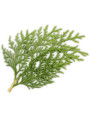
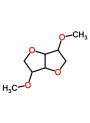
I ordered the following ingredients which were shipped via cold transport: * `Snow Algae` (20g) * `Dimethyl Isosorbide (DMI)` (35g) * `Japanese Cedar (Cryptomeria Japonica Bud Extract)` (20g) However, the package was received on a Saturday and was only moved to the refrigerator on Monday morning, meaning the items were kept at room temperature (approximately 25-30°C) for about 2 days. 1. Will the efficacy of these ingredients be significantly reduced due to this exposure? 2. Are they still safe and effective to use in my formulations as normal?
I am developing a natural oil-based formulation and would like to incorporate fragrance. I am considering using `Oil Blender™` (`Polyglyceryl-3 Diisostearate`) to help with the blending and stability of the formula. * What is the recommended usage percentage for `Oil Blender™` in this type of application? * Does the mixing process require heat? If so, at what temperature?
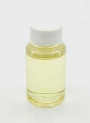
Can **WeightCare™ Reishi (Ganoderma) Mushroom Extract** and **White fungus (Tremella fuciformis) Extract** be used in oral care applications? I am interested in their safety for oral mucosa contact and their specific benefits in formulations such as: * Mouthwashes * Oral sprays * Toothpastes Specifically, I would like to know about their food-grade status, active components (such as the Polysaccharides content in Reishi), and any technical considerations for formulation, including solubility and preservation requirements.
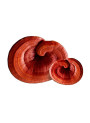
Minoxidil Sulfate vs. Regular Minoxidil: Effectiveness and Carrier Selection for Hair Loss Solutions
# Question regarding Minoxidil Sulfate and Clascoterone Formulation 1. **Effectiveness Comparison:** Is `Minoxidil Sulfate` more effective than regular `Minoxidil` because it is already in the active sulfate form? I understand that some people lack the *sulfotransferase* enzyme (SULT1A1) in their hair follicles, which is necessary to convert regular `Minoxidil` into its active form. 2. **Solubility and Carrier Selection:** What is the best carrier system or solvent combination to effectively dissolve the following ingredients in a single formulation: * `Minoxidil Sulfate` (Water-soluble) * `Clascoterone` (Poorly water-soluble) I am looking for a solution that ensures both ingredients are fully dissolved and can effectively penetrate the skin.
I am formulating a cream-based physical sunscreen using the following ingredients: * `Zinc Oxide` * `Titanium Dioxide` How can I achieve a smooth, professional texture that is not grainy and avoids leaving a white cast on the skin? Are there specific types of ingredients (such as pre-dispersed forms) or mixing techniques (like high-shear mixing) that you recommend for best results?

Since **Methyl Benzoate 1% in DPG** is no longer available, I am looking for a suitable replacement. * What ingredients can be used to achieve the same scent profile (sweet, balsamic, fruity-floral with a wintergreen/minty nuance)? * If a pure version of the chemical is used, how should it be handled or diluted to match the original 1% concentration in the formulation?
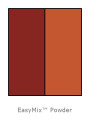
I am developing a lip gloss formulation using natural oils and pigments. I would like to know: * Which **Oil Thick™** (oil-based gelling agent) is most suitable for natural oils to prevent color sedimentation? * Could you recommend specific colors or pigments suitable for lip gloss, particularly a deep red shade (referencing a previous discussion about deep red for body oil)? * What are the recommended steps for mixing these ingredients to ensure stability and high shine?

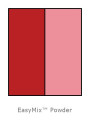
I am developing a water-based serum containing 5% `ActiveRelease Salicylic Acid` (BHA encapsulated). Initially, when I dissolved it directly in water, it left a white residue/film on the skin. I have started using PEG-40 as a solubilizer, which seems to have resolved the white film issue, but I want to ensure the long-term stability of the formula. **Current Formulation (100g batch):** **Part A:** - DI-Water: 76.20% - Allantoin: 0.10% - Mono Propylene Glycol: 1.00% - `ActiveRelease Salicylic Acid` (BHA encapsulated): 5.00% **Part A1:** - HEC (Hydroxyethyl Cellulose): 1.00% - DI-Water: 10.00% **Part B:** - Natural PHA Witch Hazel Distillate: 0.50% - Glycerin: 0.50% - Witch Hazel Distillate: 0.50% - Germall II: 0.50% - Aloe Vera Gel Spray Dried-LC: 0.10% **Part C:** - Tween 20: 3.00% - Tea Tree Oil: 0.10% - Phenoxyethanol: 0.50% **Part D:** - Tomato Extract: 2.00% **Questions:** 1. Is this formulation structure appropriate for a stable water-based serum? 2. Is there a risk of instability or the white residue returning over time? 3. What adjustments should I make regarding pH, emulsifiers, or solvents to improve stability and skin feel?
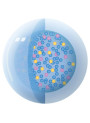
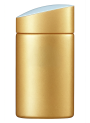
## Question regarding Fluid Light Sunscreen (Compare to Anessa) I have a question about the usage of this product. I noticed that when the product is left sitting for a while, it naturally separates into distinct layers. 1. Is it normal for the `Fluid Light Sunscreen` formulation to separate like this? 2. Is it correct that I must shake the bottle well before every use? Please clarify if this behavior indicates any stability issues or if it is simply a characteristic of the formula.
I would like to inquire about the application of `Silicone Shine 1000` and `Silicone Shine 15` in various formulations: 1. Can these two ingredients be used in **leave-on** products? 2. Are they suitable for use in **pet care** products (e.g., for coat conditioning)? 3. What are the recommended usage rates for different types of applications such as hair serums, creams, and lipsticks?
I am looking for a way to color my perfume to a **pale pink** shade. Since the formulation is alcohol-based, I have the following questions: * What type of dye should I use to ensure it dissolves correctly in alcohol without precipitation? * Are there any specific product recommendations for achieving this color? * What are the technical tips for mixing the dye to get a very light, pale intensity?

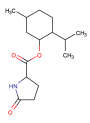
I am planning to formulate wet wipes for infants (6 months and older) and would like to incorporate cooling agents. I am currently considering the following combination: * `Menthyl PCA` * `WS-23` Could you please provide guidance on the following points: 1. Are these specific ingredients suitable and safe for use in products intended for children of this age group? 2. What is the recommended dosage for these cooling agents in a wet wipe application? 3. Are there any other safer or more appropriate alternatives that can provide a cooling or soothing sensation for baby wipes?
I am planning to create a skin barrier repair formulation in a 100g batch by mixing the following two components in a 50:50 ratio: * **MYFerment™ Barrier** (`Lactococcus Ferment Extract`, ID 35562) - 50% * **Skin Barrier Cream Base** (`Emulsifier Free`, ID 9673) - 50% I would like to clarify the following points regarding this formulation: 1. **Feasibility:** Is it technically possible to mix these two products directly at this high ratio? 2. **Efficacy:** Will this 50:50 concentration significantly enhance skin barrier recovery, or is it considered excessive (overkill) for a personal use cream? 3. **Mixing Procedure:** What is the correct method for mixing these components, and are there any specific temperature constraints or equipment needed? 4. **Stability & Storage:** How stable will the final mixture be, and are there any specific storage conditions or safety precautions (such as patch testing) I should follow?

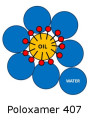
I am looking for advice on a mouth odor spray formulation. I found the following formula and would like to know about its suitability, stability, and potential improvements: **Original Formulation:** * `Ethyl Alcohol (99.9%)`: 20% * `Propylene Glycol`: 5% * `Poloxamer 407`: 1% * `DeoMax™ Liquid`: 1% * `Four-EO`: 0.3% * `Zinc Citrate`: 0.2% * `Cetylpyridinium chloride`: 0.01% * `Water`: balance to 100% Specifically, I have the following questions: 1. Is this formula effective and stable for an oral spray application? 2. If I want to avoid using `Ethyl Alcohol` to prevent a burning sensation or dryness, what alternative solvents or bases should I use? 3. How should I adjust the formula (e.g., solubilizers or preservatives) when removing the alcohol to maintain efficacy, stability, and safety?
### Question about Preservative Necessity If I am preparing a **Skin Barrier Lotion** for personal use (100g batch) using the `Skin Barrier Cream Base (Emulsifier Free)` (ID 9673) based on the website's recommendation, do I need to add an additional preservative? The formulation is as follows: - `Skin Barrier Cream Base (Emulsifier Free)`: 50% - Water: 49.7% - `Xanthan Gum`: 0.3% Since the base already contains a preservative system, is it still necessary to add more when it is diluted with water in this ratio?
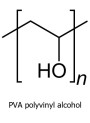
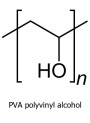
I am working on a cosmetic formulation, specifically for film-forming masks, and need to dissolve two grades of fully hydrolyzed Polyvinyl Alcohol (PVA): 1. `Polyvinyl alcohol (PVA 120) 32-40mpa.s. Fully` 2. `Polyvinyl alcohol (PVA 126) 60-75mpa.s. Fully` The material received is in the form of flakes or granules (described as small stone-like pieces), not a fine powder, and it is not dissolving easily in water. Could you provide step-by-step instructions on how to properly dissolve these PVA grades completely? Please specify the required conditions, including: * Is heating necessary? If so, what is the required temperature? * What is the appropriate solvent? * What stirring method and duration are required to prevent clumping and ensure full dissolution?
I am formulating a lotion/cream and plan to use GalaWhite™ (fermented gallic acid). I have two main questions regarding its incorporation and usage: 1. **Incorporation Method:** Since GalaWhite™ is a powder, should it be added directly to the finished lotion after emulsification, or must it be dissolved in water first before being added to the final product? 2. **Usage Frequency:** For a product containing 1% GalaWhite™ (fermented gallic acid), is it safe and effective to use it twice a day, or should usage be limited to once daily?
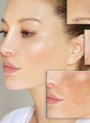
I am formulating a body balm and wish to use the `Honey Extract (For Natural Honey Odor, Oil-Soluble)` product. 1. Is it possible to use this extract at a concentration of **2%** in the body balm formulation? 2. What usage percentage does IFRA suggest for this specific extract?
