Browse Questions and Answers
Avg response: 24 HrsFilter Questions
20 of 14228 results
I am interested in using dried flowers in cosmetic products. Could you please provide guidance on the following points? 1. What are the primary uses of dried flowers in cosmetic formulations (e.g., decoration, extraction)? 2. What is the recommended method for storing unused dried flowers to maintain quality and prevent mold? 3. If I want to incorporate dried flowers into an alcohol spray (e.g., body mist or room spray), what type of base should I use? Should I use high-proof `Ethyl Alcohol` (95% or higher), or is a specialized product like the `8 Hours Fragrance Spray Base (Musk-Free)` more suitable?
I plan to purchase `Retinol (100% Pure Powder)`. I understand that this ingredient is highly sensitive to heat and requires careful handling. 1. What type of oil is recommended for dissolving the `Retinol (100% Pure Powder)`? 2. What is the proper method for dissolving the powder, ensuring that heat sensitivity is managed (cold process)?
I am looking to develop a moisturizing, colorless lip stick formulation that provides a fresh, watery, "water drop" sensation upon application. Since I plan to structure the stick using **Sodium Stearate**, what is the recommended optimal proportion of this ingredient, and what is a suitable starting formulation to achieve this high-water system effect?
If `Vitamin E Tocopheryl Acetate` is stored at a temperature of `30°C`, will its quality and stability remain good?
We are inquiring about the use of **Aluminium hydroxide** (Product ID #133613, INCI: Aluminum Hydroxide) in cosmetic formulations. Please clarify the following: * Can this ingredient be used in cosmetics? * What are its primary functions (e.g., Opacifying Agent, Bulking Agent, Absorbent, Pigment Coating) and how should it be incorporated into the formula (e.g., oil phase, powder blend)? * Are there any specific restrictions or limitations regarding its concentration, safety status, or stability (e.g., pH sensitivity, use in aerosol products)?
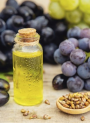
I plan to use **NaturalProfile™ Grape Seed Oil (Cold-Pressed)** at 10% in a facial gua sha oil formulation. How prone is this oil to rancidity, and what measures should be taken to ensure the stability and shelf life of the formula?
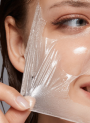
When using the `ClearFlexPeel Film™ (Peelable Skin Mask, Active Delivery, Transparent)` base (ID 31015), is it possible to modify the formulation in the following ways: 1. Can the base be made opaque (cloudy)? 2. Can an Emulsifier or oil be added to this aqueous dispersion base?
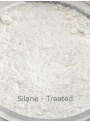
I would like to inquire about the storage conditions for two types of cosmetic ingredients: 1. **Silane-Coated Powders** (e.g., `Triethoxycaprylylsilane` coated powders such as Mica Powder, Sericite Powder, or Talc Powder). 2. **Phytic Acid (50% Liquid, Natural)**. Should these ingredients be stored in the refrigerator, or can they be stored at room temperature?
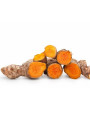
I would like to inquire about the ingredient `WhiteCumin™` powder. This specific grade is described as being soluble in oil and glycol. The chemical name for `WhiteCumin™` is `Tetrahydrodiferuloylmethane`, extracted from high-purity turmeric for cosmetic use. My question is: Is Glycol considered part of the **Water Phase (Aqueous Phase)** in a cosmetic formulation?
We are interested in the ingredient **Pure-Ferulic Acid™** (ID 131). Is this product derived from wheat, or what is its primary source of extraction?
I am formulating a purely water-based essence (containing no oil phase). When adding the ingredient `BioSulphur™ EQ (Water Soluble Sulfur)`, the formula experiences precipitation/sedimentation. What ingredient or method should I use to prevent the precipitation of `BioSulphur™ EQ (Water Soluble Sulfur)` in this purely water-based essence?
What is the recommended dosage percentage of Hemicellulase enzyme required for the digestion and processing of soybeans, considering its primary function in breaking down non-starch polysaccharides (NSPs) to improve protein/oil yield and filtration? Additionally, what grade of Hemicellulase (e.g., Food Grade vs. Analytical Grade) is appropriate for this specific food application?
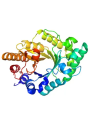
We are developing an oil balm cosmetic formulation using Bakuchiol (e.g., Pure-Bakuchiol™ or Bakuchiol-Eco™). We are considering using Triolein (ID 8009) as a carrier oil. Can Triolein be effectively used as a penetration enhancer for Bakuchiol in this oil balm formulation? Please provide detailed advice regarding: * Compatibility and potential interactions between Triolein and Bakuchiol. * Recommended usage levels for both Bakuchiol (0.5% to 1.0%) and Triolein (5% to 50%+). * Efficacy of Triolein as a penetration enhancer versus a solvent/carrier. * Stability concerns (e.g., oxidation) and best practices (e.g., use of antioxidants, packaging). * General formulation best practices for an anhydrous oil balm system.
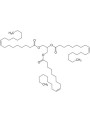
I am planning to use `Quaternium-73 (Pure Powder)` in a cosmetic formulation. * Which type of oil is recommended for dissolving `Quaternium-73 (Pure Powder)`? * Can `Quaternium-73 (Pure Powder)` be dissolved in glycol (such as Propylene Glycol or Butylene Glycol)?
What are the best peptides and specific products, including those containing Melatonin (such as Pure-Melatonin™ or Melatonin Forte™), recommended for promoting black hair, stimulating hair pigmentation, and effectively reducing gray hair? Additionally, what are the recommended usage rates and formulation guidelines for the most effective peptide, such as GreyReverse™ (Palmitoyl Tetrapeptide-20)?
Is `CAMELLIA SINENSIS SEED POWDER` (Camellia (Tea) Seed Scrub) suitable for use in a scalp and hair scrub formulation? If it is suitable, which mesh size should be selected? The product is available in various mesh sizes, such as 60-80 Mesh.
Which dispersants (สารช่วยกระจายตัว) are available and recommended for use in **Polyurethane** systems, particularly those suitable for industrial polymer and resin applications?
I am experimenting with making a homemade shower gel (100 ml batch) using surfactants AD25 and N70, along with hydroalcoholic extracts of Yanang, Lemongrass, and Pandan. I would like expert advice on optimizing this formula for commercial sale and maximum skin gentleness. ## Current Formulation (100 g / 100 ml): * AD25 — 14 g * N70 — 4 g * Glycerin — 4 g * DI Water — 54 g * Yanang hydroalcoholic extract — 6 g * Lemongrass hydroalcoholic extract — 2 g * Pandan hydroalcoholic extract — 4 g * 10% Salt Solution — 2 g * Preservative (Phenoxyethanol) — 2 g ## Specific Questions: 1. What adjustments are necessary to make this a commercially viable and extremely gentle formula? (e.g., surfactant type selection, pH adjustment, humectants, or adding conditioning agents like Vitamin E). 2. Will the use of a high concentration of hydroalcoholic extracts (totaling 12%) affect the gel's stability, clarity, or cause separation? 3. Is the combined use of `AD25` and `N70` appropriate? If aiming for increased gentleness, should I reduce, increase, use them separately, or substitute them with other surfactants? 4. What is the recommended mixing procedure for these ingredients?
Can the product **Berberine chloride form** (ID 110682), which is classified as a Certified Reference Material / Reagent, be used safely in cosmetic formulations?
I am looking for a ready-to-use product or base for a face oil intended for gua sha facial massage. * The product should ideally contain **Bakuchiol at 2%**. * Since I am a beginner, I prefer a base that requires no complex mixing or formulation. Additionally, I need the simplest possible DIY formula for a makeup remover cleanser suitable for beginners.