Browse Questions and Answers
Avg response: 24 HrsFilter Questions
20 of 14228 results
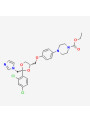
I would like to inquire about the ingredient Dandruff-Care™ (Dichlorophenyl Imidazoldioxolan). Can this substance be used effectively in **leave-on products**?
I am looking for a Carbomer product known as 'ETD 2020'. Can you confirm if this refers to **Carbomer 2020 (EasyDisperse, Electrolyte Tolerance, Long-flow)**? What are the key properties and the INCI name of this specific Carbomer?
I am trying to thicken a formula containing 10% Cocamidopropyl Betaine. I added `ThickClean™` (Acrylates Copolymer) at 1.5% and mixed it, but the mixture did not thicken. Which alkaline agent should I use to adjust the pH for neutralization and achieve the desired viscosity?
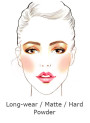
I am developing a makeup fixing spray using the following ingredient list, focusing on the use of **Trimethylsiloxysilicate** (Silicone Film) for long-wear and waterproofing. I have several questions regarding formulation and stability: # Makeup Fixing Spray Ingredient List: `Water, C9-12 Alkane, Glycerin, Butylene Glycol, Pvp, Cucumis Sativus (Cucumber) Fruit Extract, Camellia Sinensis (Green Tea) Leaf Extract, Chamomilla Recutita (Matricaria) Extract, Tocopheryl Acetate, Caffeine, Isononyl Isononanoate, Ppg-26-Buteth-26, Panthenol, Arginine, Trimethylsiloxysilicate, Peg-40 Hydrogenated Castor Oil, Polydextrose, Hydrogenated Lecithin, Citric Acid, Fragrance (Parfum), Bht, Disodium Edta, Chlorphenesin.` 1. Is the ingredient **Trimethylsiloxysilicate** suitable for this type of fixing spray formula? How should it be incorporated? 2. Regarding the full ingredient list, could you provide typical usage percentage ranges for the key components and general instructions on how to incorporate them into the formula? 3. Can I use **Polysorbate 20** or **Polysorbate 80** instead of **PEG-40 Hydrogenated Castor Oil** as the primary solubilizer? 4. Are the listed extracts (Cucumber, Green Tea, Chamomilla) necessary for the primary function, and can they be replaced with other extracts like Calendula? 5. Is **Arginine** the same as **L-Arginine**? Given that L-Arginine raises pH, why is it included in a facial product where the pH should ideally be between 4.5-5.6?

I am formulating a facial skincare product using **Oil Thick™ Transparent** to create a clear, solid oil gel texture (such as a hard balm or solid serum). 1. Is my proposed method correct: dissolving Oil Thick™ Transparent in the oil phase (e.g., `lipid soft`) at 90°C, and then mixing with other ingredients? 2. Please provide general usage instructions, including the appropriate temperature range for dissolution (80-90°C), recommended usage percentage (1-10%), and any necessary precautions to ensure a clear, firm final product.
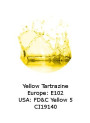
I am developing an **ethanol-based perfume** and plan to use the following colorants: * `CI 19140` (Yellow) * `CI 17200` (Red) * `CI 42090` (Blue) I have two main concerns regarding their suitability: 1. Will these dyes achieve **full dissolution** in the high-proof ethanol base? 2. Will they remain stable over time and **not cause unpleasant odor development**? Furthermore, are these specific substances identical to those used in commercial perfumes that list the same CI codes? If these dyes are not suitable, what are the recommended alternatives for coloring ethanol-based perfumes?
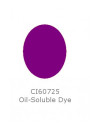

Does the Fluorescent Yellow Pigment settle or precipitate in the formula, and if so, what measures should be taken to ensure it remains evenly dispersed?

Which silicone products available on MySkinRecipes are suitable for formulating a **creamy leave-in conditioner** for hair? Please recommend silicones focusing on types that provide: * Excellent **conditioning** and **smoothness**. * Compatibility with **emulsion** systems. For each recommended product, please include: 1. The specific product name (e.g., Silicone Hi-Cond, SiliWater™). 2. The INCI name. 3. Recommended usage rates. 4. Any relevant product links or IDs from the site.
I am looking to encapsulate oil using a modified tapioca starch. Could you recommend the best product for this purpose from your selection?
What are the recommended broad-spectrum preservatives suitable for a **homemade herbal hair mask/cream** formulation? Since the formula contains herbal extracts, which increase the risk of contamination (bacteria, yeast, and mold), I need options that are effective, mild, and easy to use in a small-scale, homemade setting. Natural or 'preservative-free' claimable options are preferred.
I am planning to combine **Galactomyces Ferment Filtrate (Pitera)** with **Baby Face Protein (39 Amino Acids & Minerals)** in a cosmetic formulation (such as a serum or lotion). Are these two ingredients compatible? If so, what are their synergistic benefits, and what specific formulation instructions (e.g., mixing phase, temperature requirements) should be followed to ensure maximum efficacy and stability?

I am confused about the concentration of EGT-Max™ (Ergothioneine). Does the specification stating 0.3% pure EGT mean that 1 gram of EGT-Max™ contains 0.3% pure EGT, or does 5 grams of EGT-Max™ contain 0.3% pure EGT? Please clarify how the 0.3% pure EGT concentration relates to the purchased quantity (e.g., 1g or 5g) of the EGT-Max™ raw material.
I am planning to create an anhydrous oil serum using the following formulation: * Jojoba Oil: 95% * Perfect-C™ (Ascorbyl Tetraisopalmitate): 5% I have two main questions regarding this mixture: 1. Is it possible to successfully mix Jojoba Oil (95%) with Perfect-C™ (5%)? 2. Is it necessary to add any additional ingredients (such as antioxidants) to ensure the stability and prevent oxidation of this specific anhydrous formulation?
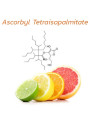
I am creating an anhydrous oil formulation (containing no water). I need to adjust the pH of this oil formula to 5-5.5. What type of substance should I use to adjust the pH?
What is the required measurement wavelength (Optical Density or OD) for the **Protein Content Assay Kit (BCA)**, specifically the product with ID `112753`?
I am planning to formulate a sunscreen lotion using the following components: 1. `SPF Protect Ultra™ III (UVA+UVB)` 15% (Used to replace `SPF Protect Ultra™ II` 15%) 2. `Milk Lotion Maker` 3% 3. `Satin Cream Maker` 0.7% 4. Water 80.3% 5. `Mild Preserved Eco` 1% Can `SPF Protect Ultra™ III (UVA+UVB)` be used to substitute `SPF Protect Ultra™ II` at a 15% concentration in this formula, and what would be the expected impact on the final SPF and PA rating compared to the original formulation?
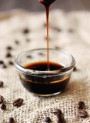
Should water-soluble coffee flavor, which is used in food applications, be stored in the refrigerator?

I am formulating a massage oil blend and need to color it pink. Which option is better for achieving a reliable pink shade in an oil blend: * Carmine (ID 31452) * Chili Extract Red Color (ID 31451)
I am planning to formulate a Vitamin C serum using ATIP (Perfect-C™). I am confused about the technical instructions for the product "Vitamin C E Ferulic (ID: 70)", which states a user rate of 100%. 1. How can I create a formula with different ingredients if the recommended usage rate for the Vitamin C E Ferulic base is 100%? 2. Is it possible to combine the pre-stabilized, water-based **Vitamin C E Ferulic (ID: 70)** base with the oil-soluble **Perfect-C™ (ATIP, ID: 499)** in a single serum formulation?
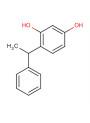
I am planning to formulate a body oil (anhydrous product) rather than a cream. Can **Phenylethyl Resorcinol (e.q. SymWhite 377)** be dissolved solely in oil for this purpose?