Browse Questions and Answers
Avg response: 24 HrsFilter Questions
20 of 14228 results
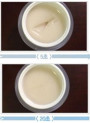
When formulating with `Reshape Gel`, if I wish to incorporate oil into the mixture, I have a few questions: * Is it necessary to include an emulsifier to ensure stability? * If an emulsifier is required or recommended for optimal results, which type or specific emulsifier would you suggest? * What is the maximum percentage of oil that can be added to the `Reshape Gel` formulation while maintaining its integrity, even if it affects the clarity of the final gel?
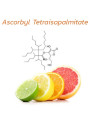
I would like to confirm if your product, `Perfect C Ascorbyl Tetraisopalmitate`, is the same as `NIKKOL VC-IPVS` manufactured by NIPPON SURFACTANT INDUSTRIES CO., LTD.
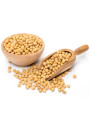
Can the Phytosterols product, which is a complex of `beta-sitosterol`, `campesterol`, and `stigmasterol` with a purity greater than 95% (extracted from soybeans), be used as an analytical standard for quantitative analysis? What factors should be considered regarding its suitability, especially if the method requires a single, isolated compound or a certified reference material for precise quantification of individual phytosterols?
I am trying to formulate a clear shampoo using `PEG-150 Distearate (Pellets)` as a thickener. However, despite heating the mixture to `60-70 degrees Celsius`, the final product remains cloudy. What steps can I take to achieve a clear shampoo?
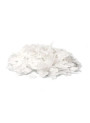
I am developing a water-in-oil (W/O) formulation that includes mica and aims for a liquid texture. Currently, I am using `Polyglyceryl-6 Polyricinoleate` and `Polyglyceryl-2 Isostearate` as emulsifiers, but the product is experiencing leaking. I would like to know if `Polysorbate 20` or `PEG-30 Dipolyhydroxystearate` would be a better alternative to improve the stability and prevent leaking while maintaining a liquid texture.
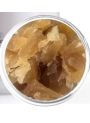
I am looking for a bright red pigment for a lip product formulation that does not have purple or pink undertones. The pigment should be easily dispersible in the lip product. Could you recommend any suitable options?
I am developing an oil-in-water (O/W) emulsion and have several questions regarding ingredient incorporation and stability: 1. **Bakuchiol and Dimethyl Isosorbide (DMI) Mixing:** * Since `Bakuchiol` is oil-soluble and my oil phase primarily consists of `Caprylic/Capric Triglyceride` and/or `LipidSoft Lite`, how should `Dimethyl Isosorbide (DMI)` be incorporated? * Can `DMI` be dissolved in the water phase, or should it be exclusively mixed with the oil phase components? 2. **Bakuchiol Compatibility with Metal Ions and Other Ingredients:** * My formula includes `Bakuchiol`, which is sensitive to metal ions. * Are `Citric Acid/Sodium Citrate pH buffer`, `Sodium Benzoate` (or other metal ion-containing preservatives like `Zinc-Ben`), and `Colem TT` compatible with `Bakuchiol`? * Will any of these ingredients negatively affect the efficacy of `Bakuchiol`? 3. **Emulsifier and Emulsion Stability:** * Can `LecithinGel` be used as the primary emulsifier with `PhosphoMax` as a co-emulsifier? * What ingredients would you recommend to enhance the stability of `LecithinGel` emulsions and prevent phase separation, especially considering the sensitivity of other ingredients (like `Bakuchiol`) to metal ions?


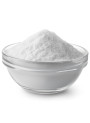
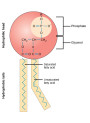
I would like to inquire about the compatibility, mixing precautions, and key differences between various forms of EGCG (Epigallocatechin Gallate) for cosmetic formulations. Could you please provide detailed information on the following specific EGCG products offered by MySkinRecipes? * **Pure-EGCG™ (98% EGCG)**: What are its characteristics, and how should it be incorporated into formulations? * **Hi-EGCG™ (3% EGCG)**: What are its properties as a liquid extract, and what specific precautions (e.g., pH range, interaction with other ingredients like Vitamin E, and use of `ActiveProtec™ OX`) are necessary during mixing? * **Micromul™ EGCG (Microemulsion)**: How does its nano-level particle size affect its dissolution and skin absorption, and what are the mixing guidelines? * **ActiveRelease™ EGCG (20% Encapsulation)**: How does encapsulation improve its water solubility and provide sustained release, and what are the mixing instructions? Additionally, please advise on general precautions regarding heat and light sensitivity for all EGCG forms, and recommended storage conditions for each product to maintain stability and effectiveness.
Can `Tribehenin` be used as a standalone structuring agent for stick formulations? If so, what is the recommended usage percentage? If not, what other waxes should it be combined with, and what are the suggested ratios to achieve a firm stick product?
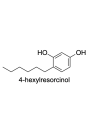
I have several questions regarding ingredient compatibility and formulation, especially for a mineral oil-free formula containing sensitive active ingredients: 1. **Electrolyte Sensitivity of Actives:** * If a formula contains active ingredients sensitive to electrolytes, such as `Bakuchiol-Eco™` and `HR-White™ (4-Hexylresorcinol)`, how significantly will small amounts of electrolytes (around 1-1.5%) from ingredients like `LecithinGel™` (an emulsifier) or `Global Guard™` (a preservative) affect these sensitive actives? * Is this something that cannot be definitively stated and requires self-testing, including monitoring the remaining active ingredient content after the specified shelf life? 2. **Electrolyte-Free pH Buffer:** * Given that some active ingredients and emulsifiers in my formula are sensitive to electrolytes, is it possible to create a pH buffer that is entirely free of electrolytes? * If so, what specific ingredients should be used? If not, I will need to adjust my formula accordingly. 3. **Mixing Bakuchiol-Eco™ with DMI and Protect UV in Mineral Oil-Free Formulas:** * Are there any special procedures for mixing `DMI (Dimethyl Isosorbide)` and `Protect UV` with `Bakuchiol-Eco™` in a formula that does not contain mineral oil? * The `DMI` product information does not specify its solubility with other oils. Can it be used with triglycerides (e.g., `Caprylic/Capric Triglyceride`), `LipidSoft Lite`, squalane, and various organic oils? * Should `Protect UV` (assuming `SPF Protect Ultra™ III`) not be added directly to `DMI`? 4. **Effect of Glycols on Water Solubility:** * Does the addition of glycols, such as glycerine, propanediol, butylene glycol, or propylene glycol, decrease the water solubility of other water-soluble ingredients in a formula? Or is this a complex interaction that is difficult to explain generally? 5. **Formula Review Request:** * If I post my formula here, can you provide an initial review regarding the basic chemical compatibility of the ingredients, without performing a full stability check (as that would require further testing on my part)?


Can `Perlite (6micron, Soft Dry Touch)` be used in toothpaste formulations?
I am looking for a formulation that uses Chromotropic acid. I am interested in achieving effective skin brightening. If Chromotropic acid is not suitable for cosmetic formulations, could you provide a formulation or guidance on using an alternative ingredient like **ChromaWhite™ (Dimethylmethoxy Chromanyl Palmitate)**? Please include details on its application for skin brightening, hyperpigmentation reduction, tyrosinase inhibition, and melanin production reduction, as well as its safety, stability, and photoprotective effects. Additionally, provide specific instructions for its use in formulations, such as: * Recommended usage rate. * Mixing procedure and addition step. * Considerations regarding heat sensitivity. * Solubility characteristics. * Optimal storage conditions.
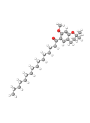
I would like to inquire about `GABA Gamma aminobutyric acid (Natural Bioferment, 98%)`. * Is this ingredient classified as a food additive or a cosmetic ingredient? * Can it be encapsulated in capsules for consumption?
When formulating with Silky Serum Base (Face/Eye), the product description recommends adding 1% NaCl for stabilization. I need clarification on the correct procedure for adding the NaCl. Should the 1% NaCl be: * Added directly into the water to dissolve, and then this NaCl solution is added to the serum base? * Or, should the water and serum base be mixed together first, and then a 1% NaCl solution is added after the serum texture is formed?
When registering a cosmetic product in Thailand, if the product has multiple color variations (e.g., different shades of lipstick or foundation), but the base formulation and all other ingredients are identical across these variations, except for the specific colorants used, is it possible to register all these color variations under a single cosmetic notification (ใบรับจดแจ้งเครื่องสำอาง)?
I would like to know the detailed methods for dissolving Hyaluronic Acid powder in water, covering both scenarios: * **Without a blender:** What is the step-by-step process, including mixing, shaking, and refrigeration times? * **With a blender:** What blending speed (e.g., `1,000 rpm`) and powder addition technique are recommended? Additionally, what are the crucial **precautions** to observe regarding: * The optimal `pH` range (`3.0-9.0`) for maintaining Hyaluronic Acid quality? * The maximum `temperature` (not exceeding `70 degrees Celsius`) during mixing? * The importance of adding a `preservative` (such as `Phenoxyethanol`) to prevent bacterial degradation and loss of gel viscosity?

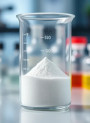
Is the product `Lecithin Granule (Soybean, 97% Phopholipids, Light Color)` considered food grade, and what are its common applications?
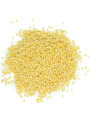
What are the benefits of Vitamin C for skin, and what are the different forms available, considering their properties such as stability, solubility, and potency for use in cosmetic formulations? Specifically, how do L-Ascorbic Acid (including its stability challenges and solutions like `Vitamin C E Ferulic`), Ethyl Ascorbic Acid, Ascorbyl Glucoside (AA-2G), Sodium Ascorbyl Phosphate (SAP), and Vitamin C Ester (Ascorbyl Palmitate) differ in their application and characteristics?
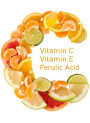
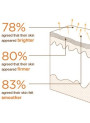
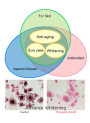
What are the recommended ingredients for effectively addressing various types of dark spots and hyperpigmentation, while also improving overall skin brightness and radiance? Please include ingredients that can help with specific concerns such as redness, clogged pores, oiliness, yellowish skin tone from glycation, and dark circles under the eyes, along with their key functions and suitable applications.
I am formulating a Lip Jelly similar to fwee jelly lip pot g using Ethylcellulose 100 cps. at 5.5%. After mixing and heating to 85-90°C for 3 hours, the Ethylcellulose does not dissolve completely, leaving hard lumps. How can I fix this issue?