Browse Questions and Answers
Avg response: 24 HrsFilter Questions
20 of 14228 results
Which solvent or solubilizer can be used in a clear hair serum formulation containing `Dimethiconol (Cyclopentasiloxane Base)` and `Isododecane` to prevent turbidity (cloudiness) when fragrance is added?
What is the appropriate duration for leaving on general cosmetic formulations? Does it vary depending on the product type or ingredients?
Could you please recommend some mild and popular fragrances that are commonly used in counter-brand creams?


How should Prebio-care (Skin Prebiotic) be stored after opening to prevent it from clumping together, as it clumped after being used once?
I am making my own herbal shampoo using the following ingredients: * N70 * Sodium chloride * Purified water with herbal extracts (butterfly pea, kaffir lime, ginger) I am not adding any preservatives but intend for the shampoo to have a shelf life of 6 months. Is this shampoo usable and safe?
Could you please provide a formulation (%) and method for a shampoo that can help prevent hair loss, promote hair growth, and prevent hair damage?

What is the recommended daily dosage in milligrams for consuming Lactic acid powder that is a postbiotic, specifically the product `Lactic Acid (Powder, Food, 60%)`?
I have questions regarding the compatibility of certain ingredients in cosmetic formulations: 1. Are prebiotics like `Prebio-care` (Skin Prebiotic) or `NuBiome™` (Skin Microbiome) compatible with, or should they not be used with, Salicylic Acid and its derivatives, and antimicrobial agents such as `Micromul™ 10HDA` (10-Hydroxydecanoic Acid Microemulsion), `Acne-TT™` (Standardized Tea Tree Extract For Acne), or other anti-`P. acnes` (C. acnes) agents? 2. `Bakuchiol-Eco™` or `HR-White™` (4-Hexylresorcinol, e.q. Synovea HR), which are sensitive to metal ions and require a chelating agent, are they compatible with `Zinc PCA` or `Adenosine Phosphate Disodium` (AMP-Na)? 3. Can ingredients like peptides or various proteins be used in a formula that contains a small amount of ethanol or other alcohols (<10%)? (Because the formula needs alcohol as a solvent for other ingredients). 4. Should `B3` + `GlucoBright™` + `Actin AC` be used together? Since `Actin AC` contains `HEXYLRESORCINOL`, will their functions overlap?
Could you please recommend popular cold-pressed natural oils that are commonly used in shampoo formulations, along with their key benefits for hair and scalp?
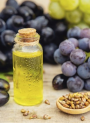
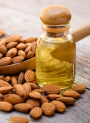
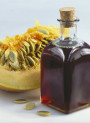
I am experimenting with making my own shampoo. Is it beneficial to add Argan oil to the shampoo formula for hair and scalp nourishment?
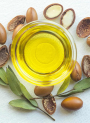
What ingredients should Z white not be used with? Is Z white an electrolyte?
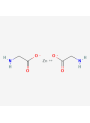
What percentage of AquaForce™ BEMT should be used to achieve equivalent UV protection as 10% Tinosorb S (BEMT) powder in a formulation?
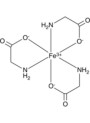
I need recommendations for suitable forms of iron and calcium to add to a bread spread formulation that contains approximately 25% oil. Which specific types of iron and calcium should I purchase for this application?
Currently, I am developing a skin serum formulation with a texture that is "cloudy, similar to cream, but light, soft, and non-sticky". I am using several raw materials from your company. I have encountered significant problems that recur after more than 5 trials: 1. The texture separates after 1-2 weeks of storage, whether refrigerated or kept at room temperature. 2. The color of the product gradually changes to dark yellow. The list of raw materials used in the latest formula is as follows: 1. Bakuchiol-Eco (Natural Retinol, 98% Pure, India): 1% 2. Perfect-C (Ascorbyl Tetraisopalmitate): 5% 3. Vitamin E (dl-alpha tocopherol): 0.5% 4. Water Sleeping Mask Base (compare to Laneige): 40% 5. Glass Moist (Oil-Free Glass Skin, 3 Day Fast Action): 10% 6. ActiveRelease Centella Asiatica (Madecassic Acid, Asiatic Acid, Asiaticoside, Madecassoside): 1% 7. Dimethyl Isosorbide (DMI): 3% 8. Allantoin: 0.5% 9. Aqua: 34% 10. Protec OX (Pentaerythrityl tetra-di-t-butyl hydroxyhydrocinnamate): 0.3% 11. Protec UV (Benzotriazolyl Dodecyl p-Cresol, e.q. Tinogard TL): 0.1% 12. Protec SQ: 1.2% 13. EDTA: 0.1% 14. Mild Preserved Eco (Preservative-Free): 1.5% 15. Lavender Provence: 0.1% 16. MakeUp-Wash (PEG-6 Caprylic/Capric Glycerides): 1.7% (The following ingredients must be kept due to marketing requirements, but their concentration can be changed: Bakuchiol-Eco, Perfect-C, Glass Moist (Oil-Free Glass Skin, 3 Day Fast Action), and Water Sleeping Mask Base). I have attempted to adjust stabilizing agents and emulsifiers by trying Light Cream Maker, Sebum Off, and MakeUp-Wash (from the latest formula), and also experimented with changing the emulsifier phase, but the problems persist. If I have overlooked anything, please provide guidance. Thank you in advance.


Could you please provide details on the following: * What types of Ceramides are available? * What is the percentage of each type of Ceramide? * What are the supplier's recommended usage percentages for each Ceramide type? * What are the recommended usage percentages for Panthenol, Squalane, and Niacinamide?
Could you please recommend silicones that provide slip to a formulation without leaving a greasy feel?
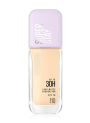
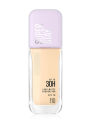
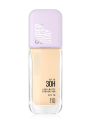
What is the SPF value for the product named `Superstay Lumi Matte Foundation (#1, Color No.110, Compare to Maybelline)`?
Could you please recommend an alternative product for SiliPerse™ (Disperse ผงสีใน Silicone) - 100 กรัม ( 100 g )? I need something that can be used to disperse color pigments in a silicone or oil base.
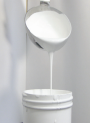
I am developing a cosmetic serum formulation containing copper peptide and am interested in using Sophorolipid 50% (liquid form). I have the following questions: 1. Is Sophorolipid 50% appropriate for combining with copper peptide powder to enhance its penetration into the skin? 2. I plan to use the following process: * Mix Sophorolipid 50% with copper peptide powder. * Use a water bath at 30°C for 10 minutes. * Apply sonication for 10 minutes. Is this process suitable for achieving good dispersion or encapsulation? 3. In a 30 ml serum, if I want to use 1% copper peptide, what approximate amount (in grams or milliliters) of Sophorolipid 50% would you recommend to support this concentration effectively? 4. Does the specific smell of Sophorolipid 50% remain noticeable in the final product, or does it usually fade after formulation?
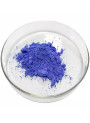
When using the hot water diffusion method to dissolve HPMC (Hydroxypropyl Methylcellulose, 5000 cP, 68C Gel), what proportion of the total water should be heated for dispersion (80-90°C) versus the portion that should be cold (ideally no more than 20°C) for final dissolution?