Browse Questions and Answers
Avg response: 24 HrsFilter Questions
20 of 14239 results
Regarding the following sample Microemulsion Cleanser formula: * Oilsify 15 30% * Any oil 50% * Water 10% * Butylene Glycol 10% Can Oilsify 30 be used instead of Oilsify 15 in this formula?
I have a question. I made a lip balm using oil as a main ingredient. When applied, my lips feel moisturized, but after a while, it seems to evaporate and my lips feel dry again. Is this considered an allergic reaction? **Formula:** * Beeswax: 20% * Total Oil: 80%
Please review the following Oil Serum formulation for anti-aging, skin brightening, and moisturizing for combination skin. Should any other ingredients be added? Do the active ingredients used need to be oil-soluble only? Here is the formulation: * Coconut Oil: 89.79% * Oil Thick™ Clear: 8% * Vitamin E: 0.01 % * WhiteCumin™ (Tetrahydrodiferuloylmethane): 0.2% * Hydro Protein: 1% * Mild Preserved Eco: 1 %
Based on the following formula, is it necessary to add solvents and/or penetration enhancers? ``` water 85% B3 3% B5 1% Sweet Almond Oil 8% Easy Cream Maker 2% Microcare 1% ```
Are there any active ingredients that can impart colors other than white or cream to a cream formulation, without using pigment powders?
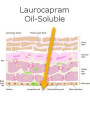
I'm wondering if the penetration enhancers Ethoxydiglycol and Laurocapram, along with the ingredient reservoir Reservoir-Tech, can be mixed into a single water-based gel product. Would this be wasteful, or should I choose only one?
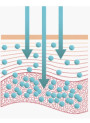
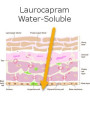
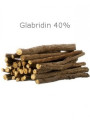
I would like to inquire before purchasing if this lotion formula is usable and request the mixing steps. This is a lotion formula focused on skin whitening: * Licorice Extract (Glabridin 40%) 0.02% * Butylene Glycol 0.5% * GlucoBright™ (Acetyl glucosamine) 4% * Safe-B3™ (Vitamin B3, Niacinamide) 5% * Light Cream Maker™ 1% * Phenoxyethanol (Extra Pure) 1% * Glycerin 5% * Water 83.28% * Fragrance 0.2%
Regarding the Oil Soap formula recommended: * Oil Soap™ 45% * Fractionated Coconut Oil 46% * Jojoba Oil 5% * Vitamin E Acetate 1% * Oil Blender 3% Can I use another type of Emulsifier instead of Oil Blender? If so, which ones can be used and at what percentage?
1. What is the difference between the following three ingredients? * Ascorbic Acid * L-ascorbic acid * Ethyl Ascorbic acid 2. I have a target formulation using Propanediol, ascorbic acid, and Alpha-Arbutin. Ascorbic acid is not available on the website. Which ingredient can be used as a substitute?
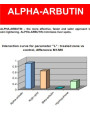
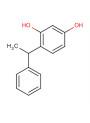
1. Can Ethoxydiglycol be used to dissolve Ferulic Acid, and also dissolve Vitamin E Tocopheryl Acetate and Vitamin E dl-alpha tocopherol? Or can Butylene Glycol be used? 2. If yes, after dissolving Vitamin E and Ferulic Acid in Ethoxydiglycol, can they be added to water mixed with Vitamin C L-ascorbic acid standard 15%? If yes, please specify the percentages for Ferulic Acid, Vitamin E, and Ethoxydiglycol. 3. In the formula, can Sym White (phenylethyl resorcinol), Phospholipid, and Pro Polymer (Acrylate Crosspolymer) be added together? 4. Comparing Sym White (phenylethyl resorcinol) and activated resorcinol (4-butyl resorcinol), which one does the expert recommend for better whitening efficacy, disregarding irritation? If there is no irritation, which one is more suitable in the expert's opinion? 5. For Laurocapram used as a penetration enhancer, there is one type for water-soluble substances and another for oil-soluble substances. Can both types be included in the same formula? Should the percentage of use be reduced when used together? 6. What is the recommended percentage for Phospholipid when used as a penetration enhancer for both water and oil-soluble substances?
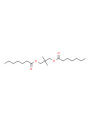
Could you please explain the functions of the following cosmetic ingredients? * acrylamide copolymer * acrylates/c10-30 acryl acrylate crosspolymer * Butylene Glycol * calcium carbonate * carrot extract * Centella Extract * Cucumber Extract * apple extract * methyparaben * mineral oil * Neopentyl Glycol Diheptanoate * polysorbate 85 * propylparaben * Squalane * triethanolamide * watermelon seed oil * peg-8 esters



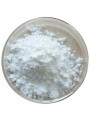
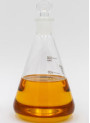
I would like to know if the product [url=http://www.myskinrecipes.com/shop/6907-4d-hyaluronic-acid.html:2lxr9gk5]4D Hyaluronic Acid[/url:2lxr9gk5] is the same as [url=http://www.myskinrecipes.com/shop/6907-4d-hyaluronic-acid.html:2lxr9gk5]Hyamagic 4-D[/url:2lxr9gk5]? I want to purchase it.
I want to mix Euphoria for Her (compare to CK) fragrance oil with Ethyl Alcohol to make a spray perfume for personal use, like regular perfume. * Can I use these two ingredients to make perfume for spraying on people like typical perfumes? * What is the recommended mixing ratio for the fragrance oil and alcohol? * Do I need to add any other ingredients besides these two?
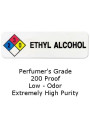
When will Myristyl Nicotinate (Pro-Niacin™) be back in stock? Could you please provide information about this ingredient, also known as Max-B3™? Specifically, I'd like to know about its properties and usage: * What is its solubility? (It's mentioned as an oil-soluble form of Vitamin B3 with excellent skin absorption compared to water-soluble Niacinamide). * What are its key benefits for the skin? (Including improvement of skin barrier function and hydration, reduction of fine lines and wrinkles, improvement in skin tone and texture, enhanced skin microcirculation, and anti-inflammatory properties). * How is it typically used? (As a main ingredient in products aimed at nourishing aging skin). * What solvents is it soluble in? (Oils and organic solvents like ethyl alcohol). * What is the recommended utilization rate? (0.5-5.0%, with 3% being recommended).
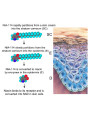
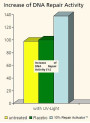
I am formulating a cream using Butter Cream Maker and Cetearyl Alcohol as the primary emulsifiers and thickeners, aiming to avoid using additional Emulsion Stabilizers. My oil phase formulation is: * Butter Cream Maker: 3% * Cetearyl Alcohol: 4% * shea butter: 10% * Vit E: 1% The mixing method involves heating the oil phase together until dissolved at 80°C, and mixing water with water-soluble ingredients at 80°C (except heat-sensitive ingredients added later at 40-50°C). I have found that the following water phase ingredients cause the product texture to become liquid: * Soy Extract 5% * 1,2-Hexanediol 3% * Natto Gum 5% Could you please review the following list of water phase ingredients and advise which ones might also cause the cream texture to become liquid, either individually or when used together in combination? * Repair Activator 15% * Fucus Film 5% * Live Yeast Cell 3% * Glyceryl glucoside 2% * Alaria Esculenta * Glycosaminoglycan 3% * Snow Algae 3% * Isopentyldiol 5% * Horse Placenta 3-5% * Plankton 2-5% * Apple Stem Cell Extract 3% * Rosa Hybrid Cell Extract 2% * Japanese Cedar 1% Thank you.




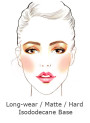
I am trying to make a lip cream using the following formula recommended for Warp Cream Maker: 1. Warp Cream Maker 25% 2. Cyclomethicone 25% 3. Isododecane 25% 4. Polyethylene Wax 2.5% 5. Silicone Film (Long-Wear, Hard, Isododecane Base) 22.5% The color payoff is good, but my upper and lower lips stick together. I tried adjusting the ratio to: 1. Warp Cream Maker 28% 2. Cyclomethicone 28% 3. Isododecane 28% 4. Polyethylene Wax 3.5% 5. Silicone Film (Long-Wear, Hard, Isododecane Base) 13.5% This reduced the stickiness, but my lips still feel sticky and stick together. Could you please advise on how to further adjust the ratio or add other ingredients to solve this problem?
If only [Essential Oil] + PG are used without adding Diffuser base or [Alcohol], is it possible? What are the effects?
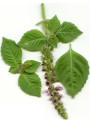
I tried using Mineral Oil in my lotion formula and the feel is very good. However, some customers are concerned it might cause acne, even though the Mineral Oil I use does not. I would like to know if there are any other oils that can be used as a replacement that are similarly lightweight, as other options tend to be too heavy. The formula already contains 2-3 types of Natural Oil, but in small percentages. I used Mineral Oil in a higher percentage. Thank you.
Regarding Perfect-C (Ascorbyl Tetraisopalmitate), which is oil-soluble: * Can it also be dissolved in other glycols or other solvents besides oil? (If I want to avoid using oil in the formula) * Could you recommend oil-compatible thickeners that can incorporate enough oil to dissolve Perfect-C in the formula? Please also specify the recommended percentage range for the thickener and the oil. * What is the difference between Pro Polymer (Acrylates/C10-30 Alkyl Acrylate Crosspolymer) and Carbomer Ultrez 20 (Carbomer)? If they are different, how are their usages different?
I am formulating a powder face wash using Amino Wash (Sodium Lauroyl Glutamate) and would like to know which of the following ingredients can be effectively and cost-efficiently combined with it to achieve specific results: **1. For Exfoliation and Brightening:** I intend to use Protease Enzyme as the primary exfoliant. Can I also use it with: * Papaya Enzyme * Pineapple Enzyme And can the following be used in the formula? If yes, please recommend the percentage. * Betaine Salicylate * Glycolic Acid **2. For Moisturization (to provide moisture after washing):** Can I expect moisturizing results from these ingredients, and which are suitable for the formula? Which ones should not be used together? * Goat Milk Powder * Hydrolyzed Milk Protein * Avena Sativa Kernel Flour * Hydroxyethyl Urea **3. For Reducing Acne or Speeding up Acne Healing:** Which of the following ingredients can help with these issues, which one do you recommend, what percentage should I use, and do they need to be used with any other specific ingredients? * Encapsulated Salicylic Acid power * Capryloyl Salicylic Acid LHA power * Complex Salicylic Acid power **4. Additional Recommendations:** Besides the ingredients mentioned above, please recommend any other suitable ingredients that were not listed if you believe they would be better or more cost-effective.