Browse Questions and Answers
Avg response: 24 HrsFilter Questions
20 of 14228 results
Is **Cyclomethicone (Cyclopentasiloxane)** suitable to be used as the primary base for formulating an **oil perfume spray**? The desired base should provide a silky, non-greasy feel and evaporate quickly, leaving only the fragrance behind.
I am developing an **all oil-soluble cream eyeshadow** formulation and am seeking a **natural-origin ingredient** that can help **elongate the wear time** and ensure there is **no creasing**. What oil-soluble, natural-origin ingredient is recommended to function as a film former and wear extender in this type of anhydrous cosmetic formulation?
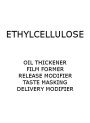
What are the recommended uses and functions for the product `Palm Kernal Oil 90% Oleic Acid` when formulating cosmetics and skincare products?
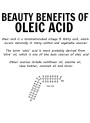
I am developing a shimmering body oil formulation containing gold mica. I need advice on how to formulate the product so that the gold mica particles remain evenly suspended and do not settle at the bottom of the bottle. If the mica currently settles, what specific ingredients or formulation adjustments (such as adding a gelling agent or thickener) are required to achieve permanent suspension?

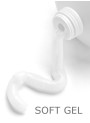
I am looking to create a **clear gel sunscreen** using the oil-soluble blend `SPF Protect Ultra™ III`. 1. Which base or gelling agent should be used to achieve a clear, stable oil gel texture? 2. If absolute clarity is not possible, what base can be used to create a light gel texture that melts or dissolves upon application into the skin?
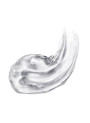
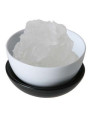

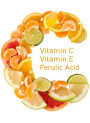
# Thickening the `Vitamin C E Ferulic (ID: 70)` Serum Base I have purchased the `Vitamin C E Ferulic (ID: 70)` product. I need clarification on two points: 1. Is this product a complete formulation that can be used directly on the face without adding any other ingredients? 2. Is it possible to add a thickener to this serum base to increase its viscosity? If so, what specific thickeners are recommended for this base, considering it contains 15% Ascorbic Acid, 1% Vitamin E, and 0.5% Ferulic Acid, resulting in a highly acidic (low pH) environment?
I am planning to create a Cica Sleeping Mask using a pre-made base and several active ingredients. Please review the following formulation to confirm if it is usable, and provide detailed instructions on the correct mixing procedure, particularly regarding the different solubility characteristics of the ingredients. ## Cica Sleeping Mask Formulation * Cica sleeping mask base: 200 g * WhiteCumin: 1 g * Pep radiance: 2 g * Beta glucan: 6 g * Pep-coll: 6 g * Mild Preserved Eco™: 2 g Is this formula usable, and how should I mix these ingredients?
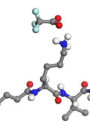

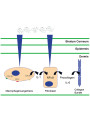
I would like to inquire about the use of a Compatibilizer. Can Polyethylene-graft-maleic anhydride be effectively used for blending Polypropylene (PP) and Polyethylene (PE)?
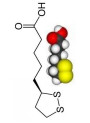
I am interested in using Alpha Lipoic Acid (ALA) (Powder) (ID: 185). Can this specific product, which is Cosmetics-grade, be used for manufacturing food supplements or for internal consumption? If not, what is the recommended Food-grade alternative for dietary supplements?
I am looking for recommendations for a suitable hair nourishing formulation specifically designed for **adult/mature hair**. Could you please provide a formulation that utilizes the base: * `SweetWash™ Hair (Shampoo Foaming Base Built-in fixative)` The formula should focus on providing deep nourishment, conditioning, and repair suitable for the needs of mature hair.

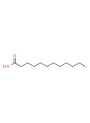
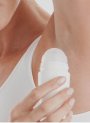
I have questions regarding the **Antiperspirant / Deodorant Base Cream (code: 124994)**: 1. Are there any base alternatives in a lotion format available, besides the cream base? 2. If a lotion base is not available, can I add water to the cream base to thin it for packaging in a roll-on bottle? If so, what is the recommended percentage of water addition? (I need to ensure stability for roll-on use.) 3. Can the following ingredients be added to the Base Cream or a potential Base Lotion? Please provide advice on compatibility and mixing instructions for proper use: * Aluminum Chlorohydrate 50% (Liquid) * Aluminum Chlorohydrate 100% (Powder) - *Please advise on the mixing method.* * Aluminum Zirconium Pentachlorohydrex GLY (Powder) - *Please advise on the mixing method.* * Lauric acid * Fragrance * Microcare PHC
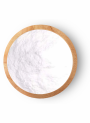
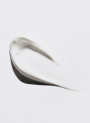
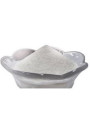
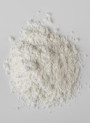
I am comparing two forms of Natural Betaine: Natural Betaine (Crystal) and Natural Betaine (Powder). Which form offers better dissolution in water at normal temperature?
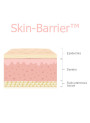
I have created a serum using the following formulation, but I find the texture absorbs slightly too slowly. Could you advise on which ingredients should be adjusted (increased or decreased) to improve the absorption speed and lighten the feel? **Formulation:** * Salmon DNA: 10.00% * Absolue Soft Cream Base (compare to Lancome): 41.00% * Methylsilanol Mannuronate: 4.00% * Mild eco: 1.00% * Dimethyl Isosorbide (DMI): 3.00% * Acetyl Tetrapeptide-11: 3.00% * Pep®-Elastyl (Palmitoyl Hexapeptide-12): 4.00% * Syn-Ake: 4.00% * Pep®-Mican (Acetyl Tetrapeptide-9): 3.00% * Pep®-Geline (Trifluoroacetyl Tripeptide-2): 2.00% * HRC-4000: 10.00% * Epidermal Growth Factor: 2.00% * Satin Cream Maker: 0.50% * Skin barrier: 10.00% * LipidSoft™ Cyclo (e.q. Cetiol Ultimate): 2.00% * Pure-Adenosine: 0.50% * Total: 100.00%


I am using 2% of the gelling agent `Oil-Fix™ S` (Silica Dimethyl Silylate) in a silicone base, but the viscosity is currently too low. I need the final product to suspend mica and disperse the following components: * 1% Camellia oil * 0.5% Jojoba oil * 0.3% Fragrance Is it essential to use heat for `Oil-Fix™ S` to reach its full viscosity, or does it require high shear mixing, beyond what a standard paddle overhead mixer can provide?


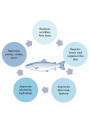
What is the difference between the INCI name `DNA` (referring to Salmon DNA/PDRN) and the INCI name `Sodium DNA`? Specifically, how do these two forms differ in terms of chemical structure, solubility, and stability when used in cosmetic formulations?
I am using Xanthan Gum (clear gel type, smooth, non-stretchy texture) and need to disperse it in Glycerin before adding it to the water phase. What is the recommended ratio of Xanthan Gum to Glycerin required to ensure proper dispersion and prevent clumping (fish-eyes)?
Can **Tranexamic Acid (Trans-White™)** be dissolved in water without applying heat?
# Essential Oils for Flavor Development in Beverages I would like to know if the following essential oils can be used for flavor development in beverages: * **Spices Category:** Clove, Nutmeg, Cajeput, Cardamom, Tumeric, Cassia. * **MySkinRecipes Oils:** Lemon Oil, Sweet Orange Oil, Lime Oil, Cassia Oil, Nutmeg Oil, Patchouli Oil, and Clove Oil. Please provide detailed information regarding: 1. The suitability of these oils for food and beverage applications. 2. The required grades (e.g., Food Grade vs. Cosmetic Grade). 3. Any specific usage guidelines, including considerations for solubility and regulatory limits.





I noticed conflicting information regarding the solubility of **Astaxanthin Liquid (Stabilized, Crystal Clear)**. The product description states it is water-soluble, but the technical section indicates it is oil-soluble. Which phase should this specific stabilized liquid be incorporated into (water phase or oil phase) for cosmetic formulation?
Tetrasodium Pyrophosphate (TSPP) is an inorganic salt often used in powder form. What are the specific reasons, such as chemical stability or physical properties, that necessitate or recommend storing TSPP under refrigeration rather than at standard room temperature?