Browse Questions and Answers
Avg response: 24 HrsFilter Questions
20 of 14228 results
I am formulating a **Facial Cleansing Gel** containing `Bubble Max™ LT` (Long-Lasting Bubble). What should the optimal pH be? I attempted to adjust the pH to 5.5, but observed that the formula containing `Bubble Max™ LT` experienced **phase separation** (separated layers/sedimentation). I am unsure if this separation is directly related to the pH level.

Regarding the **Antiperspirant / Deodorant Base Cream** (ID 124994), I wish to modify the formula to achieve underarm whitening results while ensuring the cream remains homogeneous and easy to apply. ### Formulation and Performance Questions 1. Which active ingredients can be added for whitening while maintaining the cream's texture and stability (O/W emulsion)? 2. Could you recommend suitable fragrances that make the product appealing and user-friendly? 3. For this base, what is the approximate duration of odor control? (Assuming standard active ingredients like Anti-Sweat™ are incorporated.)
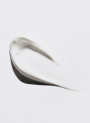
Regarding the product **8 Hours Fragrance Spray Base (Musk-Free)**: 1. Can this base be used directly to mix with fragrance oils or essences for making perfume spray? 2. Is it necessary to add extra alcohol or any other ingredients to the base before mixing?
What is the recommended usage percentage for Tocopheryl Nicotinate when used in cosmetic product formulations?
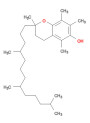
Is LipidSoft™ Moist (Triethylhexanoin) suitable for use in an essence primer formulation where a light, non-heavy texture is required? What are its properties regarding spreadability, smoothness, and non-comedogenic characteristics in this application?
I am looking to formulate a **primer essence**. Could you recommend suitable ingredients that provide the following dual functions? * **Skin Coating/Primer Effect:** Ingredients that effectively coat the skin for long-wear performance. * **Oil Control:** Ingredients that provide excellent sebum control for a matte finish throughout the day.
I am developing a body oil formulation and require advice on improving its texture to be more slippery and easy to spread, as the current application feels "draggy" (sticky/high friction). 1. Is **Mineral Oil (Paraffinum Liquidum) Very Light (5cst)** (ID: 10038) suitable for achieving a smooth, non-draggy feel, or what alternatives are recommended for an oil-based formula? 2. The current formula feels draggy even though only 6-8% of additional ingredients have been incorporated. What specific substances are recommended to enhance the slip and ease of application in an anhydrous oil formulation?


I am formulating a sunscreen containing ZnO + TiO2 (O/W emulsion, Phase A water-based + Phase B oil-based, 1 kg batch size, pH 6-6.5, Halal standard). I plan to incorporate black iron oxide color into Phase B (oil phase) at a temperature not exceeding 75°C, using Polyhydroxystearic Acid as a dispersant in non-polar oils such as Coco-Caprylate/Caprate, Cetiol CC, or Squalane. What are the differences between these two grades of black iron oxide, and which is more suitable for this specific formulation context? 1. `Iron Oxides Black (Triethoxycaprylylsilane Coated)` 2. `Iron Oxides Black (Ultra-fine, Methicone-Coated)`
We are looking for a protease enzyme suitable for cosmetic applications. We require recommendations for products currently in stock that meet the following specifications: * **Grade:** Cosmetic grade * **Optimal pH:** 6.5–7.5 * **Heat Stability:** Must be highly heat resistant for storage conditions between 25–40°C. Could you recommend a protease enzyme product that meets these specific requirements?
I am formulating a tinted sunscreen cream containing ZnO and TiO2. My goal is to achieve an **Ochre color** similar to the Clé de Peau Beauté Crème Tinted UV in the Ochre shade. The formulation structure involves: * Phase A (water-based) * Phase B (oil-based) The pigments are dispersed in Phase B under the following conditions: * **Pigments:** Iron Oxide Yellow (CI77492), Red (CI77491), Black (CI77499). * **Dispersant:** Polyhydroxystearic Acid. * **Vehicle Options:** Coco-Caprylate/Caprate, Cetiol CC, or Squalane. * **Process:** Dispersed until smooth, then emulsified with Phase A. * **Temperature Limit:** Not exceeding 75°C. **Project Specifications:** * Batch size: 1 kg * Target pH: 6.0 - 6.5 * Must comply with Halal standards. What are the recommended percentage ratios for the three Iron Oxides to achieve the desired Ochre shade, considering compatibility with the sunscreen base and the specified dispersion method?
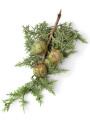
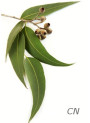
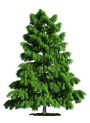
I am looking to create a safe DIY perfume or body mist for personal use by blending a combination of essential oils and fragrance oils. What is the recommended method for blending the following five scent components to create a stable, clear body spray suitable for skin application? * **Bergamot Essential Oil (FCF, Bergapten-free)** * **Neroli Fragrance Oil** * **Cedarwood Oil (Atlas, Morocco)** * **Eucalyptus Essential Oil** * **Cypress Essential Oil** Specifically, please advise on: 1. The most suitable base (e.g., Perfumer's Alcohol, water-based system with a solubilizer). 2. Suggested ratios or percentages for the total fragrance blend (targeting a body spray/light EDT concentration). 3. Crucial safety precautions for skin application, especially concerning the use of oils like Bergamot (FCF) and Eucalyptus.

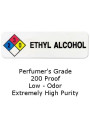
I am planning to use **Ethyl Alcohol (96%, Perfumer Grade, Low-Odor)** for mixing perfume. * Does the 96% grade have a truly low odor, similar to Ethyl Alcohol 99.9%? * How significant is the difference in performance when mixing perfume between the 96% and 99.9% grades? * What is the volume (in Liters) of 1 kilogram of Ethyl Alcohol (96%, Perfumer Grade, Low-Odor)?

The Certificate of Analysis (COA) for Oleic Acid (90%) does not specify the pH value. Could you please clarify what the typical pH of this substance is, or what standard measurement should be used to determine its acidity?
I am looking for a functional substitute for the ingredient `Genapol® EP 1022`. Could you recommend an alternative solubilizer?
I am looking for a suitable substitute for `LipidSoft™ D5 (Cyclomethicone Replacer)` to use in a clear facial serum formulation at a concentration of **34%**. The current ingredient has a strong chemical odor, which I need to eliminate. The replacement must meet the following criteria: * Be approved by the Thai FDA (not prohibited). * Function as a volatile silicone alternative. * Provide excellent volatility, slip, cushion, and overall aesthetics. * Have a very low or non-chemical odor.
What are the essential details regarding O₂-Complex™ (Pure Perfluorodecalin), a perfluorocarbon liquid utilized for the oxygen donor/carrier concept in cosmetics? Please provide the following information, including specific formulation and handling guidelines: * INCI Name * Function, Concept (e.g., 'Oxygen Net' skincare concept) * Recommended Usage and Usage Rate (0.5–5%) * Specifications and Characteristics (e.g., clear, colorless, high density, chemically inert) * Safety and Compatibility (especially regarding water/oil incompatibility) ## Formulation and Mixing Guidelines: * How must it be dispersed (e.g., PFD nanoemulsions or capsule systems)? * Optional Oxygenation process (cooling to **5–10°C**, spurting medical-grade O₂ for **15–30 minutes per liter**). * Temperature and Shear Control requirements (control temperature to **≤40°C**, avoid high shear/vacuum). * Specific Packaging requirements (filling under O₂, minimizing air gaps, using **high-gas barrier packaging**). * Monitoring methods (Oxygen Meter/Gas Analyzer).
I am seeking recommendations for a **subtilisin enzyme** suitable for cosmetic applications. The enzyme must meet the following strict specifications: * Optimal pH range: 6.5-7.5 (Neutral) * Grade: Cosmetic/Personal Care Grade * Stability: Good heat stability (must be stable at 50°C for 30+ days) * Activity: High activity (>1000 U/mg)
For the SPF UVA, UVB measurement service (Boots Star/PA eq.), if I have cosmetic samples that have different shades but utilize the exact same base formula (including all UV filters and concentrations), do I need to submit all shades for testing, or is submitting just one representative shade sufficient for product registration purposes?
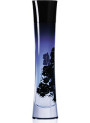
Is the fragrance product 'Code for Her (compare to Armani)' a ready-to-use perfume that can be applied directly to the skin, or is it a concentrated fragrance oil that requires mixing with a suitable base, such as alcohol, oil, or a cosmetic base, before use?
I mistakenly ordered **Clarify-Wash™ Powder (Sodium C14-16 Olefin Sulfonate)** instead of the required **Clarify-Wash™ 35 Liquid (Sodium C14-16 Olefin Sulfonate 35%)**. I need to prepare 4 kg of the equivalent liquid product. Please provide the exact ratio and amounts (in grams/kilograms) of Clarify-Wash™ Powder and water needed to achieve the 35% active matter concentration of the liquid product. Also, please advise on any critical formulation steps, such as pH adjustment, necessary when using the powder form.