Browse Questions and Answers
Avg response: 24 HrsFilter Questions
20 of 14228 results
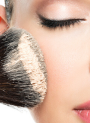
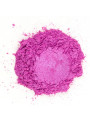
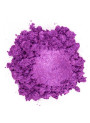
I am developing a **Mineral Makeup blush** and would appreciate your review and guidance on my current formulation. My desired product characteristics are: * **Finish:** Semi-matte. * **Color:** Barbie Pink with a violet tint, ensuring clear pigment without a white cast or chalkiness. * **Texture:** Soft, smooth, not rough or stiff upon application. * **Skin Suitability:** Ideal for oily-dehydrated skin. * **Ingredient Restrictions:** Must be free of silicone and non-comedogenic ingredients. * **Pore Effect:** Should not emphasize pores. My current ingredient list is as follows: * `Baby Pink Mica` 45% * `Pink Violet Mica` 20% * `MatteSilica 5™` 20% * `UltraBlur™` 10% * `AminoSilk™` 5% I have the following specific questions regarding the formulation: 1. What are the differences in ingredients, texture, and color between a **loose powder** and a **pressed powder** formulation? 2. If I decide to create a **pressed powder**, what type of **binder** should I use? 3. Based on my current ingredient list, what are your recommendations for **adding or reducing** any components to achieve the desired properties?
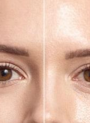
Could you please clarify if your Pisum Sativum Extract (Pea-Ex™) is the same product as Anagain from Mibelle AG Biochemistry?
Can `Pro Polymer™ (Gel Maker)` emulsify oil and water to create a cream texture, or is it primarily a gel-forming agent?
Can `ThickClean™ (Acrylates Copolymer, eq. Carbopol SF-1)` be used with `Liquid Salicylic Acid (40% Active Salicylic, Cationic For Wash-Off)`? I was informed that `ThickClean™` should not be used with polar ingredients. Is `Liquid Salicylic Acid` a polar/charged ingredient?
Is Saw Palmetto Extract, specifically the type sold by MySkinRecipes Expert, suitable for use in a hair tonic formulation for cosmetic application?
I would like to inquire about `Zinc Ricinoleate (30% Solution)`. Will it dissolve clearly in water-based formulations? If so, what are the recommended ingredients and their percentages to achieve a clear formula, considering the pH range? Specifically, I'm looking for guidance on the use of: * `Zinc Ricinoleate (30% Solution)` * `Ultra Solve` * `Propylene Glycol` or `Butylene Glycol` or `Ethyl Alcohol` * `Disodium EDTA` (for pH below 8) * `Tetrasodium EDTA` (for pH above 8)
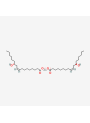
Could you confirm if `Micromul™ 10HDA (10-Hydroxydecanoic Acid Microemulsion)` is microencapsulated, and if this formulation helps to extend its shelf life and protect it from oxidation?
Could you confirm the properties of `Micromul™ 10HDA (10-Hydroxydecanoic Acid Microemulsion)`? Specifically, is it a microencapsulated form of `10-HDA` that offers extended shelf life and protection from oxidation?
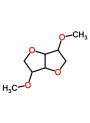
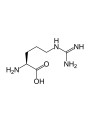
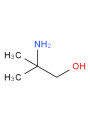
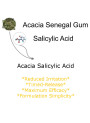
I would like to request a review of my skincare emulsion formula, which aims to address anti-aging, anti-acne, and skin brightening concerns. Below are the ingredients and my proposed formulation steps. Could you please check for compatibility, stability, and optimal processing? **Water Phase (DI Water 50%, with remaining for pH and texture adjustment):** * `Disodium EDTA` 0.2% * `Lecithin gel` 1.5% * `Propylene Glycol` 5% * `Propanediol` 3% * `Mild preserved COS` 1% * `Licorice Extract (Licochalcone A 1%, Water-Soluble)` 2% * `Acacia Salicylic Acid` 2% * `Safe-B3` 4% * `GlucoBright™ (Acetyl Glucosamine)` 4% * `Micromul™ EGCG` 2% * `Micromul™ 10HDA` 3% * `Propolis Extract (Liquid, Water-Soluble, High Flavonoids)` 2% **pH Adjustment (before oil phase, target pH 5-5.5, suitable for Actin AC and other stable ingredients):** * **Alkaline Adjusters:** `L-arginine`, `AMP (2-Amino-2-methyl-1-propanol) 95% (Deodorized)` * **Acidic Adjusters:** `Citric acid`, `Malic acid` **Oil Phase:** * `Dimethyl Isosorbide (DMI)` 2% * `Bakuchiol-Eco` 1% * `Protec™ OX` 0.1% * `Protec™ UV` 0.1% * `Squalane` 3% * `Actin AC` 3% * `Lipidsoft cyclo` 3% * `Phosphomax` 1% * `Xanthan gum` 0.3% **Final Steps:** * Check pH and texture before completion. * May use small amounts of `glycol` or `Lipidsoft` to adjust texture. * May add more `LecithinGel` if the emulsion is not well-emulsified. * Final pH adjustment to 5-5.5. * Add remaining `DI water` to 100%.
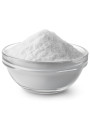
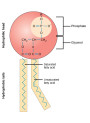
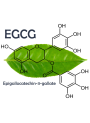
What substances can be added to soap formulations to extend their shelf life and prevent microbial growth, such as bacteria, yeast, and mold?
I am attempting to create a gel product, but it has not gelled even after nearly 20 hours; it remains in liquid form. I have prepared the following formulation: | Order | Ingredient | Function and Reason for Use | Concentration (%) | Quantity (grams) | Quantity (ml) | |---|---|---|---|---|---| | 1 | Water Extract from `หมาน้อย` Leaf | Primary solvent, active ingredient | 74.0 | 37.0 | 37.0 | | 2 | Glycerin | Humectant | 5.0 | 2.5 | 2.0 | | 3 | Pro Polymer™ | Gelling Agent | 2.0 | 0.5 + | (measured by weight) | | 4 | Pectinase | Pectin-degrading enzyme | 2.0 | 1.0 | | | 5 | Vitamin E | Antioxidant, skin nourishing | 2.0 | 1.0 | 1.1 | | 6 | Polysorbate 80 | Oil-in-water emulsifier | 3.0 | 1.5 | 1.4 | | 7 | Acetic Acid 5% | pH adjuster, electrolyte | 12.0 | 6.0 | 6.0 | | **Total** | | | **100%** | **50.0** | **50.5** | My current mixing procedure is as follows: 1. **Prepare the Oil Phase (Emulsion Base):** * In a clean, dry container, add `Vitamin E`. * Slowly add `Polysorbate 80` (referred to as `Tween 80` in my notes) little by little, stirring continuously with a spatula or spoon in one direction until both ingredients are uniformly mixed. `Polysorbate 80` will act as an emulsifier to allow `Vitamin E` to combine with water later. 2. **Prepare the Gel Phase (Gel Base):** * In another container, add the fresh `หมาน้อย` leaf water extract. (Note: The remaining `Pectinase` enzyme was already mixed into this fresh `หมาน้อย` leaf water extract). * Add `Glycerin` and stir to combine. * Slowly sprinkle `Pro Polymer™` powder into the water mixture in very small amounts, stirring continuously with a spatula in one direction. I have paused at this last step, waiting for the mixture to form a gel before incorporating the oil phase from step 1, and then adding the `Acetic Acid` once the gel has formed. However, the mixture is still not gelling. What could be the reason for this issue?
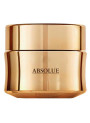
I am a private customer who enjoys making face creams as a hobby. I recently purchased your `Absolue Soft Cream Base` and found it to be an excellent base for adding functional additives. I am now interested in creating my own cream base inspired by it. While reviewing the ingredients to source them from your website, I noticed that certain components, such as `Hydrogenated Polyisobutene`, are available in multiple grades. This also appears to be the case for several other ingredients in the formulation. Could you please advise on which specific grades of these ingredients, particularly `Hydrogenated Polyisobutene`, would be most suitable to replicate or closely approximate the rich, well-coating texture and feel of your `Absolue Soft Cream Base` for a night application cream?
I would like to create a DIY toner that has exfoliating properties and helps reduce clogged pores, as I frequently experience clogged acne. Could you please recommend simple, beginner-friendly ingredients and a straightforward formulation? Specifically, I am looking for a toner that: * Helps exfoliate dead skin cells and dissolve impurities within pores, which are primary causes of clogged acne. * Is suitable for acne-prone and sensitive skin, ideally with a low-irritation mechanism. * Helps to tighten pores and control excess oil on the face. * Includes ingredients that reduce irritation and moisturize the skin, making the toner gentle. Please provide a basic formula with recommended percentages, such as `Acacia Salicylic Acid` and `Witch Hazel (Alcohol Free, Paraben Free) Plus Allantoin`, along with instructions for preparation.
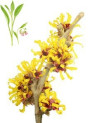
I am formulating a liquid soap product that includes glitter powder, but I'm encountering a problem where the glitter settles at the bottom of the product. Could you please advise on how to prevent this precipitation and ensure the glitter remains evenly suspended in the liquid soap?
I am experiencing an issue with my water phase formulation. I used `MAS 1%` as a gelling agent at a concentration of `1%` to thicken the water phase. However, the formulation **will not thicken**, and there is a **thin white residue** at the bottom. What could be the reasons for this, and how can I troubleshoot it?
I am looking to develop innovative and unique skincare products using `Oil-Fix™ W (Silica Dimethyl Silylate)`. Could you please suggest some product ideas that leverage its properties to create formulations with a matte, non-sticky finish, improved waterproof capabilities, and enhanced stability, particularly for water-in-oil or water-in-silicone systems?
Regarding the `Oil-Free Pomade (Natural Hair Styling, Matte)` formulation, I would like to inquire about the following: * What are the specific ingredients used in this pomade? * What are the recommended percentages or quantities for each ingredient? * Are these individual ingredients available for purchase on your website?
Is Activated Carbon powder available in food-grade quality? If so, please provide detailed information on its applications in the food industry, specifically its use as a processing aid for purification (e.g., in sugar, beverages, edible oils) and as an intentional color additive (E153 'vegetable carbon'). Additionally, could you explain the regulatory status of E153 in different regions (e.g., EU/UK, US) and highlight any important safety considerations, such as its non-selective adsorption and recommended usage guidelines with medications?
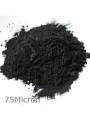
I would like to know if `Carboxymethyl Cellulose (CMC)` can be used as a thickener in a shower cream formulation. Could you please provide details on its properties, recommended usage rate, and mixing method for achieving desired viscosity? Specifically, I am interested in knowing about the different types of `CMC` available (e.g., `Carboxymethyl Cellulose (CMC, 1000mPa.s.)` and `Carboxymethyl Cellulose (CMC, 2000mPa.s.)`), their consistency, and their resistance to acid and salt.
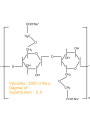
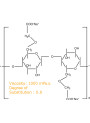
I am looking for a recommendation for a **natural hair conditioner**. The desired properties are for the conditioner to make hair **soft, smooth, untangled**, and add **weight** to the hair. Are there any natural conditioner ingredients or formulations that can achieve these effects?