Browse Questions and Answers
Avg response: 24 HrsFilter Questions
20 of 14228 results
What are 4D and 8D Hyaluronic Acid, and how do they differ from standard hyaluronic acid formulations?
What kind of face spray formulation can help reduce redness, be waterproof, and provide a cooling sensation, and what ingredients are suitable for this purpose?
How to formulate a non-sticky, fast-absorbing, non-clogging serum using specific ingredients, including questions on ingredient compatibility, necessary additions (like preservatives), and achieving the desired texture?
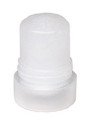
I purchased **Oil Stick™ Hard** and **Oil Stick™ Medium**. I would like to know: * Are these substances waxes, gels, or polymers? * Why do they become hard and clear when combined? * Will they still be hard and clear if used separately? I need a detailed explanation to answer my professor's question. Thank you.
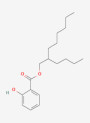
Hello, please review the following formula. The objective is an SPF 30 sunscreen spray, focused on reapplication throughout the day, for sensitive skin. **Formula:** * Zinc Oxide 200nm EasyDisperse™ = 12% * Glycerin = 10% * Chamomile Water (Anthemis Nobilis) = 10% * Butyl Octyl Salicylate = 10% * Kaolin = 5% * Butylene Glycol = 3% * Light Lotion Maker = 2% * Mild Preserved Eco™ (Preservative-Free) = 1% * Xanthan Gum = 0.20% * Tocopheryl Acetate = 0.01% * Balance: Water and water-soluble soothing ingredients **Questions:** 1. Is this formula suitable to be made into a spray for sensitive skin? 2. Are the proportions of sunscreen, solvent, and emulsifier appropriate? 3. Is Butyl Octyl Salicylate truly necessary if the purpose is only for reapplication throughout the day? 4. Can Chamomile Water (Anthemis Nobilis) help mask the sunscreen smell? 5. Can Kaolin help prevent skin greasiness, or can it be omitted? Thank you very much.


When formulating a Carbopol gel, adding Laurocapram mixed with water and Propylene Glycol before neutralization caused instability, resulting in white clumps and failure to gel. What is the reason for this instability, at which step should Laurocapram be added, and what alternative penetration enhancers can be used in a water-based gel?
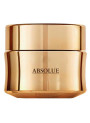
I want to purchase 1 kg of Absolue Soft Cream Base to use as a morning cream before makeup. I plan to add the following ingredients: 1. `Panthenol ( Pro Vitamin B5 , DL- Panthenol , Powder)` 1%: Should I add this directly to the cream, or should I mix it with water first? 2. `Capryloyl Salicylic Acid (LHA) Powder` 1%: Can I add this directly to the cream base? Will it dissolve since the base contains oil? If it doesn't dissolve, what should I do? Should I heat the cream base? If so, what temperature should I heat it to ensure the active ingredients from the manufacturer are not affected? 3. `Pure-Adenosine` 0.5%: Can this be dispersed directly into the cream after adding the ingredients from steps 1 and 2? If not, what should I do? 4. Based on steps 1-3, are there any additional ingredients needed for mixing? If so, please provide the ingredient name, percentage, and method so I can purchase them together. 5. After mixing according to the recommendations, will the cream feel oily? The base already contains silica. If it feels oily, what should I add to reduce oiliness? (Especially since I apply sunscreen afterwards, which is very oily). Please provide a link to the ingredient, percentage, and method.
What are the recommended usage percentages for Potassium Cocoyl Glycinate and Potassium Cocoate (30%) when formulating shampoo and facial cleanser products?
Seeking feedback and suggestions on a provided Cleaning Water formula, including potential ingredient adjustments and general formulation review.

Can Beta Cyclodextrin be used in solutions with a pH higher than the recommended range of 5-8? What are the potential negative effects if Beta Cyclodextrin is used at high pH?
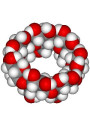

Please explain the process of using Cyclodextrin, including both Beta-methyl Cyclodextrin and regular Cyclodextrin, to incorporate drugs into a cream formulation. Specifically, what are the steps involved in encapsulating the drug within the Cyclodextrin, and how is the resulting drug-Cyclodextrin complex then mixed into the other cream ingredients?
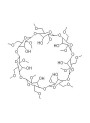
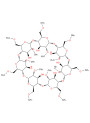
What does the FEMA 2588 code indicate about Raspberry Ketone's suitability as a food flavoring/food grade, and what solvents are suitable for dissolving this substance, given its poor solubility in oils?
How can 20% concentration of 'Glass Moist' be converted to ppm, and what information is needed for this conversion?
How to use Ezerwax™ in a lip balm formulation, including recommended usage percentage and the correct step for addition.
If Vitamin C and B3 (Niacinamide) serums should not be mixed in the same bottle, what is the recommended waiting time when applying them separately from different bottles for optimal efficacy, or should they not be layered at all?
What causes white clumps that dissolve upon rubbing in a cream formulation containing MSH White, Safflower Seed Oil, Satin Cream Maker, and other ingredients, when the heated oil phase (with dissolved MSH White) is added to the water phase?


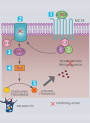
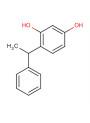
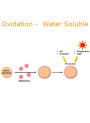
Seeking recommendations for effective oil-soluble ingredients to reduce melasma, freckles, and dark spots for use in an oil-based facial product. Specifically asking about the effectiveness and potential for irritation of MSH White™ (Undecylenoyl Phenylalanine) when simply dissolved in an oil base at the recommended percentage.
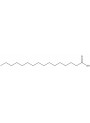
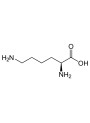
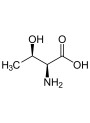
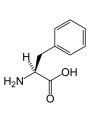
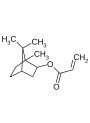

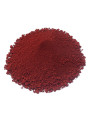
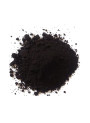
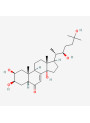
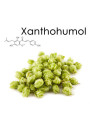
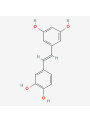
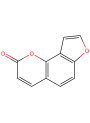
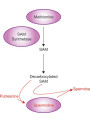
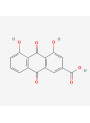
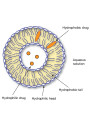
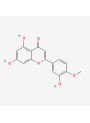
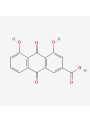
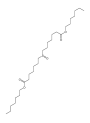
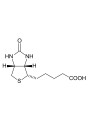
How can Pure-Biotin™ be incorporated into a water-based serum formula, given its solubility limitations? Are there any water-soluble alternatives available, especially since Biotin Express™ is no longer stocked?

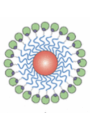
Is a simple gel formula consisting of 3% Horse Placenta Extract and 97% Aloe Vera Gel base stable and sufficiently preserved, or are additional ingredients required?
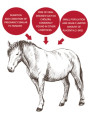
I have purchased Absolue Soft Cream Base and plan to mix it with other ingredients, specifically [active ingredients in water] or [active ingredients in oil]. I previously saw a question about the maximum amount of [active ingredients in water] that could be added to Absolue Soft Cream Base, and the staff replied that 10% is acceptable. I have the following questions: 1. If I add [active ingredients in water] at a proportion of 20% (20 parts active ingredients in water : 80 parts Absolue Soft Cream Base), would the cream's viscosity change too much? Would it become loose like a lotion, or would it still retain a cream consistency? 2. If I add [active ingredients in oil] at a proportion of 20% (20 parts active ingredients in oil : 80 parts Absolue Soft Cream Base), would the cream's viscosity change too much? Would it become too sticky, or would the texture still be acceptable as a cream? 3. If I add either [active ingredients in water] or [active ingredients in oil] at a proportion of 20%, would this affect the preservative ability of the base cream? What is the maximum proportion of active ingredients that can be added without compromising the preservative ability of the base cream?