Browse Questions and Answers
Avg response: 24 HrsFilter Questions
20 of 14228 results
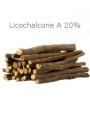
I want to create a toner using `Witch Hazel Water` as the solvent and include `Hi-LiconeA™ Licorice Extract (Licochalcone A 20%)` along with `Tannic Acid`. * Can you guide me on how to formulate or add other ingredients to produce a clear product? * Is a 0.5% concentration of `Hi-LiconeA™ Licorice Extract` suitable for eczema-prone skin?
I am looking for a way to create a shimmer toner (liquid treatment) that contains ingredients like `Gold White Pearl Mica` without the particles settling at the bottom. * What type of shimmer or mica should be used for this kind of formulation? * How should the formula be adjusted to ensure the shimmer stays suspended? * Specifically, if I use `Xanthan Gum` at a concentration of 0.1-0.2%, how long will it effectively keep the shimmer suspended?
I have been asked to create either: * **Laundry scent boosters** that leave clothes smelling fresh for a long time. * **Tumble dryer sheets** with the same long-lasting effect. I don't even know where to start. Is this possible, and how should I begin?
**Immediate Mixing:** If active ingredients are added to a base serum that already contains an adequate amount of preservatives, it is generally not necessary to add additional preservatives to the individual active ingredients. In this case, what is the recommended timeframe for using the mixture after it has been blended?
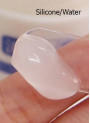
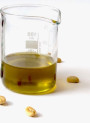
Can `Green Coffee Oil (Virgin, Cold-Pressed)` be used in a body oil formulation?
I would like to ask how to resolve a cloudiness issue in a solution. The ingredients were mixed into water at room temperature in the following order: 1. `Sodium Laurylglucosides Hydroxypropylsulfonate` 3.5 mL 2. `Decyl Glucoside` 2.5 mL 3. `Cocamidopropyl PG-Dimonium Chloride Phosphate` 0.5 mL 4. `Soyethyl Morpholinium Ethosulfate` 1 mL 5. `Zinc Ricinoleate (30% Solution)` 1 mL The resulting solution is turbid. How can I fix this problem?
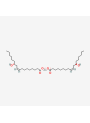
I have developed a formulation using the following ingredients dissolved in water: * `Sodium Laurylglucosides Hydroxypropylsulfonate` * `Decyl Glucoside` * `Cocamidopropyl PG-Dimonium Chloride Phosphate` * `Soyethyl Morpholinium Ethosulfate` * `Zinc Ricinoleate` I found that the resulting solution is cloudy. How can I resolve this issue?
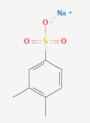
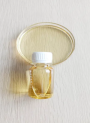
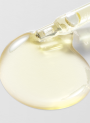
Please help check the compatibility of the ingredients in this serum formulation and provide the recommended mixing procedure. The goal is to create an anti-aging, brightening, and plumping serum suitable for morning and evening use. It should be non-comedogenic, with a thick yet light, soft, and smooth texture that absorbs quickly. **Formulation Details:** 1. `Rose Water (Rosa Damascena)` 50% 2. `Disodium EDTA` 0.2% 3. `Allantoin` 0.3% 4. `Safe-B3™ (Vitamin B3, Niacinamide)` 5% 5. `GlucoBright™ (Acetyl Glucosamine)` 4% 6. `DMAE (SkinTight MD™) Liquid` 3% 7. `Panthenol (Vitamin B5, DL-Panthenol, Powder)` 2% 8. `Wrinkle-Fill™ (Acetyl-Tyrosine)` 2% 9. `Wrinkle-Lax™` 0.5% 10. `Sodium Copper Chlorophyllin Complex` 0.5% 11. `Centella Asiatica Extract (Madecassoside 90%)` 0.5% 12. `Sialic Acid (Bioyouth NANA, N-Acetylneuraminic Acid 98%)` 0.5% 13. `Yeast Radiance™` 3% 14. `MOIST24` 5% 15. `Rose (Rosa Damascena) Extract` 5% 16. `Silky Serum Base (Face/Eye)` 10% 17. `Mild Preserved Eco™ (Preservative-Free)` 2% 18. `Magnesium Sulfate (High Purity, Cosmetics Grade)` 1% 19. `RO Water` (q.s. to 100%) **Specific Questions:** 1. Is this ingredient list comprehensive? Are there any unnecessary ingredients that should be removed? 2. Are all ingredients compatible in a single formula, or should any be separated into a different product? 3. Can I use Rose Water to dissolve the powdered ingredients directly? 4. Is 2% `Mild Preserved Eco™` sufficient for this formula, or do I need additional preservatives? 5. Regarding `Centella Asiatica Extract (Madecassoside 90%)`, should I sprinkle the powder in the final step or dissolve it in water first? 6. Please provide the full mixing instructions and steps.
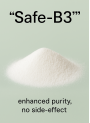



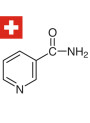
I would like to inquire about the actual effective usage percentage of `Copper Peptide (GHK-Cu, Copper Tripeptide-1)`. I am comparing two specific products: * **Copper Peptide (1000ppm Solution)** (Product ID: 272) * **Copper Tripeptide 10x (10000ppm Solution)** (Product ID: 35807) Why are both products recommended at a usage rate of 1-3%, even though their concentrations differ by 10 times? Could you please provide further explanation regarding the percentage range that is truly effective for these ingredients?
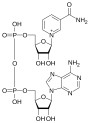
What is the molecular size of `NAD+`?
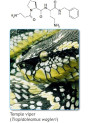
I would like to ask for further information regarding the formulation process: * If I want to add other active ingredients (similar to `Syn-Ake`) into a main serum, can I add a preservative—provided it is compatible with both the active and the main serum—into the active ingredient first, before incorporating it into the final serum base?

Regarding `SPF Protect Ultra™ II`, I have the following questions: * If used at 15%, it provides SPF50 PA++. If I want to achieve **PA+++**, should I increase the percentage or add other ingredients? * What type of filter is this (Physical, Chemical, or Hybrid)? * Is this ingredient reef-safe?
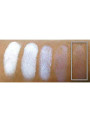
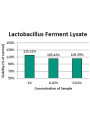
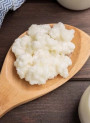
Can the following extracts be used together in a face cream formulation? What is the ideal pH level for such a formula, and are there any specific precautions or limitations I should be aware of? * `Lactobacillus Ferment Lysate` * `Kefir Ferment Filtrate` * `Yogurt Extract` * `Galactooligosaccharide`

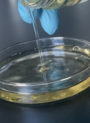
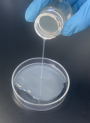
`Alcalase 2.4L` enzyme: * What happens if it is transported without temperature control? * Can it be shipped normally?
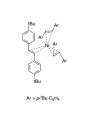
Since `Syn-ake` does not contain any preservatives, I am concerned that adding it to a skincare base might result in an inadequate preservation system. I have noticed that most of the skincare products I use contain `Phenoxyethanol` as a preservative. * Is it possible to add `Phenoxyethanol` directly into the `Syn-ake` solution before incorporating it into a skincare formulation? * What is the recommended concentration (%) to ensure the ingredient remains effective and safe for use?
I would like to ask if products containing `WhiteCumin™` (`Tetrahydrodiferuloylmethane`) also include these three active ingredients in the extract: * Curcumin * Demethoxycurcumin * Bisdemethoxycurcumin
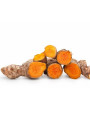
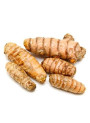
I would like to request formulations and order ingredients for the following products: 1. **Shampoo and Dishwashing Liquid:** I require a clear, transparent product texture. 2. **Conditioner:** A formula for a hair conditioner to be used alongside the shampoo. 3. **Herbal Extracts:** For the shampoo, I plan to use natural herbs such as Kaffir Lime and Butterfly Pea, prepared by boiling and blending them into the formula. 4. **Lemon Extract:** For the dishwashing liquid, if a ready-made lemon extract is available, I would prefer to use that.

I want to create fragrance drops that can be added to water for scent diffusion. Currently, I have mixed the fragrance with water and a solubilizer until it is clear. However, when testing by dropping it into a container of water, the mixture sinks and mixes with the water instead of floating. I am looking for ingredients that will help the fragrance form a film on the water's surface, allowing it to float and diffuse without sinking. I have already purchased the following materials: * `Phenethyl Alcohol`, `Phenyl Ethyl Alcohol (FEMA-2858)` * `Methyl Dihydrojasmonate`, `Hedione (standard)` Will these two ingredients help with the floating and film formation on the water surface?
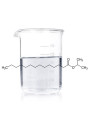
Can `Vitamin E (dl-alpha tocopherol)` be mixed directly with `LipidSoft™ F (Ethyl Linoleate)`, or is a cream binder (emulsifier) required for the formulation?

`LipidSoft™ F` (`Ethyl Linoleate`) 1. Can it be used as a 100% face oil? 2. Can it be mixed directly into an existing cream? 3. Does it require a preservative if used directly as a skin oil?