Browse Questions and Answers
Avg response: 24 HrsFilter Questions
20 of 14228 results
Please recommend an O/W Emulsion formula for a body lotion with the following characteristics: * **Texture:** Lightweight, non-sticky, and fast-absorbing. * **Effect:** Provides deep hydration and a "Glass Skin" appearance (glossy, light-reflecting, and healthy-looking). * **Active Ingredients:** Seeking an innovative, water-soluble active ingredient for moisture. * **Glossiness:** Desired through the use of a `Film Former` or the addition of `Ultra Fine Mica`.
Could you please recommend alternatives for the following ingredients? * `Xiameter MEM-7173` * `Genencare OSMS BA`
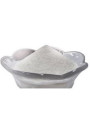
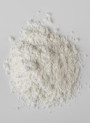

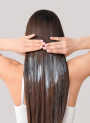
As an RD developing a brightening cream (Whitening Cream), once the formulation is complete: * What comprehensive tests should be conducted to ensure it meets the standards of a high-quality whitening product? * If `Vitamin C` is added to the formula, what impact will it have on the product? * Does the inclusion of `Vitamin C` require different testing protocols or any additional specific tests compared to standard formulations?
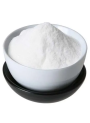
Could you please recommend fragrance oils for a **body cream** with the following characteristics? * A light, fresh scent similar to **Sakura** (Cherry Blossom). * Other floral options that are not too overpowering.


Please recommend a suitable preservative for a hypoallergenic serum using an oil-in-water system. All active ingredients are water-soluble. Here are the formulation details: * **Target pH:** 5.5 * **Active Ingredients:** * `Alpha Arbutin` * `4MSK` * `Ethyl Ascorbic Acid` * `Tranexamic Acid` * `Ectoine` * `Betaine` * `Zinc PCA` * `Sodium PCA` * `L-Carnitine` * `Matrixyl 3000` * **Solvents/Boosters used:** `1,3-Propanediol`, `Pentylene Glycol`, and `Butylene Glycol`.
If I have already finished mixing a perfume, can I add `Ambroxan` to it later?
Is it normal for **Pentylene Glycol** to appear cloudy when dissolved in water (`DI Water`)? * Other `glycols` usually result in a clear solution.

I tried making a Kojic Dipalmitate oil serum, but the Kojic Dipalmitate settles to the bottom once the oil cools down. I heat the oils to 80°C and then add the Kojic Dipalmitate and stir until fully clear. However, once it starts to cool, the oil turns cloudy and the Kojic Dipalmitate clearly returns to its powder form and settles to the bottom. I have to shake the bottle every time to use it. How do I achieve a clear oil? **My Formula:** * `IPM`: 45% * `Sunflower oil`: 47.5% * `Kojic dp`: 2% * `Grape seed oil`: 2% * `Jojoba oil`: 2% * `Fragrance oil`: 1% * `Vitamin e`: 0.5%
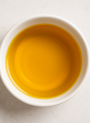
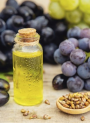
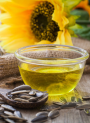
Please recommend a **Body Oil** formulation with the following characteristics: * **Texture:** Medium-weight oil, easy to absorb, non-greasy, and non-comedogenic. * **Skin Type:** Suitable for dry skin (but not extremely dry). * **Complexity:** A simple formula that is easy to mix without complex steps. * **Scent:** I would like to use `Essential Oils` to create a soft, baby powder-like scent that also lingers on the skin. Could you please suggest the types of oils to blend, the specific scents, and the approximate proportions? Thank you.
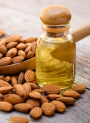
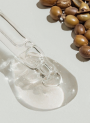
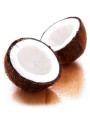

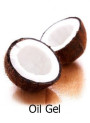
Which type of `Coconut Oil` should be chosen for a scrub: `virgin`, `refined`, or `fractionated`? * Will it solidify at room temperature? * If using `fractionated`, is it necessary to blend it with other oils? * If so, can `Butyrospermum parkii (shea butter) oil` be used?

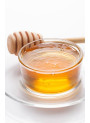
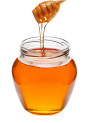
I would like to inquire about using Honey in a scrub formulation for industrial-scale production: * What methods can be used to ensure the formula is stable, consistent, and safe? * Does real honey need to undergo any specific processing before use? * Does honey extract provide a `Viscosity` similar to real honey? * What type of honey is typically used in commercial scrub products?


Can this preservative be used in an **anhydrous (water-free)** body scrub?

I have a question regarding the usage rates of these two ingredients: * `Poloxamer 407 Thermoreversible Gel (19% in water)`: Recommended usage 50-100% * `Poloxamer 407` (Powder): Recommended usage 0-5% If I use `Poloxamer 407 Thermoreversible Gel (19% in water)` at 50%, does that mean I am effectively using `Poloxamer 407` powder at 9.5%? Also, is it acceptable to use a concentration that exceeds the limit specified for the powder form?
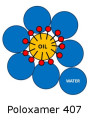
I would like to inquire about the technical specifications of `LipidSoft™ Dry II` (`Dicaprylyl Carbonate`) for use in the oil phase of a cream formulation: * **Heat Resistance and Evaporation:** What is its boiling point or the maximum temperature it can withstand during the melting process in the `oil phase`? Does it evaporate? * **HLB Value:** What is its `Required HLB` for calculating the `Total required HLB` of a formulation? * **Stability:** What is its stability profile? * **Incompatibility:** Are there any known ingredients that are incompatible with it? * **Additional Information:** Are there any other important details or tips useful for formulation development?
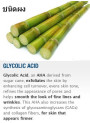
I have a formulation question regarding Cysteamine. I’ve never compounded it before, and I understand it can be difficult due to instability and odor. I have the following parameters in mind: * **Temperature:** Store the product in the fridge and any mixed solution at -20°C. * **pH:** Ideal pH is 4.2. Can I use `Glycolic Acid` to adjust to this optimal pH? * **Chelation:** Use deionized water and/or a chelating agent to reduce metal oxidation. Which chelating agent do you recommend? Is `EDTA` suitable? * **Antioxidants:** I understand `Catalase` can help reduce degradation. What percentage should be used? Are there other recommended antioxidants? Would `Ergothioneine` be appropriate? * **Oxygen:** To prevent degradation, I could mix the serum or cream in a cryo-vac sealed bag. Given these variables, I would like to know: 1. What is the best method to dissolve Cysteamine? 2. If I have a serum or cream with the optimal pH and added ingredients (`EDTA`, `Catalase`, odor control), is it possible to add Cysteamine directly to it? 3. Which specific cream or serum base would you recommend for this?
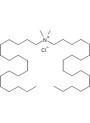
I would like to inquire about a formulation using `Distearyldimonium Chloride` in a laundry product intended to reduce pet hair (dog hair) attachment. * Does this product require hazardous substance registration or notification with the FDA?
Please recommend `Silicone` ingredients for use in a clear shampoo formulation with the following properties: * Provides hair softness and smoothness * Water-soluble (to maintain formula transparency) Which products are available and suitable for this application?
Regarding the production of creams, sunscreens, scrubs, and serums, what are the specific processes involved from receiving raw materials to producing the Finished Goods (FG)? Please provide details on the following: * Detailed production line workflow * Quality Control (`QC`) and Quality Assurance (`QA`) steps required throughout the process * Equipment and tools needed from start to finish * Differences in production processes between each product type (cream, sunscreen, scrub, serum) * Does MySkinRecipes provide any equipment or tools to support these processes?
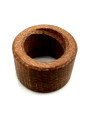
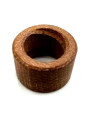
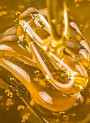
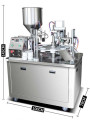
In my formulation, I used 10% `Isefoam` and heated it until fully dissolved. Initially, the solution was clear, but after letting it sit and cool down, it became cloudy. Previously, I used the stick/noodle form of `Isefoam` and never encountered this issue. However, since switching to the flake form, I have been facing this cloudiness problem. I would like to ask: 1. What is the cause of this cloudiness? 2. How can I resolve this and make the formulation clear again?
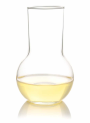
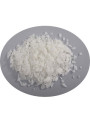
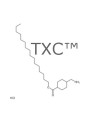
What is the best solvent to dissolve `Cetyl Tranexamate HCl (TXC™)` using the smallest amount possible for an eye cream formulation? * Can it be oil-based if suitable? * How much solvent is needed to dissolve 300mg of it?