Browse Questions and Answers
Avg response: 24 HrsFilter Questions
20 of 14236 results
How can I make tamarind cream last longer? The pH is around 3.5. The tamarind cream has already been cooked. I want to add natural preservatives.
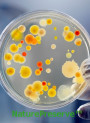
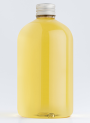
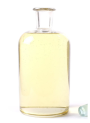
Regarding Ichthammol: 1. Can Ichthammol be dispersed in oil? 2. Is this substance soluble in water? On the product information page, it is stated that it is soluble in water, but in older forum posts, staff provided information that it is not soluble in water (as shown in the attached image). Thank you in advance for your answer.
Due to the difficulty in purchasing Alcohol hand gel currently, could you please recommend a formula focusing on hand sanitizer? Thank you.
I would like to know how to make fragrance last longer in shampoo or hair treatment products. * Does fragrance encapsulation help fragrance last longer? * If the base contains oil, will it increase fragrance longevity? * For very dry and damaged hair, which lacks moisture and causes fragrance to disappear quickly, how can fragrance be fixed/made to last?
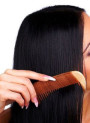
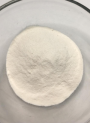
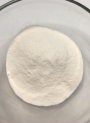
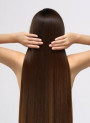
I made a homemade herbal shampoo with the following formula: * `หัวแชมพู Emal28 CT`: 1 Kg * `ผงฟอง HH SLS`: 50 gram * Lanolin: 25 gram * Sodium chloride: 200 gram * Herbal water (น้ำมะกรูด+ดอกอัญชัญ+ใบย่านาง+ใบหมี่+ขิง+บอระเพ็ด): 3 Kg * Fragrance: 20 gram * Preservative Glydant: 0.4 percent (15 gram) After using it, I noticed significantly increased hair loss. Could you please advise which ingredients might be causing this and what alternatives I should use?
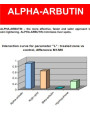
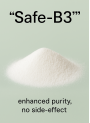
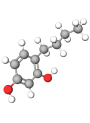
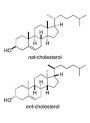
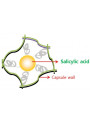
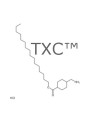
I have a list of ingredients and would like to know about their properties and how to use them in cosmetic formulations, specifically regarding combinations for different skin concerns. The ingredients are: * Ume Extract (Anti-Glycation) * Licorice Extract (Glabridin 40%) * Alpha Arbutin (Switzerland) * TXC™ (Cetyl Tranexamate HCl) * Activated Resorcinol™ * Complex Salicylic Acid (Powder, Water-Soluble) * Z-White™ * 4D Hyaluronic Acid * Ceramide 2 (Ceramide NG) * Phytosphingosine * Cholesterol * GlucoBright™ (Acetyl glucosamine) * Safe-B3™ (Vitamin B3, Niacinamide) * Dimethyl Isosorbide (DMI) * Phytosphingosine Could you provide information on: 1. The benefits and properties of each ingredient? 2. Their solubility and optimal pH ranges for formulation? 3. Potential combinations for specific results (e.g., whitening, moisturizing, anti-acne)? 4. Any known incompatibilities or formulation considerations?

I need a gel mask that can be used on both the face and lips. My formula is as follows: * water: 83 * 4D hya: 5 * butylene: 5 * Panthenol powder: 1 * Glycerin: 5 * Xanthan Gum: 0.2 * Dipotassium Glycyrrhizate: 0.1 * Phenoxyethanol SA: 0.7 After testing the formula on my face for 15 minutes and wiping it off, I felt a tingling sensation on my lips. I suspect it might be due to Phenoxyethanol SA. 1. Do you have any recommendations for a preservative that is suitable for this formula and can be used on the lips? 2. Global Globe's pH should not exceed 5.5. I am concerned if it can be used with this formula, as the range is quite narrow. 3. Besides the preservative, are there any other ingredients in this formula that could potentially cause a tingling sensation on the lips?
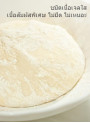
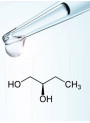

I have the following sunscreen formulation: * Titanium Dioxide 15nm Liquid: 10% * Zinc Oxide 35nm Liquid: 10% * Silicone Gel (Ultra Clear): 28% * PMMA Booster: 5% * Silicone Blender: 3% * Beige Iron Oxides EasyMix™: 0.15% * Mild Preserved Eco™: 1% * Water: 42.85% The resulting sunscreen texture is quite thick but easy to spread. I would like to achieve a more fluid texture. I have a few questions regarding adjustments: 1. Which ingredients should I increase or decrease? For example, can I replace `Silicone Gel` (Ultra Clear) with `Cyclopentasiloxane`? Will this make the texture more fluid, and what percentage should I use? 2. If I switch to using `Cyclopentasiloxane`, do I still need to include `Silicone Blender` for emulsification, or should I use a different base? What percentage should I use to achieve a fluid texture? 3. Will using `Cyclopentopentasiloxane` affect the waterproof property of the sunscreen? If it reduces water resistance, how can I address this?
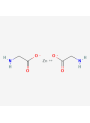
I would like to inquire about the MSDS for the amino acid product sold. Is it possible now or is there a chance in the future that the company will choose a version without **Methylparaben** and **Propylparaben** as preservatives, which are found in the extract? Even though the amount is small, their presence on the label causes concern for some users. Could you please provide advice?
I would like to inquire about **Glycerin Gel** (Glyceryl Polyacrylate). 1. Does it require adding a **preservative**? 2. If mixed with the following four ingredients, will it cause the texture to become thinner? * Licorice Extract (Licochalcone A 1%) * Ume Extract (Anti-Glycation) * Sea Kelp Extract * Prebio-care (Skin Prebiotic)
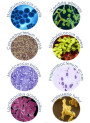
Could you please recommend a formula for an anti-pollution sunscreen (PM 2.5 and dust/smoke pollution)? I would like it to have the following properties: 1. Protect the skin from both UVA-UVB radiation with **SPF50+ PA+++**. 2. Be a **physical sunscreen**, which is highly stable and contains fewer chemical components than **chemical sunscreen**, thus reducing the chance of allergic reactions for those with weak, sensitive skin. 3. Contain ingredients that help with **anti adhesion** to reduce the adherence of pollution on the skin (e.g., Ectoin, Fucus Film™). 4. Contain ingredients that act as a **skin barrier**, such as Cica, Ceramide, and Niacinamide, which strengthen the outer skin layer and reduce the chance of irritation from pollution. 5. Contain moisturizer ingredients to help keep the skin hydrated, as dry skin is prone to itching and irritation. 6. Be free from ingredients that can cause allergies, such as น้ำหอม, paraben, colorants, and artificial scents. Also, I would like to know the price for producing a 50ml quantity.
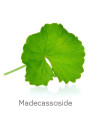
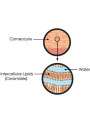
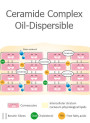
How can I make fragrance oil dissolve in water so that the scent diffuses well? What formula or ingredients should I use?
1. Which anionic surfactant(s) can dissolve in oil? 2. Which anionic surfactant(s) are liquid?
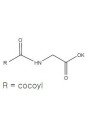
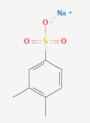
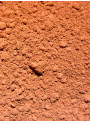
Regarding the use of Semi Red Brown color: If I want the Semi Red Brown color to be darker and stick better, and I want to add `ColorFix`, * Should I add it directly into the base cream? * Should I mix it with other ingredients first? * Can I mix it with the Semi Red Brown color first and then mix that with the base cream?
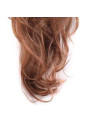
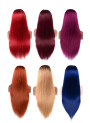
I want to make a peel-off mask formulation. 1. What is the maximum recommended duration to leave it on? Is it typically 10-15 minutes? What happens if it's left on longer than that, similar to how a sheet mask dries and makes the face dry? 2. If I want to make a peel-off mask formulation, can it be left on overnight? 3. What other ingredients are needed besides the following formula: * Active ingredient 5% * Fragrance 1% * Color 0.1% * ผงมาส์ก ผงมาร์ค สำเร็จรูป ลอกได้ (Peel-Off ไม่มีสี ไม่มีกลิ่น) 93.9%

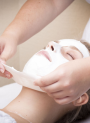
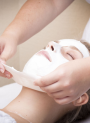
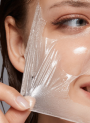
Could you please recommend ingredients for a cream formulation (50-100 cc for testing) that helps with: * **Wrinkle reduction** * **Skin plumping/firming** * **Skin whitening**
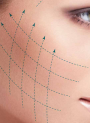
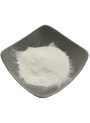
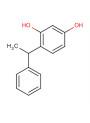
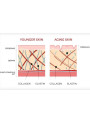
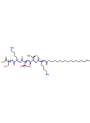
I want to use Poly-Conditioner Easy in a facial cleansing gel, but later found out it contains parabens. Could you please recommend ingredients with similar properties but without parabens? Thank you.
I would like to ask about using Glyceryl Stearate SE and Pentaerythrityl Distearate in cream formulations. 1. Can Glyceryl Stearate SE be used to create a cream texture directly (without oil)? If so, what percentage should be used? (Mixing in water + electrolyte-free formula, sometimes pure water). 2. Can Glyceryl Stearate SE emulsify water + oil? 3. Can Pentaerythrityl Distearate emulsify both water + oil? What percentage should be used? 4. If it can emulsify, how much oil can it support? 4.1. If it cannot emulsify water, can Pentaerythrityl Distearate be used together with Glyceryl Stearate SE to emulsify water + oil? If I want to emulsify 70% oil and 30% water, what percentage of each should I use? What kind of texture would result? If I want to increase viscosity or thickness, what ratio of SE:Distearate should I add? If I want to increase oil in the formula, what ratio should I add Distearate per oil? For example, in a formula like this: * Water 30% * SE (what percentage should I use? Please help answer this) * Oil 70% * DISTEARATE (what percentage should I use together? I don't know) If I get the percentages for both, I will reduce the oil to make it 100% total. For example, if I use SE 5% and DISTEARATE 5%, I will reduce the oil to 60% and water to 30%. I would like detailed information on how to create a cream texture using these two ingredients to emulsify water and oil (without using 'MAKER'). 5. What is the HLB value and how is it calculated? I need very detailed information as I am not very familiar with using emulsifiers like 'MAKER' and often encounter issues with texture or equipment (perhaps due to lack of knowledge). I want to be able to create cream texture myself. Thank you.
I have the following lotion formulation and encountered a pilling issue when applying it. I want a thick lotion texture that doesn't spill when the container is inverted, absorbs easily, is not sticky, and has a BB sunscreen effect without leaving a white cast. I tried the formula below, and it pills when applied. What needs to be adjusted to achieve the desired texture and prevent pilling? **Oil Phase:** * Oil 2% * E-Wax 4% * Stearic Acid 4% * IPM 3% **Water Phase:** * Distilled Water 70% **Sunscreen Phase:** * Silicone 5% * Titanium Dioxide 3% **Final Phase:** * Preservative * Fragrance After trying this formula, it pills when applied. I want it to absorb into the skin immediately. What adjustments are needed?
When using **SemiColor - Red Brown** in shampoo/treatment formulations, do I need to wear gloves when washing? Will the color stain my hands?