Browse Questions and Answers
Avg response: 24 HrsFilter Questions
20 of 14228 results
I am formulating a simple makeup remover using the following components: make up wash, glycerin, and water. Does this water-based formula require the addition of a preservative?
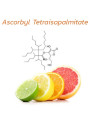
I plan to formulate a serum using the stable, oil-soluble Vitamin C derivative, Perfect-C™ (Ascorbyl Tetraisopalmitate, ATIP). I have several technical questions regarding its properties and formulation requirements: 1. **Potency and Properties:** Is ATIP as potent as pure L-Ascorbic Acid (LAA)? What are the key differences between the two, aside from ATIP being stable and oil-based? 2. **pH and Penetration:** Pure L-Ascorbic Acid typically requires a low pH (e.g., below 3.5) for effective skin penetration. Why does ATIP require a formula pH between 5.0-5.5? Does ATIP not require a low pH to penetrate the skin like LAA does? 3. **Formulation Guidance (Water-Based Serum):** I would like to create a **water-based and transparent serum** using ATIP. Could you provide a suggested formula structure or ingredient list? I intend to include anti-aging ingredients like *Hyaluronic Acid (extra low molecule)* and *Gluconolactone*. 4. **Stabilizer Requirements:** Since I plan to use Disodium EDTA, is it necessary to also incorporate dedicated stabilizers such as `Protec™ OX` and `Protec™ UV` in this transparent, water-based serum?

Could you please provide a comprehensive guide formula for a **Body Lotion Tone Up**? I am looking for a stable Oil-in-Water (O/W) emulsion formulation that utilizes a high concentration of white pigment, such as Titanium Dioxide, to achieve an instant brightening effect, while ensuring the final product is smooth, non-streaky, and the pigment is perfectly dispersed.
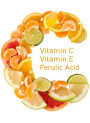
I am trying to understand the product **Vitamin C E Ferulic (ID 70)**. Based on information I have read, can this product be used directly on the skin? Specifically, I need clarification on the relationship between this raw material and the commercial product: * Is the **Vitamin C E Ferulic (ID 70)** pre-mix the exact same product as the **C E Ferulic serum** sold by SkinCeuticals? * Does the finished **C E Ferulic serum** from SkinCeuticals use the core active complex found in ID 70 (containing Ascorbic Acid 15%, Tocopherol 0.7%, and Ferulic Acid 0.5%) as one of its primary ingredients?
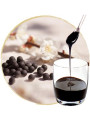
Please provide detailed product information, recommended usage instructions, and formulation suggestions for incorporating Ume Extract (Japanese Plum Extract) into a cosmetic serum. Specifically, I need to know the recommended usage rate, solubility, and guidance on how to integrate this ingredient effectively into a water-based serum formulation.
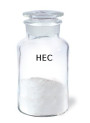
I am formulating a Dry Brushing Toothpaste Gel. Can I use **3%** of `Hydroxyethyl Cellulose (HEC) (4500mPa.s)` to achieve the required thick gel texture?
I am formulating a facial skincare **oil gel** using 30% natural oils, with coconut oil as the main oil at 10%. I require a thixotropic agent that meets three critical criteria: 1. Provides a **light texture**. 2. Requires **no heat** (cold process). 3. Must be **natural/vegan** compatible. I am currently considering options like Diisopropyl Sebacate Gel but need recommendations for suitable natural thixotropic agents. * Please advise on the best suitable agent(s). * Explain the trade-offs, especially regarding the heat requirement for natural options. * Compare the recommended natural option (such as Dextrin Palmitate) against Diisopropyl Sebacate Gel in terms of process, compatibility, and final texture.
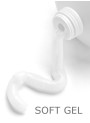
I need assistance reviewing two oil-based formulations—a Cleansing Oil for makeup removal and a Shower Oil for body cleansing. Both formulas are designed for dry skin. Please confirm if the ingredients are compatible, if the formulas are practical for actual use, and if any adjustments are needed. ## 1. Cleansing Oil Formula * Rice Bran oil / Castor Oil : 60% * Caprylic/Capric Triglyceride : 16% * Ethylhexy Plamitate : 8.6% * Sorbeth-30 Tetraoleate : 10% * PEG-7 Glyceryl Cocoate : 5% * Phenoxyehenol : 0.2% * Essential Oil / Fragrance Oil : 0.2% ## 2. Shower Oil Formula * Castor Oil : 78.3% * Lumorol : 20% * Essential Oil / Fragrance Oil : 1% * Vitamin E Acetate : 0.5% * Phenoxyehenol : 0.2%

We are developing a sunscreen formulation and aim to achieve a **powdery matte finish** with a **soft-focus** effect. We plan to use either WhiteMatte3™ or WhiteMatte10™ (Boron Nitride). 1. Which product (WhiteMatte3™ or WhiteMatte10™) is better suited for achieving a powdery matte finish in a sunscreen emulsion? Please explain the performance differences, considering particle size and visual effect. 2. What is the suggested concentration range for the recommended WhiteMatte product? 3. How is the compatibility of the recommended WhiteMatte product with our base ingredients, which include `Glycol Monostearate` and `Cetyl Alcohol`? 4. What are the essential formulation tips, including dispersion methods (e.g., phase of addition, equipment), to ensure optimal matte and soft-focus performance in the final sunscreen emulsion?
I am developing a pet product (lotion or spray) using a **Water-Soluble Herbal Extract**. I plan to incorporate this extract at a high concentration, ranging from **10% to 30%**. Since the extract is highly water-soluble and does not require a solubilizer, what pre-made cosmetic bases are recommended for both a lotion/cream formulation (Oil-in-Water type) and a low-viscosity spray formulation to ensure stability and proper incorporation of the active ingredient?
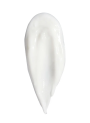
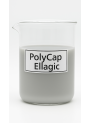
I plan to formulate a serum using the **ANR Serum Base (Compare to Estee)**. I would like to incorporate the following active ingredients: * **PolyCap™ Ellagic (Water Dispersible Ellagic Acid 17%)** at 3% * **Madecassoside (Centella Asiatica Extract (Madecassoside 90%))** at 1% 1. Is the **ANR Serum Base** compatible with both PolyCap™ Ellagic (3%) and Madecassoside (1%)? 2. If compatible, what is the correct mixing procedure, especially for the powder form of Madecassoside? 3. Are there any other suitable pre-made serum bases you would recommend for this combination of actives?

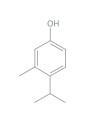
Can `Thyme Kill` (`IPMP`, `o-Cymen-5-ol`) be effectively used as an antibacterial agent in a **detergent formulation for the oral cavity**, specifically such as **liquid toothpaste**? Please provide detailed information regarding: * Suitability and mechanism of action. * Recommended usage percentage, noting any regulatory constraints (e.g., maximum allowed percentage). * Technical constraints, including pH range and solubility requirements (e.g., how to incorporate it into a water-based liquid formula). * Safety considerations for oral use.
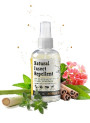
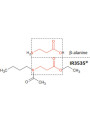
Could you please provide guideline formulations for a 1-liter (1000g) **water-based mosquito repellent spray**? The formulation should be divided into three separate formulas, each using a different primary active ingredient, and should assume the use of a **homogenizer** during the mixing process to ensure clarity and stability. The three required formulas are: 1. Formula using **Euca-Kill** (e.q. Citriodiol/PMD) as the main active. 2. Formula using **IR3535** as the main active. 3. Formula using **Grapefruit oil** as the main active. There are no specific constraints regarding pH, natural certification, or vegan status.
The product information for Vitamin B12 (Cyanocobalamin 1%) states that it is highly sensitive to light and must be packaged in a 100% opaque container to prevent rapid deterioration. I would like to know if a **dark airless bottle** can be used as an alternative to a truly opaque container for this formulation.
I am formulating an **O/W emulsion serum** for facial application. I need ingredient recommendations to achieve a distinct **shiny, glowy finish** upon application. Silicone ingredients are acceptable. Could you recommend suitable ingredients, such as specific silicones or esters with a high Refractive Index (RI), and provide usage guidelines to achieve this high-gloss effect?

In a cosmetic powder formulation containing Long-Cool™ (Encapsulated Menthol), the customer reports that the product has a coarser texture than regular powder because the Long-Cool™ particle size is large, leading to poor flow. We need to know: 1. Is there a finer powder version of Long-Cool™ available? 2. Are there alternative cooling agents that provide a long-lasting cooling effect but are finer in particle size to improve the texture and flow of the formula, which also includes menthol crystals, fragrance, thymol, and other ingredients?
How should **Methacrylic Acid - Methyl Methacrylate Copolymer (1:1)** (e.g., Eudragit L100) powder be dissolved for use in enteric tablet coating applications? Please provide the standard dissolution method, including suitable solvents, required concentration, and necessary additives like plasticizers, given that the polymer is insoluble in water and dilute acids.
I plan to use Vinyl Film (Medium Wear, Soft) (VP/Hexadecene Copolymer) as a film former in a formulation that also uses Tinosorb S as a UV filter. Since Tinosorb S requires melting at 80°C, I have a question regarding the incorporation process: * If I melt the UV filter (Tinosorb S) and maintain the temperature at no more than 80°C, can I add the Vinyl Film (Medium Wear, Soft) (VP/Hexadecene Copolymer) as the final ingredient? * Can I simply stir the mixture until the Vinyl Film dissolves without applying additional heat, and then proceed immediately to emulsification?
Can flavor essences (flavor perfume heads) be successfully mixed and stabilized into a body spray perfume formulation that is **oil-based** and **alcohol-free**? What are the key considerations regarding solubility and base compatibility for achieving a stable, clear mixture?


What is the purity and molecular weight of the Sodium Alginate (Ultra-Fine 170Mesh, 800cps, Medium Strength) product with ID 10938?