Browse Questions and Answers
Avg response: 24 HrsFilter Questions
20 of 14228 results
How do I dissolve `Aluminum Zirconium Octachlorohydrex GLY`?
Does `Behentrimonium methosulfate (BTMS 90%)`, which acts as a hair and skin conditioner, also function as an emulsifier?
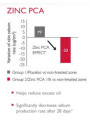
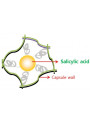
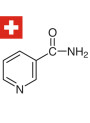
I have a question regarding the following formulation: * `HEC`: 0.4% * `Cosmedia SP`: 0.8% * `Complex Salicylic Acid`: 1.5% * `Niacinamide`: 4% * `Zinc PCA`: 1% * `Oligopeptide-10`: 0.5% * `Centella Extract`: 2% I intended to create a gel, but why is the resulting texture liquid? How can I fix this to prevent the gel from becoming liquid? Thank you.
Hello, is it possible to use `Bright Crystal Absolu (Compare To Versace)` and other fragrances in this section in cosmetic products with direct skin contact, such as a roll-on deodorant? * Is a dosage of up to 1% acceptable and safe for this application?
After formulating the serum, the color changed from a light cream to a darker shade after 1 week. * Could this be caused by `Lecicream`? * Are there any solutions or recommended ingredients to address this?
# Inquiry regarding SPF value of OMC Ultra-Pure™ If `OMC Ultra-Pure` (Octinoxate / Octyl Methoxycinnamate) is used at a concentration of 20%, what would be the estimated SPF value for UV protection?
I'm formulating a lip gloss and trying to blend `Oil Thick Clear S` (4%) with the following base ingredients heated to 95°C: 1. `Hydrogenated Polyisobutane` - 20% 2. `Hydrogenated Polydecene` - 10% 3. `Polybutene` - 15% 4. `Diisostearyl Malate` - 6% 5. `Tridecyl Trimellitate` - 4% 6. `Bis-Diglyceryl Polyacyladipate-2` - 4% 7. `Ethylhexyl Palmitate` - 3% The `Oil Thick Clear S` is not dissolving. I have a few questions: * Will it not dissolve in this specific mixture? * What non-polar oils should I add to help? I will not use mineral oil, but I have `isododecane` and `octyldodecanol` available. * Would another `Ethylene/Propylene/Styrene Copolymer` work better with these ingredients? My planned process once incorporated: * Increase temperature to 100-110°C and add `Lip Film HR` - 6% * After cooling to 70°C, add `Silica Dimethyl Silylate` - 2.5% * Cool further and add Pigment blend (with castor oil) - 6% * Finally, add natural oils - 19.5%

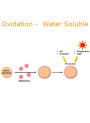
I want to incorporate `Hi-EGCG™` (Green Tea Extract) into my product formulation, which must contain only natural ingredients. You previously recommended using `ActiveProtec™ OX` alongside `Hi-EGCG™` to prolong its stability. However, `ActiveProtec™ OX` contains some ingredients that are not accepted in natural skincare standards. * Could you suggest any natural alternatives to `ActiveProtec™ OX` to help prolong the stability of the extract? * Alternatively, can `Hi-EGCG™` be used effectively on its own in a natural formula? Kindly advise.
# Replacing Tinosorb M with Tinosorb S in a W/O emulsion — will it solve the sedimentation issue? I am formulating a silicone-based W/O emulsion — a CC cream with SPF protection. * **Emulsifiers:** Hectorite Gel combined with PEG-10 Dimethicone (`SiliSolve`) * **Oil phase:** Primarily silicones (`Methyl Trimethicone`, `Silicone Gel Ultra Clear`), complemented by `C12-15 Alkyl Benzoate` and `Oil-Fix W` **Current UV Filter System:** * `DHHB`: 5% (Oil phase) * `EHT`: 4% (Oil phase) * `Bisoctrizole` (`Tinosorb M`): 2% (Water phase) In the final product, I am observing visible grittiness and stickiness. I believe the MBBT particles are not dispersing sufficiently in the W/O matrix and that decyl glucoside, as the carrier in `Tinosorb M`, may be interfering with the emulsification based on Hectorite Gel. I want to replace `Tinosorb M` with `BEMT` (`Tinosorb S`) at 2%, moved into the oil phase as a premix with `C12-15 Alkyl Benzoate` at 60–70°C. **Questions:** 1. Can you confirm that this substitution will eliminate the grittiness and sedimentation issue? 2. What SPF values can realistically be expected from a combination of `DHHB` 5%, `EHT` 4%, and `BEMT` 2%?
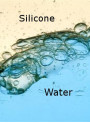
I would like to ask if `Simeth-15 (Simethicone Anti-Foaming)` can be shipped via normal temperature transport.
I would like some advice on choosing the right `Vitamin C` for a whitening lotion formulation that contains 6% `Niacinamide`. * Which type of `Vitamin C` should I use? * I am looking for a version that is compatible with 6% `Niacinamide` and will not cause stability issues.
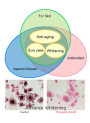
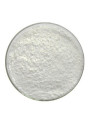
I am formulating an emulsified cream deodorant and would like to use **Hydroxyapatite (Hexagonal, Synthetic)** (product_id `35571`) as a sweat absorbent. My goal is to avoid using starches, as they can serve as a food source for bacteria. I am referencing a product called *DeoHAP* that utilizes this concept. I have the following questions: 1. Has hydroxyapatite been used effectively as a sweat absorbent in deodorant formulations? 2. Can your **Hydroxyapatite (Hexagonal, Synthetic)** (product_id `35571`) be used in an emulsified cream deodorant? I am concerned about the particle size and skin feel—the specification states it passes `325 mesh ≥99.5%`. Will this provide a comfortable feel in a cream? 3. Are there any other non-starch absorbent ingredients available that would be suitable for this type of formulation?
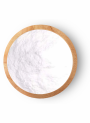
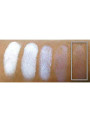
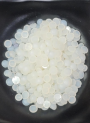
Can I adjust the thickness of the formula using salt?
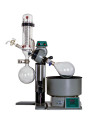
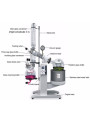
Can the `Rotary Evaporator (20 Litre, electric lift)` vacuum distillation evaporator be used with black garlic?
Is it possible to mix `Tween 20` and `Tween 80` to achieve an efficiency equivalent to `Flora Solve™ Clear`? If so, what ratio should be used?
I am formulating a cooling spray using `WS-23 Cooling agent`. The recommended usage rate is 0.1-0.5%. * I would like to know if I can use it at 1%? * Would this be considered an overdose or be dangerous to the skin?
Can `Oilsify 15` still be used to create a clear formulation? Usually, the formula I use is clear, but this batch won't clear up at all. * If the formula is not clear, how should I fix it?
# Inquiry regarding Aveenoat™ (Ultra-Fine Oatmeal) in a Scrub Formulation I would like to know if `Aveenoat™ (Ultra-Fine Oatmeal)` can be used to create a **mousse-textured scrub**.
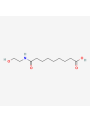
Can the following ingredients be used as components in cosmetic formulations? * `Azelaic Acid` * `Benzoyl Peroxide`
I am looking for a formulation for a peeling gel or cream to remove dead skin cells with the following characteristics: * Produces visible small clumps (simulating dead skin) through a scientific reaction during scrubbing. * Has a smooth and fine texture. * Leaves the skin feeling soft, moisturized, and looking brighter after use. * Includes `AHA` in the formulation. Please provide recommendations on ingredients and the production process.