Browse Questions and Answers
Avg response: 24 HrsFilter Questions
20 of 14236 results
I would like to ask: 1. Which natural preservatives can be added to lip balm? 2. Can I add Lemon Peel Bioferment as a whitening agent using Soy Lecithin oil as an emulsifier with the oil phase?
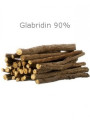
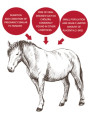
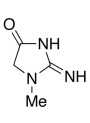
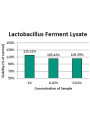
I need to formulate a serum using the following active ingredients: 1. MSH White™ 2 % 2. GlucoBright™ 4.00 % 3. Safe-B3™ 5% 4. Activated Resorcinol™ 1.00% 5. Sym-White™ (Phenylethyl Resorcinol) 0.5% 6. Yeast Radiance™ 3% 7. 4MSK (Potassium Methoxysalicylate) 2% 8. Licorice Extract (Glabridin 90%) 0.5% 9. CosmoWhite™ (1-Methylhydantoin-2-Imide) 1.50% 10. Horse Placenta 2% 11. Plankton Artemia Extract 2% 12. Phytosphingosine SA 0.2% 13. Marine Plankton (Lifting, Tightening) 2% 14. Salmon Roe Extract 3% 15. Live Yeast Cell Derivative (LYCD) 3% 16. Hexapeptide-9 2% 17. Tetrapeptide-21 3% 18. Wild Yam Extract (Diosgenin 95%) 0.20% 19. Ultrasomes Micrococcus Lysate 1.00% 20. Lactobacillus Ferment Lysate 3% 21. Wakame Extract (Brown Sea Weed) 3% Total: 43.45% I need advice on which solvents and oil/water emulsifiers to use to achieve a serum texture for production. I plan to proceed with manufacturing.
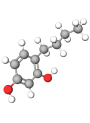
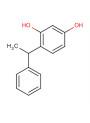



I would like to know the formula for a liquid antiperspirant. Specifically, I am interested in a formula that uses active ingredients like `Anti-Sweat™ (Aluminum Chlorohydrate)` or `Aluminum Zirconium compounds` (such as `Aluminum Zirconium Trichlorohydrex GLY`, `Aluminum Zirconium Tetrachlorohydrex GLY`, `Aluminum Zirconium Pentachlorohydrex GLY`, or `Aluminum Zirconium Octachlorohydrex GLY`). Please provide details on: * Suitable solvents (e.g., Water, Alcohol) * Types of liquid formulations (e.g., Roll-on, Spray), including water-based and anhydrous (water-free) options. * Recommended usage rates for the antiperspirant actives (typically 5-25% according to FDA). * Ideal pH range for the final formulation (4-6). * Other potential ingredients, such as `Disodium EDTA` (0.1-0.2%). * Information on how to achieve desired consistency (e.g., using thickeners or gelling agents for roll-ons). * Any notes on mixing the active powder with water (e.g., initial turbidity and subsequent clarity). * Suggestions for odor control ingredients like `DeoMax™ Liquid`.
I've been using Dr. Somchai Acne Gel and it works very well. It reduces acne quickly, doesn't dry or peel the skin, and has no bad smell. The brand claims it contains Micronized Salicylic Acid, which I believe is the key ingredient for its fast action. I tried mixing my own version using standard Salicylic Acid, but the results weren't as good; the acne didn't reduce as quickly as I wanted. Could you please recommend: * Which type of Salicylic Acid in your shop has a similar effect to the Micronized version? * Are there any other fast-acting actives available in your shop that you would recommend for acne spot treatment, aiming for results within 1-2 days?
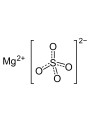
I need a sunscreen SPF 50+ PA++++ for outdoor and water activities that is long-lasting and highly water/sweat resistant. Here is my proposed formulation: INGREDIENTS 1. Cyclomethicone / Cyclopentasiloxane (Low-Odor) 5% 2. Dimethicone (Very Light/5, Low-Odor) 17% 3. Magnesium Sulfate (Anhydrous) 1% 4. SiliSolve Plus™ (ประสานน้ำ-น้ำมัน-ซิลิโคน) 1% 5. Mild Preserved Eco™ (Preservative-Free) 1% 6. WaterGuard™ Ultra 5% 7. PMMA Booster (SPF/Color Booster) 5% 8. Ethyl Ferulate 1% 9. Butylene Glycol 3% 10. isohexadecane 5% 11. Polymethylsilsesquioxane 4.5microns (Soft-Focus / Matte) 3% 12. SPF Protect Ultra™ II 10% 13. Zinc Oxide 35nm Liquid 10% 14. Bisoctrizole (Compare to Tinosorb M) 5% I have two specific questions regarding the ingredients: 1. Between Polymethylsilsesquioxane 4.5microns (Soft-Focus / Matte) and QuikBlur™, which one provides the most natural look? The objective is to blur pores and make the skin appear smooth. 2. Between WaterGuard™ Ultra and Silicone Film (Long-Wear, Hard, Cyclopentasiloxane Base), which one is more effective for high durability and water/sweat resistance, especially for swimming? Please also provide any other recommendations. Thank you.
Could you please compare the performance of these two homemade facial cleansing gel formulas? **Formula 1** * Sulfate Free Shampoo Base (pH 7, Clear, Foaming) 25.00% * Mild Preserved Eco 1.00% * Water 74.00% **Formula 2** * Lauryl Glucoside 25.00% * Cocamidopropyl Betaine 5.00% * Lactic Acid 1.00% * Mild Preserved Eco 1.00% * Water 68.00% Specifically, please compare them in terms of: 1. Cleansing efficacy for facial skin. 2. Gentleness for sensitive skin. 3. Foam generated. 4. If only sunscreen is applied (no makeup), such as Anessa Gold, would these facial cleansers (both formulas) be sufficient to remove it completely, or would a cleansing water still be necessary beforehand?
Based on the product Hydro-White™ (Hydroquinone-Replacer), I would like to ask: * Does it have side effects similar to Hydroquinone? * Are there issues when discontinuing use? * Does it leave residue? * Is it safer than Hydroquinone?
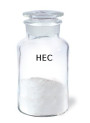
I tried formulating a gel using Hydroxyethyl Cellulose (HEC). However, when applied to the skin, pilling occurs. I would like to know what causes the pilling.
Where is the product Squalane (Olive) imported from, or is it domestically produced?
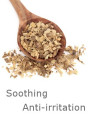
Regarding Dipotassium Glycyrrhizate and Glycyrrhetinic Acid: 1. The description states that Dipotassium Glycyrrhizate should be used with Stearyl Glycyrrhetinate or Glycyrrhetinic Acid. However, I've read on this forum that choosing just one (Dipotassium Glycyrrhizate or Glycyrrhetinic Acid) is sufficient. What is the final opinion of the staff regarding Dipotassium Glycyrrhizate and Glycyrrhetinic Acid as ingredients for **reducing irritation** and redness? Should they be used together, or is one sufficient? 2. If it is recommended to use only one, is the effectiveness of Glycyrrhetinic Acid (3%) in **reducing irritation** superior to Dipotassium Glycyrrhizate (2%)? 3. If Glycyrrhetinic Acid is dissolved in Ethoxydiglycol or Butylene Glycol, what is the minimum ratio of solvent required? For example, for 1% or 2% Glycyrrhetinic Acid, what percentage of Ethoxydiglycol or Butylene Glycol is needed? 4. Does Glycyrrhetinic Acid need to be dissolved completely clear in Glycol before adding to the water phase, or is just partial dissolution sufficient, similar to SymWhite? 5. If complete dissolution until clear is required, can this be done by continuous manual stirring without heat, or by using a microwave, heating for 5-10 seconds at a time and stirring repeatedly until completely dissolved?
Can **Activated Resorcinol** be used together with **GABA** and other amino acids or peptides in a **serum formulation**? What effects might occur?
I am formulating a lip balm. I understand that adding 5% Water Balm allows for incorporating 10% water into the formula. 1. If I increase the percentage of Water Balm, for example, to 10%, will I be able to incorporate more water proportionally, such as increasing the water content to 20%? 2. If I use a higher percentage of Water Balm, will it result in a harder lip balm texture?
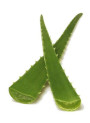
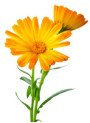
I have a toner formulation and mixing method and would like you to review them: **Ingredients:** 1. Rice Vitamin 2.5% 2. Grape Seed Extract 2.5% 3. Calendula extract (water solution) 5% 4. Aloe Vera Extract 2.5% 5. Raffnose (Oligo GGF) 2.5% 6. Dipotassium Glycyrrhizate 1% 7. Oat Avenanthramides 1.5% 8. Panthenol Pro Vitamin B5, DL Panthenol powder 2.5% 9. Palmaria Palmata Extract 1.5% 10. Adenosine Liposome 1.5% 11. Natural moisturizer Amino acid 5% 12. DMAE 0.5% 13. DI Water 71.5% **Mixing Method:** 1. Mix 1, 5, 6, 8 in DI Water. 2. Mix 2, 3, 4, 7, 9, 10, 11, 12 into part 1. **Questions:** 1. Please check the ingredients and mixing method. 2. If all these ingredients are mixed for personal use, is factory mixing service not available?



I have a question: 1. I mixed Hydro white and 4MSK in normal water. Individually, they dissolve into clear solutions. However, when I mixed 4MSK into the Hydro white solution, it became cloudy and did not dissolve, even though both ingredients are water-soluble. What should I do? 2. What is the usage percentage for Hexapeptide 9? The information doesn't specify.
I want to make a nourishing cream based on the product "Hydra-V Nourishing Gel Cream". Looking at the ingredient list, there are many ingredients. I would like to know which ingredients are included for their actual beneficial effects on the skin? Here is the ingredient list: WATER/AQUA/EAU, Glycerin, Cetearyl Ethylhexanoate, Cyclopentasiloxane, Cyclohexasiloxane, Alcohol denat., Butylene Glycol, AMMONIUM ACRYLOYLDIMETHYLTAURATE/VP COPOLYMER, Saccharide Isomerate, Dimethicone, ISOPROPYL MYRISTATE, chlorphenesin, METHYLPARABEN, EUTERPE OLERACEA FRUIT OIL, Disodium EDTA, Fragrance/PARFUM, Xanthan Gum, Glycine Soja (SOYBEAN) OIL, Tocopherol, Panthenol, Tocopheryl Acetate, Yeast Extract, Dipotassium Glycyrrhizate, Lecithin, Camellia Sinensis Leaf Extract, Sodium Hyaluronate, PYRUS COMMUNIS (PEAR) FRUIT EXTRACT, FERULA ASSA FOETIDA ROOT EXTRACT, HIBISCUS SABDARIFFA FLOWER EXTRACT, Sericin, Ceramide-3, BETA-SITOSTEROL, Limnanthes Alba (Meadowfoam) Seed Oil, PERILLA OCYMOIDES SEED OIL, SALVIA HISPANICA SEED OIL, OENOTHERA BIENNIS (Evening Primrose) OIL, Glucosamine HCL, Urea, ALGAE EXTRACT, Tetrahexyldecyl Ascorbate, blue 1 (CI 42090), Alpha-Isomethyl Ionone, BENZYL BENZOATE, Butylphenyl Methylpropional, Citral, Citronellol, Eugenol, Geraniol, Hexyl Cinnamal, Limonene, Linalool
I am looking for a foundation cream formulation that also provides sun protection. I found a lightweight BB cream formula with SPF 15-25. Do you have any recommendations for a foundation cream formula with **SPF 50**?
I am looking for a formula that does not contain **surfactants** like sulfates and can be mixed with fragrance without interference from the gel's own scent. I previously bought a ready-made base and when I added rose fragrance, the gel became cloudy and liquidy. Could you please provide some recommendations?
Which ingredient provides better results for wrinkle reduction: Tetrapeptide-21 or Matrixyl?
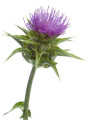
I'm encountering some issues when mixing two ingredients in a butter cleanser formula. Both ingredients are in the same formula, which is a butter cleanser consisting mostly of oils and butters, with no water added. 1. **Wild Yam Extract (Diosgenin, Liquid):** I used heat at 60°C, but no matter how much I mix, it doesn't dissolve completely. How can I fix this? (Usage rate: 0.2%) 2. **Milk Thistle Extract (Silybum Marianum, Silymarin):** After mixing in Ultramarine Pink, Mild Preserve Eco, and Tocopherol (Vitamin E), it precipitates into clumps at the bottom. What is causing this? Thank you.
I have a formula that doesn't produce much foam. Could you please review the formula? The ingredients are: * Water * Glycerin * Sles * Cocamidopropyl Betaine * Cocamind Dea * Preservative * Sugar thick * Fragrance * Tween 20 I was thinking of adding Apple Foam and PEG7. Would this help, or do you have other suggestions? Thank you.