Browse Questions and Answers
Avg response: 24 HrsFilter Questions
20 of 14240 results
I have two questions: 1. Can Activated Resorcinol, Tranexamic Acid, and 4MSK (Potassium Methoxysalicylate) be used together? Do their functions overlap? 2. Is 4MSK (Potassium Methoxysalicylate) still patented?
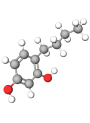
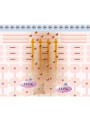
When adding `LipidSoft F` to a cream formulation that already contains an emulsifier, can I add `LipidSoft F` directly to the cream, or do I need to dissolve it in oil first?

I want to make a night cream for skin aged 30+ that shows clear results in: * Reducing existing wrinkles * Preventing new wrinkles * Providing moisture * Making skin bright and pinkish-white The desired texture is a non-greasy cream with a light floral scent. It should be suitable for sensitive skin and non-comedogenic. I have drafted a formula with the following ingredients and percentages: * Ectoine 5% * Repair Activator 5% * DPHP 5% * Glycosaminoglycans Complex 3% * safety B3 5% * GlucoBright 5% * Orange Peel Extract 5% * Grape Seed Extract 8% * Allantoin 2% * Pure-Phytosterol 2% * Natural PHA 1% * Hydro Urea powder 3% * Light Cream Maker 1.5% * Laurocapram 2% * Rose petal 10% * Mild Preserved Eco 1% * sterile water 38% I plan to use this in conjunction with a day cream serum from a previous topic. Will the cream texture and properties match my design? Should the active ingredients be complementary or completely different? Are there any synergistic effects? Should I adjust the ingredient ratios?

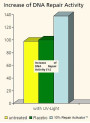
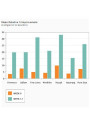
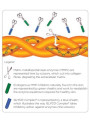
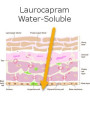
I want to create a day serum for skin aged 30+ that provides noticeable results in: * Reducing existing wrinkles * Preventing new wrinkles * Providing moisture * Making skin bright and pinkish The desired texture is a serum that is not too thick, absorbs quickly, and is non-sticky. It should be suitable for applying sunscreen and makeup over it. It should also be suitable for sensitive skin and not cause acne. I have drafted a formulation as follows: * Wrinkle-Lax 1% * Lift now 1% * Ectoine 2% * Repair Activator 8% * DPHP 3% * Glycosaminoglycans Complex 3% * Safe-B3 8% * GlucoBright 5% * Orange Peel Extract 2% * Grape Seed Extract 2% * Allantoin 1% * Pure-Phytosterol 1% * Natural PHA 1% * HydroUrea powder 3% * Silky Serum Base 10% * Magnesium Sulfate 1% * SelectSorb 1% * Siliwax Aqua 1% * Laurocapram 2% * Mild Preserved Eco 1% * sterile water 42% Will the serum texture and properties match my design? Do I need to adjust the ingredient ratios?
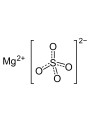
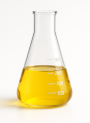
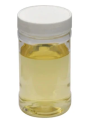
The product changed color from light yellow to dark brown. 1. What is the cause? Is it due to a specific ingredient, insufficient `สารกันเสีย`, or other factors? 2. Can the product still be used? 3. How can the formulation be improved for the next batch? The product volume is 300g, and the formula is as shown in the attached picture (not provided).
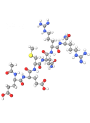
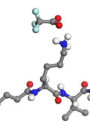
I would like to create an essence or serum product for **wrinkle reduction** using the following ingredients and percentages: 1. Distilled water: 50% 2. Repair Activator™: 10% 3. Pep®-Coll (Palmitoyl Tripeptide-5): 3% 4. Pal-GHK, Pal-GQPR (Matrixyl 3000): 5% 5. Acetyl Hexapeptide-8 (Argireline): 10% 6. Beta Glucan (Saccharomyces cerevisiae extract): 5% 7. Adenosine Liposome: 3% 8. Methylsilanol Mannuronate: 6% 9. Rhamnose: 3% 10. Phospholipid: 1% 11. 1,2-Hexanediol: 3% 12. Mild Preserved Eco™: 1% Please provide guidance on formulating this product.
Could you please advise on the technology or ingredients used in sunscreens that change color from white to flesh tone upon application? Specifically, what substance is used, and how is it mixed into the formula?
What is the shelf life of a product when using Mild Preserved Eco as a preservative?
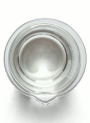
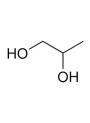
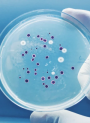
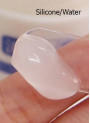
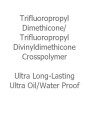
Based on the provided information, I have two questions regarding cosmetic formulation: 1. Which gel-forming agents can be used in a facial product that will not cause pilling or flaking when left on or when other products are layered on top? 2. If I include `Silicone Gel (Vinyl Dimethicone Crosspolymer)` in a product intended to have a liquid texture, what is needed to emulsify/incorporate this ingredient? Will the final product be clear or opaque white?
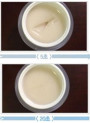
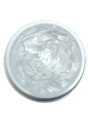
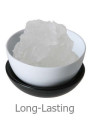
I have the following lotion formula and mixing method. Can these ingredients be mixed together? Also, how much Light Cream Maker should I use to achieve a light, easily absorbed lotion texture? **Formula:** 1. Natural Oil: 15% 2. Light Cream Maker: 1.5% 3. Water: 77.30% 4. Disodium EDTA: 0.2% 5. CosmoWhite: 1.5% 6. Vitamin E: 0.5% 7. Natto Gum: 3% 8. Mild Preserved Eco: 1% **Mixing Method:** * Combine ingredients 1 and 2. * Combine ingredients 3, 4, 5, 6, and 7. * Slowly pour the water phase mixture into the oil phase mixture while stirring until a lotion texture is formed. * Add ingredient 8 and continue stirring until well combined.
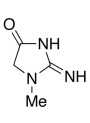
I am making a lotion with the following ingredients and percentages: **Phase 1:** 1. Natural Oil: 12% 2. Alaria Esculenta Extract: 1% 3. Light Cream Maker: 1% **Phase 2:** 4. DI Water: 74.5% 5. Safe-B3: 4% 6. GlucoBright: 4% 7. Natto Gum: 3% **Phase 3:** 8. Mild Preserved Eco: 0.5% My proposed mixing method is: * Mix 1 + 2 + 3 together. * Mix 4 + 5 + 6 + 7 together. * Slowly pour the water mixture into the oil mixture, stirring until a cream texture is formed. * Then add 8 and stir until combined. Is this mixing method correct?
Regarding the formulation of solid perfume: 1. If we use fixatives like `Flora Fix` or `Last Fix` in solid perfume to make the scent last longer, will it be effective? Which one is most suitable for solid perfume, considering that high heat is needed to melt the wax? 2. If we blend `Essential Oil` with synthetic fragrance, do we need a solvent? If so, which one? Or is no solvent needed? 3. After pouring the mixture into the container, should we quickly close the lid to prevent the scent from evaporating with the heat, or should we leave it open?
I am using a `Sulfate Free Shampoo Base` to formulate a shampoo. I would like to know what foaming agents can be used to increase the foam level in this base?
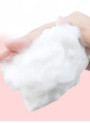
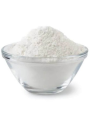
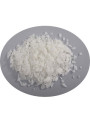

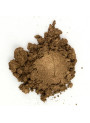
Can the following two products be used in lipstick? If yes, what is the maximum percentage? * Brown/Gold Red Mica แดง อมน้ำตาล เหลือบทอง (ขนาด B) * Gold Glitter Mica ประกายทอง (ขนาด C)
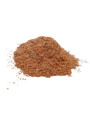
I would like to consult about skincare suitable for my 60-year-old mother who has concerns about wrinkles and age-related sagging. 1. Which formula would be more suitable between: * Glycosaminoglycans night Serum * REGENERATING NIGHT CONCENTRATE 2. I am looking for a cream with a high concentration of Coenzyme Q10. Are there any recommended formulas? Thank you.
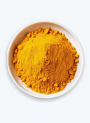
I want to create a serum to address melasma, freckles, dark spots, acne marks, and dull skin. I have the following formula: * Activated Resorcinol 1% * Ume Extract 2% * Tranexamic Acid 3% * Gluco Bright 4% * Niacinamide 5% * Azelaic Acid 10% * Double Hyaluronic 10% * Dimethyl Isosorbide (DMI) 3% * Xanthan Gum 0.2% * Mild Preserved Eco 1% * Water (remaining part) Can Activated Resorcinol be mixed directly into this formula, or does it require a solvent for dissolution?
I have several questions regarding cosmetic formulation, specifically concerning emulsifiers, silicones, and their impact on stability and texture: 1. Can **Silk Lotion Maker** emulsify a formula with high electrolyte content, such as 10% Hyaluronic liquid + 5% B5 (with possibly only 1-2% oil)? Is it necessary to use **Magnesium Sulfate** to increase stability in such a formula? 2. For a lightweight formula like a spray or one with low viscosity (potentially without any gelling agents), the team suggested using **Silk Lotion Maker** 2-3% together with **Polysorbate 80** 1%. If I change this to using **Silk Lotion Maker** 3% together with **Light Lotion Maker** 1-2% instead, is this possible? And will it affect separation if the formula contains a total of 30% oil + silicone? 3. Theoretically, some types of silicone can coat the skin. If I use two products consecutively (layered), for example, applying the first formula containing **Trisiloxane** + water solution, and then applying a second formula with the same composition as the first, will the silicone in the first formula interfere with or hinder the absorption of the water solution in the second formula? 4. For a serum formula that is lightweight, easy to spread, and fast-drying, which product is most suitable among **Trisiloxane**, **Dimethicone 1Secs**, and **SiliconeGel (Ultra Clear)**? Also, is **SiliconeGel (Ultra Clear)** a volatile type of silicone?
Based on the following sunscreen formula: * Titanium Dioxide 15nm Liquid (Gloss) - 10% * Zinc Oxide 35nm Liquid - 10% * Silicone Blender (ประสานซิลิโคนหลากชนิด) - 3% * Mild Preserved Eco™ (Ethylhexylglycerin) - 1% * Silicone Gel (Ultra Clear) - 28% * น้ำกลั่น ปราศจากเชื้อ - 48% I want to modify this formula to increase SPF and PA values. 1. Can I replace 10% of Silicone Gel with 10% SPF Protect Ultra 2? Would the resulting cream still be stable? If additional ingredients are needed, please advise. 2. Alternatively, if I use SPF Protect Ultra 2 instead of Zinc Oxide, but also want to increase the white cast by using powder TiO2 instead of the liquid type in the first ingredient, would the resulting cream still be stable? If additional ingredients are needed, please advise. I also want to modify this formula to increase its longevity. 1. If I want to add Oil Film to make the sunscreen last longer: * Which ingredient should I replace, and do I need to add any additional emulsifiers? * If I still want to have some water in the formula, can I still use Oil Film? (Because water is cheaper than Silicone Gel). 2. If I want to add Silicone Film to make the sunscreen last longer: * Can I replace 10% Silicone Gel directly with 10% Silicone Film? Do I need to add any additional emulsifiers?
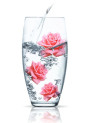
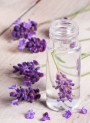
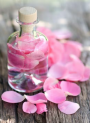
Can Rose Water and Lavender Water be used as ingredients in cosmetic formulations instead of Purified Water? What are the considerations?
I would like to create a physical sunscreen with the following properties: * Liquid, milky lotion texture * SPF50 PA++++ * Lightweight texture, no white cast * Slight sweat and water resistance I have proposed the following formulation: * Titanium Dioxide 15nm Liquid: 25% * Zinc Oxide 35nm Liquid: 15% * Milk Lotion Maker™: 4% * WaterGuard™ Lite: 5% * Mild Preserved Eco™: 1% * Purified Water: Remaining amount Is this formulation feasible? Will the results be close to the desired properties mentioned above? Please review and suggest any necessary adjustments.