Browse Questions and Answers
Avg response: 24 HrsFilter Questions
20 of 14228 results
I am formulating a **pH-changing lip oil** and need to incorporate sunscreen to achieve a high protection level of **SPF50 PA+**. 1. Which oil-soluble sunscreen ingredients or blends are recommended for achieving this high SPF level in an anhydrous lip oil formulation? 2. Can the final lip oil product be submitted to MySkinRecipes Expert's SPF Lab service for official testing and validation of the SPF50 PA+ claim?


What is the concentration of the Calcium Chloride product (ID 33737) listed on the website?
# Formulation Challenge: Water-Based Essential Oil Pillow Spray I am formulating a water-based Essential Oil Pillow Spray using the following components: * Distilled Water * Essential oils (5%) * PEG-40 and Flora Solve™ Clear (Solubilizer ratio 3:1 relative to EO) * Fixative (5%) I encountered issues after adding the Fixative: 1. **Cloudiness:** When Fixative is added at 5%, the product becomes cloudy even when using a Solubilizer-to-EO ratio of 2:1 (which was clear before adding the Fixative). 2. **Viscosity:** Increasing the Solubilizer-to-EO ratio to 3:1 (with 5% Fixative) results in slight cloudiness, while a 4:1 ratio (with 5% Fixative) results in a clear product that is highly viscous. I need advice on the following: 1. How can I achieve a clear and non-viscous final product? 2. If I replace PEG-40 and Flora Solve™ Clear with `Polyglyceryl-6 Caprylate` and `Polyglyceryl-4 Caprate`, will this substitution yield a clear and non-viscous result? 3. What non-irritating substance can be used to effectively enhance scent diffusion and longevity?
I incorporated `Hi-Quercetin®` into a Hair Tonic formulation and adjusted the pH using `5% Sodium Hydroxide`. After leaving the product for a few days, a yellow precipitate formed. Is this precipitation caused by the addition of the base? What methods can be used to resolve this stability issue?
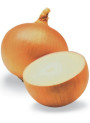
Can the decorative product **White/Pink Petals Beads 9-15mm** (Product ID 5941) be incorporated into glycerin soap? If so, what are the recommended guidelines for mixing and usage rate to ensure the beads do not break or deform during the manufacturing process?
# Using Hydrolyzed Sclerotium Gum (Poly-Protect) in Sunscreen Formulations I am developing a suncream and would like to use Hydrolyzed Sclerotium Gum (Poly-Protect). Please confirm the following details regarding its application: * Is Hydrolyzed Sclerotium Gum (Poly-Protect) suitable for use in sunscreen formulations? * What is the recommended usage rate range for this ingredient? * How is its compatibility with essential sunscreen ingredients, particularly **UV filters** (both chemical and physical)? * Are there any specific formulation tips or technical considerations for incorporating Hydrolyzed Sclerotium Gum into suncreams (e.g., mixing phase, temperature limits, or synergy with other stabilizers)?
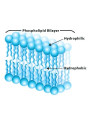
I am developing a cosmetic product and would like to know if **Phospholipid** (specifically, Hydrogenated Lecithin, Product ID 1169) can be successfully incorporated into a **perfectly clear serum formulation**. What are the technical considerations regarding clarity and stability when using this ingredient?
I am formulating a product using the `EasyThick™ Gel` base and wish to incorporate a distinct green tea fragrance. 1. Does the product `CleanTea™ Liquid (Green Tea Extract Deodorizer)` (ID: 31621) provide a noticeable green tea scent, or is it primarily a deodorizer? 2. Could you recommend specific green tea fragrance oils available from MySkinRecipes that are suitable for use in a gel base? 3. What is the recommended usage rate (%) for the fragrance oil in the gel formulation?


# EasyThick™ Instability in Dishwashing Liquid Formulation I am formulating a dishwashing liquid using **EasyThick™ (PEG-90 Glyceryl Isostearate)** as the gelling agent. The initial process successfully formed a thick gel. However, during the final step of adding liquid fragrance and food coloring, the gel instantly collapsed and turned back into a liquid. 1. Is this instability caused by the food coloring or the liquid fragrance? 2. What specific types of liquid fragrance and color are compatible with `EasyThick™` to maintain viscosity? *Note: When testing with **HEC (Hydroxyethylcellulose)** as the gelling agent, adding fragrance and color only resulted in a slight drop in viscosity, not a complete collapse, unlike the result with EasyThick™.*
I am looking to develop a pain balm product with a **clear, gel texture**, similar to the consistency of Himalaya Pain Balm. Could you recommend the necessary gelling agents and provide guidance on the formulation process (including required temperature ranges and typical usage rates) to achieve this specific texture and clarity?

I am working with the **Antiperspirant / Deodorant Base Cream (ID 124994)** formulation and would like to substitute Aluminum Chlorohydrate with Potassium Alum. I need guidance on the following points: 1. Is it possible to use Potassium Alum instead of Aluminum Chlorohydrate in this base? 2. If substitution is possible, should I use the powder form or another type? 3. What is the recommended usage percentage for Potassium Alum? 4. Could you provide detailed instructions on the mixing steps and method required to ensure stability when incorporating Potassium Alum into the cream base?
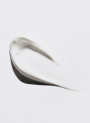
pH Stability and Preservative Requirements for Stabilized Cellulase Enzyme in Concentrated Detergent
I am using a Stabilized Cellulase Enzyme (Alkaline type) which has an optimal activation range of pH 6-10 and temperature 25-60°C. I have two questions regarding its use in a concentrated liquid laundry detergent: 1. Can the finished concentrated liquid laundry detergent formula have a pH exceeding 10? Or must the detergent be maintained strictly within the specified pH range (6-10)? If the pH is slightly lower or higher than this range, will the enzyme be damaged, considering that dilution during washing should bring the pH back into the 6-10 range? 2. Does the concentrated formula require a preservative? If so, which type is recommended?
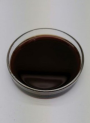
Regarding the product Urea (High Purity, Cosmetics, Powder) (Product ID 149): 1. What is its physical form? Is it considered a urea crystal? 2. Is this specific grade of Urea highly water-soluble?
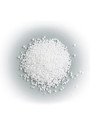
I am using **Carbamide Peroxide (Gel, 25% Carbamide Peroxide)**. Is my understanding correct that this product can be applied directly to the tooth surface for a duration of 20-30 minutes?
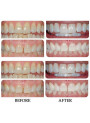
Please provide a simple, basic toothpaste formulation recipe suitable for general cleaning and a fresh feeling, utilizing **Hydrated Silica** as the primary abrasive agent. The formulation should be designed for a 100g trial batch, easily prepared in a standard laboratory setting without requiring specialized high-shear mixing equipment. The response must include: 1. The complete ingredient list with percentage (%) usage (independent of batch size). 2. The function/role of each key ingredient. 3. A detailed, step-by-step mixing process (including phase separation, e.g., Phase A, B, C) suitable for small-scale laboratory preparation.
Can **MSH Black™ (Acetyl Hexapeptide-1)** be incorporated into a shampoo formulation? If not, what are the recommended product types (e.g., leave-on vs. wash-off) and usage guidelines for this ingredient, especially considering its function in reducing white/gray hair?
I am using the **Cleansing Balm (Colorless, Fragrance-Free)** base (Product ID 31507). What is the recommended percentage range for adding oil-based nourishing ingredients, and what is the absolute maximum percentage that can be added without compromising the texture or wash-off performance of the balm?
I have a question regarding the ingredient `Natamycin (50%, From Bacteria Fermentation)`. 1. What exactly is this product? 2. In practical food formulation, if a recipe specifies a requirement for `Natamycin 100%` (pure active ingredient), is it correct that I must use **double the amount** of the `Natamycin (50%, From Bacteria Fermentation)` product to achieve the required active concentration?
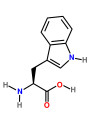
I attempted to incorporate L-tryptophan into a fruit juice beverage formulation. I observed that the resulting drink had an intensely bitter taste at the concentration used: `1g L-tryptophan per 40ml` of liquid. What methods or techniques are recommended to correct this intense bitterness and successfully mix L-tryptophan into a drinkable format?
Which blend provides better thickening properties in a cream formulation: `Cetearyl Alcohol (50/50, e.q. Lanette O)` or `Cetearyl Alcohol (30/70, eq. Lanette D)`?