Browse Questions and Answers
Avg response: 24 HrsFilter Questions
20 of 14228 results
I plan to use **Glutathione (L-Glutathione Reduced)** powder in a skin cream formulation. 1. Can **Glutathione (L-Glutathione Reduced)** be mixed into a skin cream? 2. How should I mix **Glutathione (L-Glutathione Reduced)** powder into Vaseline (petroleum jelly) cream for topical application? 3. Do I need to dissolve the powder in water first before mixing it with the cream? I am concerned that if mixed directly, it might leave a powdery residue on the skin.
What is the correct procedure for dissolving and achieving optimal thickening with `METHOCEL F4M` (Hydroxypropyl Methylcellulose)? Should hot water be used, and what are the specific temperature requirements and steps necessary to prevent clumping or "fish eyes"?
What are the INS (International Numbering System) codes for the following natural food colorants? * Gardenia Yellow Color (Natural Food Colorant) * Turmeric Extract Curcumin Yellow Color (Natural Food Colorant)
I plan to use Galactomyces Ferment Filtrate 100% purely as a final product. I have two main questions regarding its stability and use: 1. If I use the raw material purely (100%), is it necessary to add an additional broad-spectrum preservative, or is the preservative already contained within the raw material sufficient? 2. What are the correct storage conditions? Can this ingredient be stored at normal room temperature, or must it be kept refrigerated (4°C to 8°C) to maintain its stability and shelf life?
What are the key differences in material, function, and purpose between **oil blotting paper/film**, **powder pressing equipment** (used for manufacturing compact cosmetics), and **general white cloth**?
I have **Glutathione (L-Glutathione Reduced) 99%** powder. 1. How should this ingredient be used? 2. If I already have an existing commercial body lotion (e.g., Vaseline), what is the correct method for mixing the powder into the lotion for use? 3. What solvents are suitable for dissolving this ingredient?
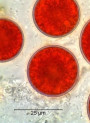
I plan to mix the following 10 active ingredients into the Absolue Soft Cream Base (compare to Lancome) - 500 gram. Please advise on the recommended mixing ratios, compatibility, and potential texture issues when combining these ingredients: * Panthenol (Vitamin B5, DL-Panthenol, Powder) * Pure-Adenosine™ * WhiteCumin™ 2x (สารสกัดขมิ้น, Tetrahydrodiferuloylmethane) * Astaxanthin (10% Algae Extract, Oil) * Bakuchiol-Eco ™ (Natural Retinol, 98% Pure, India) * Horse Placenta * Bifida Repair Complex™ (Bifida Ferment Lysate, High Conc) * S-Proteoglycan™ Liquid (Salmon Cartilage Protein 10000ppm) * HyaCap™ Salmon Roe * SerpinBlock™ (Piperidinepropionic acid) Additionally, which of these listed ingredients can also be incorporated into a hair root serum/spray formulation?
I am formulating a facial spray mist and encountered a significant solubility issue. When adding Vitamin B6 (Pyridoxine Hydrochloride) to the main water phase, the entire solution became 'crystally and sparkly' and would not dissolve. My mixing process involved: 1. Dissolving Sebum-Reg™ (Capryloyl Glycine) in a portion of water using Sodium Bicarbonate (to achieve a higher pH necessary for Sebum-Reg™ dissolution). 2. Adding this high-pH Sebum-Reg™ solution to the main water phase. 3. Adding the Vitamin B6 afterward. The final pH of the resulting mixture was 4.6. I suspect the initial high pH environment created during the Sebum-Reg™ dissolution step caused the B6 to precipitate, even though the final pH was acidic. What is the proper procedure or advice for successfully dissolving both Vitamin B6 and Sebum-Reg™ in water for a stable facial mist formulation?
I am attempting to incorporate **PoreNin™ (Tannic Acid)** powder into a water-based formulation (serum or facial mist spray). I found that the powder is extremely difficult to dissolve in water, even with electric whisking. My current successful method is: * Making a slurry in `propanediol`. * Allowing it to sit for some time in the `propanediol`. Are there any other recommendations or alternative methods for effectively dissolving **PoreNin™ (Tannic Acid)** in a water-based serum or water-based facial mist spray?
What are natural alternatives to the following synthetic ingredients for use in cosmetic formulations, especially for hair care? Please recommend specific natural ingredients available that have similar properties (conditioning, emulsifying, and cationic effects). The ingredients to replace are: * `Dimethicone` (Medium/350, Low-Odor) * `Cetearyl Alcohol` (30/70, eq. Lanette D) * `Stearamidopropyl Dimethylamine`
I plan to submit a peptide sample for Peptide Purity Analysis using High-Performance Liquid Chromatography (HPLC). 1. Is a 10mg peptide sample in powder form sufficient for this analysis? 2. Will the results of the Peptide Purity Analysis by HPLC be reported in percentage form?
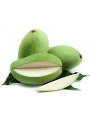
The customer is inquiring about the composition and appropriate selection of flavors for food and beverage applications. Specifically: 1. Is the **Green Mango Flavor (Water & Oil Soluble, Propylene Glycol Base)** product considered a 100% natural extract? 2. When selecting fruit and flower flavors for food/beverage use, are these generally 100% natural extracts? 3. Which product section should be prioritized for food/beverage flavors: the Food Flavor section, or can the Natural Scents section also be used for food products?
I am attempting a **Hot Process** formulation using `Sucrose Cream Maker` in the oil phase. The oil phase consists only of Mineral Oil and Sucrose Cream Maker. When heating the oil phase to approximately **40°C** to ensure all solids dissolve into a liquid, I encountered two persistent issues (tried 3-4 times): 1. The `Sucrose Cream Maker` did not fully melt or dissolve. 2. Smoke started appearing, even though Mineral Oil and Sucrose Cream Maker should be stable at temperatures much higher than 40°C. What steps or precautions should I take, especially regarding the melting temperature and the smoking issue, when using `Sucrose Cream Maker` in this technique?
What is the recommended usage percentage or dosage for **Konjac glucomannan** (Konjac Gum) when used either as a dietary supplement or as a thickener/gelling agent in formulations?
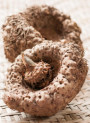
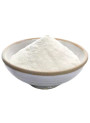
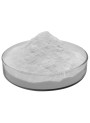
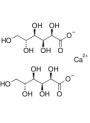
# Alternative Mineral Salts for Electrolyte Tablets (Taste Masking) I am currently developing **electrolyte tablets** for oral consumption. I have used the following ingredients to provide essential minerals, but the resulting product has an astringent and bitter taste: * Sodium Citrate (20%) * Potassium Citrate (3%) * Magnesium Citrate (4%) * Calcium Lactate (5%) * L-Glutamine (6%) I am seeking advice on alternative compounds that provide the same minerals (Na, K, Mg, Ca) but offer a significantly milder, less bitter taste profile suitable for use in a pharmaceutical or supplement tablet formulation.

I have received concentrated fragrance oil from a friend and wish to formulate a DIY body perfume for personal use. I have already purchased some ingredients from My Skin Recipes. Could you please recommend the necessary ingredients and formulation guidelines to achieve a perfume that meets the following criteria? * **Longevity:** Must be long-lasting on the skin. * **Diffusion:** Must be diffusive (sillage) and not heavy or thick (non-heavy/non-oily texture). * **Packaging Stability:** Must be suitable for packaging in clear bottles while remaining resistant to sun/light degradation.
I am looking for recommendations for 3-4 cold-process gelling agents suitable for making a clear, water-based gel base for cosmetic formulations. The required characteristics are: * **Cold Process:** Must form a gel without the use of heat. * **Instant Gelling:** Should form a clear gel immediately upon adding to water and stirring or blending (similar to a pre-neutralized Carbomer). * **Ease of Use:** Preferably requires minimal or no complex pH neutralization steps. **Output:** Please recommend 3-4 options, including their suggested usage rates and any necessary precautions or pH adjustment requirements.
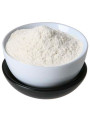
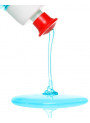
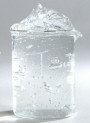
I am seeking guidance on the proper incorporation of two thickening agents in complex formulations: # 1. Carbomer 2020 (EasyDisperse, Electrolyte Tolerance, Long-flow) For use in serum formulations (both hot and cool process) and W/O or W/S waterproof sunscreen systems, what is the correct step for addition? * What is the ideal temperature range for addition? * Is resting time required for full hydration/swelling after addition? * Should it be added early (after dissolving EDTA), mid-process, or late (before adjusting pH with AMP/Citric Acid)? # 2. Xanthan Gum In the water phase of a waterproof sunscreen containing: * Humectant & Glycol * Whitening/Anti-Acne Active * Hydration & Soothing Complex * Antioxidant * Preservative system What is the correct step for adding Xanthan Gum within this complex water phase?
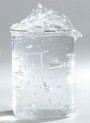
I am developing a water-resistant sunscreen cream using a Water-in-Oil (W/O) system. I need guidance on the proper procedure for incorporating specific film formers. 1. At what step in the mixing process (before emulsification, after emulsification, or during cooling) should the film formers be added? 2. What is the appropriate temperature for adding these components? The film formers I plan to use are: * `VP/Hexadecene Copolymer` (intended for the oil base) * `Isododecane (Germany)` + `UV35 (Polyurethane-35)` (intended for the water base) Should these components be mixed in after the emulsification step?
Can **Vitamin K2 MK-7 (Menaquinone-7) (0.15% In MCT Oil)** be mixed with Essential Oils (EO) or Fragrance Oils (FO) to create a roll-on perfume for topical application?