Browse Questions and Answers
Avg response: 24 HrsFilter Questions
20 of 14228 results
My Liquid Foundation SPF50 PA++ formula separated after mixing, with clear water on top. What are the possible reasons and solutions for this phase separation? Also, does the ingredient SPF Protect Ultra™ II require heat for proper mixing in the formula?
Can Skin Barrier Cream Base (Emulsifier Free) be used at 100% concentration for dry areas like heels, elbows, and knees, or should it be mixed with other ingredients? Does this base exfoliate, and is it safe for pregnant women to use on dry areas like the abdomen?

Seeking alternative broad-spectrum, water-soluble preservatives suitable for a hydrosol-based facial spray, other than Liquid Germall Plus.

The user is asking for clarification on using Reservoir-Tech (Product ID 1246) in existing cream or lotion formulations, specifically regarding the feasibility of adding it to a finished product, the appropriate mixing method (manual vs. mechanical blending), and its compatibility with different types of penetration enhancers or carriers (specifically carriers 1-3 vs. 4-5).
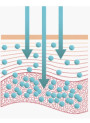
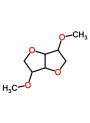
Is it possible to formulate a targeted serum for wrinkles around the eyes and forehead using a specific list of ingredients including Cone Snail Peptide, Acetyl Octapeptide-3, Pep®-Leupha, Wrinkle-Lax™, Pro Polymer, Poly-Conditioner Pro, Mild Preserved Eco, and Dimethyl Isosorbide at specified percentages (20%, 0.5%, 0.5%, 1%, 10%, 0.3%, 10%, 3%)?

From a sunscreen formula containing 15% SPF Protect Ultra™ II, Milk Lotion Maker, Satin Cream Maker, Water, and Mild Preserved Eco, which yields SPF 50.95 and PA++, what ingredients should be added to increase the PA rating to PA+++?
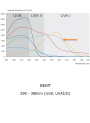
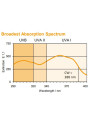
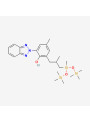

Is food-grade Choline Chloride (Silica Coated) safe for consumption, and what are the consumption limits, especially regarding the silica coating?
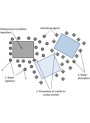
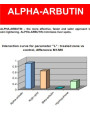
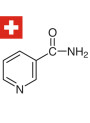
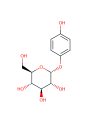
Can Alpha Arbutin, Niacinamide (Safe-B3), and Acetyl Glucosamine (GlucoBright) be used as whitening agents in an underarm deodorant powder formula? What are the recommended usage percentages, and are there alternative ingredients or considerations for achieving whitening in this product form?
How should a concentrated finished fragrance like "Lost in Forest" be used? Can it be applied directly or added directly to products like shower cream or body spray, or does it require dilution or mixing with a suitable base before use?

How can I improve my cream formula to address issues with white cast that requires rubbing, color change over time (lighter to darker, settling), and sticky texture after application? (Formula provided)

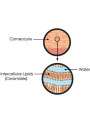
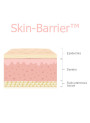

I am developing an oil-free sunscreen formula and have two options using Bisoctrizole and Hyaluronic Acid Gel Base. The second formula also includes Tris-Biphenyl Triazine (Nano). Is the second formula viable for an oil-free sunscreen, what would its estimated SPF be, and do you have recommendations for oil-free sunscreen formulations?
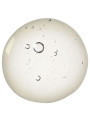
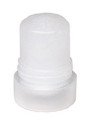
I have a deodorant stick formula (silicone base, lightweight, white color but doesn't leave white cast on underarms) as follows: * Oil Stick™ Hard 2% * Oil Stick™ Medium 6% * Anti-Sweat™ 20% (helps reduce sweat, reduces odor) * Silk Talc Powder 6% (helps absorb oil, reduce stickiness, makes the formula dry quickly) * AminoSilk™ 1% (provides smoothness to underarms) * Cyclomethicone remaining to 100% I followed the formula and tried making it, but it became lumpy and I couldn't pour it into the mold. What adjustments should I make? The resulting texture looks like this (image reference in original post). Please advise.
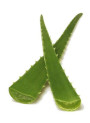
Regarding Aloe Vera Extract (10:1 concentration ratio): 1. Will the extract's properties degrade in a finished product stored at room temperature before the extract's expiry date, given the raw extract requires refrigeration after opening? 2. Does 3% extract equal 30% fresh Aloe Vera, and 10% extract equal 100% fresh Aloe Vera? 3. Can mixing the extract with Propylene Glycol before adding it to the formula help extend the Aloe Vera's properties' shelf life in the final product stored at room temperature?
I want to make a cooling body oil. I tried Freeze Me™ at 2% but it wasn't cool enough. Can I increase the concentration to 5% or higher as suggested for desired efficacy and still register with the FDA? Are there other cooling agents from MySkinRecipes suitable for oil formulations that can be registered with the FDA?
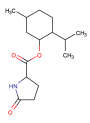
What are the properties of Sodium Isostearoyl Lactylate as an emulsifier, including its compatibility with other emulsifiers and the resulting texture (soft, light, non-sticky?), especially compared to ingredients like Cyclopentasiloxane?
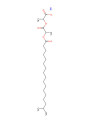
How can I properly dissolve Ethylene/Propylene/Styrene Copolymer in an oil blend (Polybutene, Pentaerythrityl Tetraisostearate, Diisostearyl Malate) for cosmetic formulation, as heating to 120°C and continuous stirring did not result in complete dissolution and caused lumps? What is the correct mixing method?
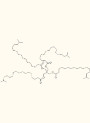
Can LipidSoft™ Deo (Triethyl Citrate) be used safely and effectively in pet products, considering its properties as a deodorizing emollient typically used in human cosmetics?
I am trying to register a product containing a peptide mixture (like Matrixyl 3000) with the INCI name "Glycerin (and) Water (and) Butylene Glycol (and) Carbomer (and) Polysorbate 20 (and) Palmitoyl Oligopeptide (and) Palmitoyl Tetrapeptide-7". The registration program states the information is not found. How can I resolve this issue?

In a gentle herbal shampoo formula containing approximately 2% herbal powder, can BabyFoam™ (Sodium Cocoyl Isethionate) be used as the sole surfactant? If so, what percentage is recommended to achieve effective cleaning, considering 6% felt insufficient?
The user wants to know if Hairplex™ can be used in a hair conditioner formula to repair hair bonds and provide softness. They specifically ask about compatibility with silicones/oils, the appropriate pH range, and other formulation recommendations to achieve both bond repair and a soft finish.