Browse Questions and Answers
Avg response: 24 HrsFilter Questions
20 of 14228 results
How can I adjust a provided liquid/semi-liquid lip formula, which includes LipidSoft Moist, Isododecane, powders, Silicone Film, Warp Cream Maker, and Silicone Gel, to create a solid lipstick stick? What ingredients should be adjusted or added, and in what proportions?
What stable orange and red colors are recommended for Cold Process (CP) soap, as previous colors I used changed in the acidic/alkaline environment?


I am making Cold Process (CP) soap and need recommendations for colorants, specifically orange and red, that are stable and do not change color or fade in the high pH environment of CP soap, as the colors I have used previously have distorted.




What colorants are recommended for Cold Process (CP) soap to achieve stable red and orange colors without shifting in the high alkaline environment?
How should buffers be used to stabilize the pH of cosmetic products? Specifically, is it necessary to use both an acid and its salt (like Citric Acid and Sodium Citrate) or just the salt? What is the typical ratio? If a product already has the desired pH (e.g., pH 5.5), is it still necessary to add a buffer like Sodium Citrate or HEPES to prevent pH drift over time? At what stage of the formulation process should buffers be added? And is it a requirement to include buffers in all cosmetic formulas?
How to adjust and maintain pH stability in cosmetic formulations using buffer systems, including the necessity of acid/salt combinations, the need for buffering even at the target pH, the optimal addition stage, and whether buffers are required in all formulas.
When mixing a DIY serum focusing on Hyaluronic Acid, Apple Stem Cell, and 4 main whitening agents, what precautions should be taken? Specifically, I would like to know: 1. Will the ingredients have interactions with each other? 2. What is the recommended mixing order? 3. What type of water is recommended, and do you have a pH measurement tool recommendation?
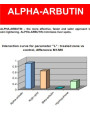

I plan to mix my own serum focusing on Hyaluron with Anti-aging from Apple Stem Cell and 4 main whitening ingredients. What precautions should I take? 1. Will the ingredients react with each other? 2. What is the correct mixing order? 3. What kind of water is recommended, and do I need a pH meter?
I am trying to make an oil gel using Sugar Gel, glycerin, water, and coconut oil. Following my procedure (mixing Sugar Gel, glycerin, water, heating to 70-80°C, then heating coconut oil to 70-80°C, and pouring the oil into the gel mixture), the product separates into a cloudy white layer on top and oil at the bottom, failing to form a consistent gel. How can I fix this separation issue?
I am making a herbal massage oil by infusing herbs like Plai, Wan, and Turmeric in a base of sesame oil and cold-pressed coconut oil. The resulting oil is too heavy, viscous, slow to absorb, and feels sticky. Additionally, cold-pressed coconut oil is expensive. Could you recommend alternative oils or methods to make the massage oil lighter, faster absorbing, less sticky, and potentially reduce the formula cost?
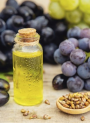
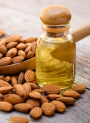
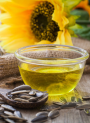
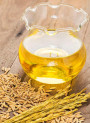
I am making herbal massage oil for muscle aches and tight muscles using a base of sesame oil and cold-pressed coconut oil, infused with herbs like plai, wan, and turmeric. After making it, I apply it for massage, but it absorbs slowly, and the oil texture is too heavy and sticky. Furthermore, the cost of cold-pressed coconut oil is high. Could you recommend alternative oils to replace sesame oil and cold-pressed coconut oil to make the oil lighter, easily absorbed, and non-sticky when applied?
Seeking recommendations for alternative base oils for herbal massage oil to replace sesame oil and cold-pressed coconut oil, aiming for a lighter, faster-absorbing, non-sticky texture and potentially lower cost, as the current formulation is heavy, slow to absorb, sticky, and uses expensive oils.
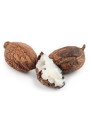
I am seeking advice on making herbal massage oil for muscle aches and tension. Currently, I use sesame oil + cold-pressed coconut oil and boil herbs such as plai, wan, and turmeric in them. When the oil is finished and used for massage, it absorbs slowly, and the texture is too heavy and viscous. Additionally, the cost of cold-pressed coconut oil is high. Could you please recommend alternative oils to replace or reduce the amount of sesame oil + cold-pressed coconut oil? I am looking for an oil that has a lighter texture, is easily absorbed when applied, and is not sticky. Thank you very much.
Can Phosphatidylcholine be used to encapsulate plant extracts for food applications, and what is the appropriate usage percentage for thesis research?
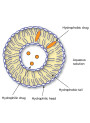
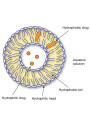
For a thesis project, can Phosphatidylcholine be used to encapsulate plant extracts for food applications? If so, what is the recommended usage percentage for encapsulating these plant extracts?
When using Butyl Methoxydibenzoylmethane powder and Ethylhexyl Salicylate liquid in a formulation, can the powder be dissolved directly in the liquid, or is it necessary to pre-dissolve the powder in a solvent like DPG before adding it to the formula?

When formulating with both liquid Ethylhexyl Salicylate and powder Butyl Methoxydibenzoylmethane, is it possible to mix them directly for dissolution, or is it necessary to pre-dissolve the powder in a solvent like DPG or another suitable solvent before adding to the formula?
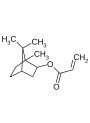


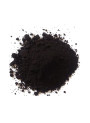

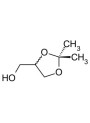
Which type of black colorant is suitable for face and body cream or serum formulations to achieve a black color that does not stain the skin and is easy to wash off?
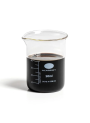


What type of black colorant should be used in face and body creams or serums to achieve a black color that is easy to wash off and does not stain the skin?
I have a body lotion formula with 10% 4D Hyaluronic Acid, aiming for a lightweight, fast-absorbing, and non-greasy texture. Will this formula achieve the desired texture, and what potential issues might occur?