Browse Questions and Answers
Avg response: 24 HrsFilter Questions
20 of 14238 results
Can **Sponge Gel** incorporate oil into a formulation? If yes, what is the maximum percentage of oil that can be incorporated?
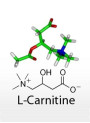
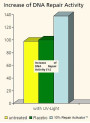
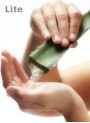
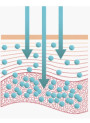
I'm a complete beginner. After researching formulas on the website for a while, I'd like to consult on a formula that a beginner can mix themselves. It's for a 45-year-old woman with sensitive skin, dry to combination skin (T-zone), starting to have issues with skin sagging, but also undergoes some lifting laser treatments. She has fine lines around the eyes only when smiling, fair skin with some freckles and melasma, and pores are starting to enlarge. She normally uses Hada's plain hyaluronic acid watery lotion, Vitamin C serum, and Rosehip oil as her main products. I want to make a serum to add to her routine to help with skin lifting and pores. Would the following formula meet these needs? **Proposed Formula:** * Repair Activator 5% (or 10%? Worried about it being oily) * L-Carnitine (Carnitine) 3% * GlucoBright 4% * Safe-B3 3% * Pal-GHK 5% * Aloe Vera Gel (Lite) 80% **Additional Questions about the Formula:** 1. Is it necessary to add Reservoir-Tech to help with absorption? 2. My skin is very fair already because I've used sunscreen regularly since age 16 due to very thin skin. Is it necessary to include GlucoBright and Safe-B3 in the formula? Do they help with freckles? 3. I included L-Carnitine because I want gentle exfoliation. Is this correct? 4. Are the ingredients compatible with Aloe Vera Gel? I'm hesitant to use too many ingredients, worried it won't turn out successfully. Thank you very much.
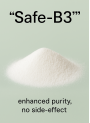
I've seen this ingredient in some creams, named `n-butyl resorcinol` and `4-n-butyl resorcinol`. Are these the same as MySkinRecipes' product named `4-butyl Resorcinol` Activated Resorcinol?
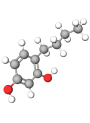
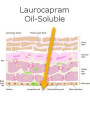
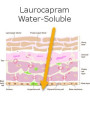
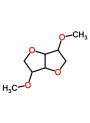
Dimethyl Isosorbide (DMI) is a substance that can carry both water-soluble and oil-soluble ingredients. To reduce costs, can I mix Laurocapram (Water Soluble) and Laurocapram (Oil Soluble) together to carry both water-soluble and oil-soluble ingredients?
Can a product containing the ingredient `Sugar-Film` claim to protect against PM2.5 pollution?
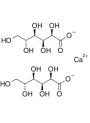
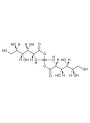
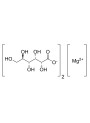
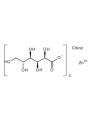
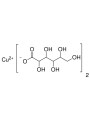
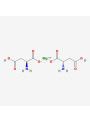
I would like to have my formula reviewed before proceeding with manufacturing. My formula consists of: 1. Calcium Gluconate 1% 2. Manganese Gluconate 0.5% 3. Magnesium Gluconate 0.5% or Magnesium Aspartate 0.5% 4. Copper Gluconate 0.05% or Copper PCA 1% 5. Zinc Gluconate 0.5% or Zinc PCA 1% 6. Sodium PCA 4% 7. Niacinamide 10% 8. NAT-RIBOSE 3% 9. Creatine 0.5% 10. Pure-Adenosine™ 1% 11. L-Carnitine 5% 12. Mild Preserved Eco™ 1% 13. Xanthan Gum 1% 14. WaterSoft™ 5% 15. Water to 100% For items 3, 4, and 5, I need to know the effectiveness of both options in terms of increasing skin oxygenation and skin absorption compared to Mineral Ready™. Please provide your opinion and information. Based on the formula, I expect the pH to be quite high. If I add Glycolic Acid or Lactic Acid at 1-2%, will it affect the mineral group? I understand these acids are Chelating Agents. Also, is L-Carnitine, being an amino acid, also a Chelating Agent? Thank you for your assistance.
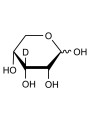

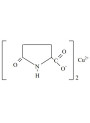
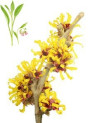
What are the recommended usage percentages for the following ingredients in a facial gel formulation? * Aloe Vera Extract (extraction ratio 10:1 FullAssay™) * Pro Polymer™ (Gel Maker) * Safe-B3™ (Vitamin B3, Niacinamide) * Sodium PCA 50% * Natural Moisturizing Amino Acids * Witch Hazel (Alcohol Free, Paraben Free) Plus Allantoin
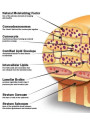
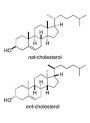
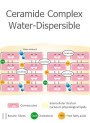
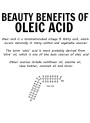
Based on the provided information about skin barrier repair, could you elaborate on the following points: 1. The optimal formula for retaining skin moisture and strengthening the skin barrier contains: * Cholesterol * Essential Fatty Acid (e.g., Linoleic Acid) * Non Essential Fatty Acid (e.g., Stearic Acid) * Ceramide in a ratio of `3 : 1 : 1 : 1`. *(Source: Optimal ratios of topical stratum corneum lipids improve barrier recovery in chronologically aged skin)* 2. Products like Atopalm, which claim to help with the skin barrier but may not explicitly list the `3:1:1:1` ratio, use `MLE technology` (Multi Lamella Emulsion). This technology incorporates `Pseudo Ceramides` (specifically mentioning the ingredient `Myristoyl/palmitoyl oxostearamide/arachamide MEA`, which is a US patent `US6221371B1` from 2001 by Aekyung, South Korea) along with appropriate ratios of Cholesterol, Ceramide, and Fatty Acids. This technology stimulates the skin to produce new lipids to repair damaged barriers and improves absorption. 3. The principle of good skin barrier reinforcement requires the presence of all components (Cholesterol, Essential Fatty Acid, Non Essential Fatty Acid, Ceramide) in the `3:1:1:1` ratio to accelerate barrier strengthening. 4. Using a single ingredient like Ceramide or Cholesterol alone might sometimes disrupt the skin barrier and worsen skin repair, potentially increasing water loss. Therefore, a cream containing only Ceramide does not always strengthen the skin barrier; using Ceramide alone can interfere with the barrier and increase water loss. 5. Other ingredients that can stimulate Ceramide production include Linoleic Acid, N-acetyl- L-hydroxyproline, and Niacinamide. Could you confirm and expand on these points regarding skin barrier ingredients and formulations?
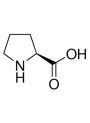
I would like to inquire about the compatibility and mixing procedure for a night cream formulation. The desired properties of the cream are: * Moisturizing * Skin strengthening * Skin whitening * Lifting/Firming * Reducing irritation/allergy The formulation is as follows: * GlucoBright™ (Acetyl glucosamine) 4% * Safe-B3™ (Vitamin B3, Niacinamide) 5% * Panthenol (Pro Vitamin B5, DL-Panthenol, Powder) 2% * 4D Hyaluronic Acid 10% * Allantoin 0.5% * Horse Oil (สกัด/บริสุทธิ์) 5% * DMAE (SkinTight MD™) Liquid 3% * Glycerin 99.5% 5% * Phenoxyethanol 1% * น้ำหอม 0.2% * น้ำเปล่า 62.3% Please advise on the compatibility of these ingredients and the correct steps for mixing.
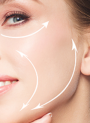

I am experiencing a rather strong odor with the `easy hairstyler (8hr)` product. I would like advice on how to eliminate the odor issue of the `easy hairstyler (8hr)`.

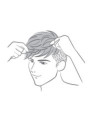
I am using Pitera 100% and find it quite sticky. My skin is oily and acne-prone, but I haven't experienced breakouts from it. I would like to try adjusting the formula. My proposed formula is: * Galactomyces 65 % * Bifida 5 % * Preservative 1 % * Laurocapram 2 % Are these ingredients compatible and will the formula still be effective? Also, is there a significant difference in results between the penetration enhancers Laurocapram and Dimethyl Isosorbide?
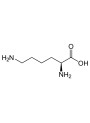
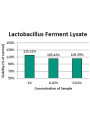
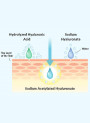
Could you please provide information about the following ingredients? * Gluconolactone * Sodium Citrate * Butylene Glycol * Lactobacilus Ferment * Citric Acid * Caprylyl/Capryl Glucoside * Sodium Hyaluronate * Zinc Gluconate * Zinc PCA * Zinc Lactate * Schizandra Sphenanthera Fruit Extract * Sodium Dilauramidoglutamide * Lysine * Maltodextrin * Polyglyceryl-10 Isosterate * Pancratium Maritimum Extract
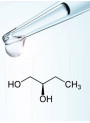
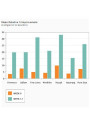
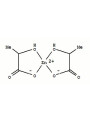
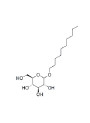
I would like to know about ingredients used for adding to Fragrance, such as Linalool, Limonene, Geraniol. 1. If I want to use them in Fragrance products like Reed Diffuser and candles, is it possible? Which ones should I use? For example, Linalool has a variant called Ethyl Linalool; can this be used in reed diffusers? 2. Which ingredients are recommended for use in candles? 3. Are these ingredients necessary to be added to existing scents, for example, mixing Lavender with Linalool?

I would like a formula containing `Pro-Cysteine 2-Oxothiazolidine-4-Carboxylic Acid`. What should I consider when formulating with this ingredient?
Can a formula with the following ingredients be claimed as "preservative-free" for FDA registration? * DMAE 3% * Acetyl Tyrosine 2% * FruitPeel 3% * Laurocapram 2% * Ethoxydiglycol 2% * Xanthan Gum 0.5% * Mild Preserved Eco 1% * Water I understand some liquid actives might contain preservatives like Phenoxyethanol. My concern is whether I can make the "preservative-free" claim during FDA registration with this specific formula.
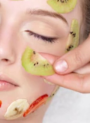
Regarding a skin cream formulation, I would like to inquire if using the specified amount of `Satin Cream Maker` in the following formula will result in a medium-thick cream suitable for dry, sensitive skin: * Fractionated Coconut Oil 10% * Rice Bran Oil 10% * Double Hyaluron Liquid 5% * Satin Cream Maker 2% * Mild Preserved Eco 1% * DIwater 72% Thank you.

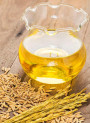
Can `Phenoxyethanol (Extra pure)` be used in spray products that can be sprayed onto the face and into the mouth? If not, what alternative ingredient should be used?

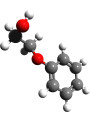
There is information stating that Niacinamide should not be used with Vitamin C in the same formula or product. However, if they are formulated as two separate products and applied layered on the skin, will the Niacinamide and Vitamin C cancel each other out?
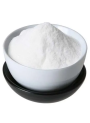
Based on the product description for `Goat Milk Powder` which states it is processed via Ultrapasteurized and Spray-Dry methods, is preservative-free, and is 8 times more concentrated than liquid goat milk: 1. What percentage of `Goat Milk Powder` should be mixed with water and `preservative` to achieve a concentration equivalent to regular liquid goat milk? 2. If formulating a concentrated `Goat Milk` liquid soap, what percentage should be included in the formula? I am confused about the usage rate; what percentage is too much or too little to be equivalent to ready-to-drink `Goat Milk`? I want the concentration to be equivalent to ready-to-drink `Goat Milk`.

I just bought a product, and it has a very strong alcohol smell.