Browse Questions and Answers
Avg response: 24 HrsFilter Questions
20 of 14240 results
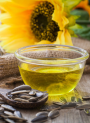
I would like to ask about the rancid smell from Safflower Seed Oil. The description mentions it might have a rancid smell. If I mix it into a cosmetic formulation, will it make the cosmetic product smell rancid? Also, I want to ask about the Shelf Life specified for each ingredient. If I mix them into a cosmetic product, will the shelf life follow that of the individual ingredients, or will it be counted from the date the cosmetic is mixed? Thank you.
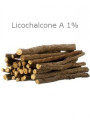
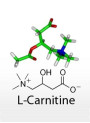
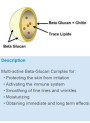
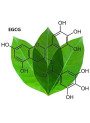
Regarding custom cosmetic production, specifically for a light water-based serum aimed at acne prevention, inflammation reduction, and skin strengthening, with the following active ingredients: 1. Hyaluronic Acid (Small Molecule) 0.1% 2. Hyaluronic Acid (Standard Molecule) 0.1% 3. beta glucan 5% 4. White Egg Enzyme 5% 5. Allantoin 0.5% 6. Licorice (Licochalcone A 1%) 1% 7. L-Carnitine 3% 8. EGCG 2% 9. Ectoine 2% 10. Solvent ??? 11. Preservative ??? 12. pH Adjuster ??? Target pH of the formula is 6.2. My questions are: 1. If the customer does not specify the type and percentage of Solvent, pH Adjuster, and Additives, will MySkinRecipe automatically select the appropriate ingredients and quantities? 2. If MySkinRecipe selects Solvent, pH Adjuster, and Additives based on the formula's suitability, will the customer be informed of the type and quantity added? 3. If the formula requires a specific pH (for optimal active ingredient performance), where can this be specified in the production order? 4. If MySkinRecipe selects Solvent, pH Adjuster, and Additives, how will the cost for these added ingredients be calculated in the production price?

Could you please provide a formula for making a Room Spray that can eliminate musty odors in rooms and cars?


Can Butter Cream Maker emulsify silicone? If yes, what is the maximum percentage it can support?
Could you please clarify which of your available Vitamin C products corresponds to "Vitamin C 100%" as claimed in the attached file?
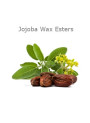
I have a stable base formula (Formula 1) and encountered problems when adding other ingredients in subsequent formulas (Formulas 2, 3, 4). I suspect incompatibility between Silicone quick cond, Jojoba ester, and Polyconditioner easy. **Formula 1 (Stable Base):** * makeupwash: 3% * cocowash: 3% * Isopentyldiol: 10% * Polyconditioner.easy: 4% * Silicone.quick.cond: 5% * MOIST24: 8% * Cucumber: 5% * Aloe: 3% * Phenoxyethanol.SA: 1% * Water: 58% **Formula 2 (Adding to Formula 1 base):** * Condi-B5: 4% * Jojoba.ester: 5% * HyaCoat: 0.2% **Procedure for Formula 2:** Added Condi-B5, then Jojoba.ester. Jojoba.ester did not seem to dissolve. High-speed mixing and heating (below 70°C) did not improve the issue. The problem looks like a combination of polymers. **Formula 3:** * Jojoba.ester: 5% * Condi-B5: 4% * B3: 3% * GlucoBright: 3% * Phenoxyethanol: 1% * Polyconditioner.easy: 8% (accidentally added 4% extra, total 8%) **Procedure for Formula 3:** Dissolved Jojoba.ester in water first, then added other ingredients top-down. After adding Polyconditioner.easy, the result was a mucus-like, separated mixture. **Formula 4:** * makeupwash: 3% * cocowash: 3% * Isopentyldiol: 10% * Polyconditioner.easy: 2% * Silicone.quick.cond: 5% * MOIST24: 8% * Cucumber: 5% * Aloe: 3% * Phenoxyethanol.SA: 1% * Water: q.s. to 100% * Condi-B5: 4% * Jojoba.ester: 5% **Procedure for Formula 4:** Started by dissolving Jojoba.ester in water and warming until dissolved, then added Polyconditioner.easy --> Condi-B5 --> Silicone.quick.cond. After adding Silicone.quick.cond, a cloudy, stringy mucus formed. High-speed mixing did not help. **Summary of Questions:** 1. What is the cause of the problem in Formula 2? 2. What is the cause of the problem in Formula 3? 3. What is the cause of the problem in Formula 4? 4. Which ingredients are incompatible? I read the website descriptions and none mention incompatibility. 5. Please provide guidance on how to fix these issues, as I have run out of materials to continue testing.

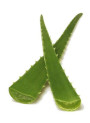
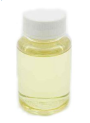


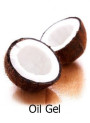
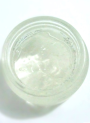
I have questions about three types of oil gels: * Oil Gel (Mineral Oil Base) * Oil Gel (Polydecene Base) * Fractionated Coconut Oil Gel 1. Which of these three provides more moisture but is not sticky? 2. Can they be applied directly to the skin? 3. Can water be added directly to them? If yes, what percentage? 4. Can oil-soluble ingredients like Alpha Bisabolol (Natural Bisabolol) be added? Will it make the product sticky? This is for use as a baby oil gel applied directly to the skin.
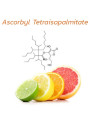
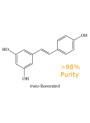
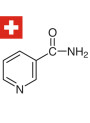
I have two questions regarding cosmetic formulation: 1. Can Ascorbyl Tetraisopalmitate be used together with Niacinamide? 2. Can Trans-Resveratrol Powder 98% be dissolved in 1,2-Hexanediol? Thank you.
Could you please analyze the following ingredient list and explain what kind of product it is likely to be and what the main functions of the ingredients are? The ingredient list is: * Water * Butylene glyco * Schizosaccharomyces pombe extract * Propylene Glycol * Sodłum cttrate * Linum usstatissimum seed extrcct * Hydrolyzed sodlum hyaluronate * Hydrolyzed acacia macrostachya seed extract * Gossypium herbaceum callus culture extrcct * Hydrolyzed lepidum meyenii root extract * Gluconolactone * Salvia hispantoa seed extract * Sodium Hyaluronate * Bifida ferment ysate * PolyGlutamic Acid * Calcium gluconatc * Galactomyces Ferment Filtrate * Phenoxycthcno * Sodium bcnzoatc * Ethylhexylglycerin * Disodium EDTA * Maltodextrin * Propanediol * Cltric acid * Glycerin
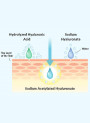
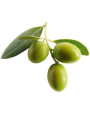
Regarding the use of Sensitive Cream Maker™: 1. Does Sensitive Cream Maker™ need to be mixed specifically in the water phase or the oil phase? 2. For the following formula: * Olive Oil (Olea Europaea Fruit Oil) 15% * Squalene 5% * Sensitive Cream Maker™ 3% * Water 77% If I mix as follows: * Heat components 1+2+3 to 70°C as the oil phase. * Heat component 4 (Water) to 70°C as the water phase. * Gradually pour the water phase into the oil phase while continuously blending. Will this result in a cream texture?
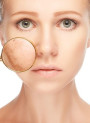
Please review the following body lotion formula intended for whitening and moisturizing. I would like to know if the ingredients are compatible and if any adjustments are needed before ordering: * Sym-White: 0.5 * MSH White: 2 * Safe-B3: 5 * GlucoBright: 4 * Papaya Enzyme (Papain): 1 * Safflower Seed Oil: 4 * shea butter (Ultra Soft): 4 * CosmoWhite: 1.5 * Calendula Extract: 4 * Natto Gum: 4 * Mild Preserved Eco: 1 * Disodium EDTA: 0.2 * Satin Cream Maker: 1.5 * Water: 67.3



I need advice on coloring a physical sunscreen with a Water in Oil emulsion base. The formula contains 13% mineral oil. I want to achieve a skin tone color similar to sponge number 2 using Beige Iron Oxides EasyMix. My plan is to add the color after the oil phase and water phase are emulsified, at a temperature below 60°C, sifting it in along with Zinc Oxide, Kaolin, and Titanium Dioxide. I will be using simple mixing equipment (hand stirring or an egg beater). Is this color choice suitable? What percentage should I start with for testing the color?
I want to make infused oil to use the extracted oil in a face oil formulation. However, based on my research, natural oils like almond oil, coconut oil, and olive oil don't have a long shelf life if not preserved, or they can go rancid if not stored properly. I would like to know: 1. If adding Vitamin E oil to the oil will help extend its life and quality, and for how long? 2. If I want to add a preservative suitable for sensitive skin to the oil, which one should I use, how should it be used, and what is the recommended percentage? 3. Is Vitamin E oil considered a preservative?

I have a formula with the following ingredients and percentages: * Water: 53.9% * Sodium PCA: 1% * LipidSoft CC: 9% * Titanium Dioxide Easy Dis: 1% * Zinc Oxide nano: 5% * SPF Protect Ultra II: 12% * Water in Oil EZ: 2.5% * Isododecane: 6% * Cyclomethicone: 3% * Aloe Vera Extract: 1% * Phenoxyethanol SA: 0.5% * Vitamin E (Tocopheryl Acetate): 0.1% * Oil Fix: 1% * Polymethylsilsesquioxane: 4% The formula separates when left standing. Can I use "silicone plus" to help emulsify it? Also, I didn't see "Oil Fix" on the website; is it discontinued? Can I just use "silicone plus" instead?
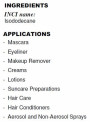
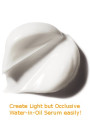
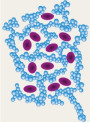
I am trying to formulate an O/S/W and S/W cream containing approximately 10% silicone (like Cyclomethicone). The formula also includes electrolytes from: * Sodium PCA 50% - 5% * Sodium Lactate (60% Liquid) - 5% I have tried various cream makers at high concentrations: * Satin Cream Maker - 3% + Pro Polymer - 3%: Can emulsify silicone but doesn't achieve the desired thickness. * Silk Cream Maker - 3% + Pro Polymer - 3%: Can emulsify silicone but doesn't achieve the desired thickness. * HEC - 3% + Satin Cream Maker - 1%: Can emulsify silicone and achieves close to the desired thickness, but causes significant pilling after application. The formula closest to the desired cream texture uses: * Butter Cream Maker - 4% + Cetyl Alcohol (Vegetable) - 3% + Cyclomethicone / Cyclopentasiloxane (Low-Odor) - 10% This formula achieves a texture close to desired after 24 hours, but I am unsure if it effectively emulsifies the silicone or if Satin Cream Maker is necessary to assist with silicone emulsification. Therefore, I have the following questions: 1. Can Butter Cream Maker, Milk Lotion Maker, Laureth-7, or Steareth-2 effectively emulsify silicone/water in this formula, or is Satin Cream Maker needed to assist? 2. Can cream makers like Satin Cream Maker, Light Cream Maker, Silk Cream Maker, or Luxury Cream Maker tolerate heat if used together with Butter Cream Maker? 3. If I use Easy Cream Maker + Glyceryl Stearate SE, can it emulsify silicone/water? 4. Can Aculyn 22 (Acrylates/Steareth-20 Methacrylate Copolymer) at >= 1.25% tolerate the electrolytes in this formula? 5. Alternatively, should this formula be changed to a water in silicone system? I would appreciate any suggestions for alternative emulsifiers or additional recommendations. Additionally, I am interested in Hydroxypropyl Chitosan (HPCH) for nail care in a hand cream formulation. I couldn't find it on your website. Do you carry this ingredient, or do you have any other recommended active ingredients for nail conditioning? Apologies for the lengthy question.


I need to find alternative ingredients for my formula because some are currently unavailable. Customer service informed me that WhiteCumin™ 2x (Turmeric Extract), Tranexamic Acid (Trans-White™), and PE-1 Aqua are only available for customers with purchase history. Could you please suggest alternative ingredients that are similar or more effective, suitable for my formula targeting dark spots, melasma, and combination skin? The original formula is as follows: * Papaya Enzyme (Papain) 1% * WhiteCumin™ 2x (Turmeric Extract) 2.5% * GlucoBright™ (Acetyl glucosamine) 4% * Safe-B3™ (Vitamin B3, Niacinamide) 5% * Tranexamic Acid (Trans-White™) 3% * Activated Resorcinol™ 1% * nano silver Pure™ 1% * Sea Kelp Extract 2% * PE-1 Aqua 2% * Phenoxyethanol SA (Optiphen Plus) 1% * Light Cream Maker™ 1.5% * L-Carnitine (Carnitine) 3% * Zinc PCA 1% * water (remainder) 71%



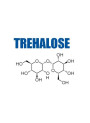
Could you please provide an analysis of the following cosmetic ingredient list? * Aqua * Glycerol * Butylene Glycol * Dipropylene glycol * Alcohol * PEG-32 * Biosaccharide Gum-1 * Nicotinamide * Trehalose * Adenosine * Arginine * Dexpanthenol * Hydrogenated Lecithin * β-Glucans * Dipotassium Glycyrrhizate * Palmitoyl Pentapeptide-3 * Dimethicone * PEG-60 Hydrogenated Castor Oil * 1,2-Hexanediol * Carbomer * Xantham Gum * Sodium palmitoyl sarcosinate * Glyceryl acrylate/acrylic acid copolymer * Caramel * Tween 20 * Acetyl Hexapeptide-3 * Capryl Glycol * Glyceryl caprylate * PVOH * glycolic acid * Lactic Acid * Phenylpropanol * Mica * Titanium(IV) Oxide * Calcium alginate * Gellan gum * Kanten * Propylene Glycol * Phenoxyethanol * Ethylhexylglycerin * Tetrasodium EDTA * Peptide 10050 ppb


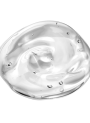
I have a formula from Neutrogena Water Lock and would like to create a light, clear gel texture similar to it. The original formula includes the following ingredients: Water, Dimethicone, Glycerin, Dimethicone Vinyl Dimethicone Crosspolymer Phenoxyethanol, Polyacrylamide, Cetearyl Olivate, Dimethiconol, Sorbitan Olivate C13-14 Isoparaffin, Dimethicone Crosspolymer, Chlorphenesin, Carbomer Laureth-7, Sodium Hyaluronate Ethylhexylglycerin, Sodium Hydroxide Fragrance, C12-14 Pareth 12 CI 42090. I need recommendations for alternative ingredients, especially for the part that is not available for sale, to achieve a light, clear gel texture that focuses on moisture retention and a dewy/hydrated feel.
Regarding PEG-12 Dimethicone (water-soluble silicone): 1. Can it be added in the final step of a formulation? It is heat sensitive (tolerates up to 80°C), but previously it was added at 85°C and evaporated. 2. If added in the final step, will this silicone have any negative effects on hair?
Regarding Sodium Alginate (Super Fine): 1. Can it be used with food, such as blended fruit juice? 2. I want to use it with a preservative that provides a 1-year shelf life. The product I am making is not for consumption, but I need a non-irritating preservative for skin application.