Browse Questions and Answers
Avg response: 24 HrsFilter Questions
20 of 14240 results
I would like to inquire about surfactant bases. Are there clear types and types that have a pearlescent appearance?
Can Silver Nano dissolve in solvents such as xylene and butyl acetate?
Can **Flavor** be used to make **spray perfume**?


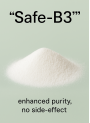
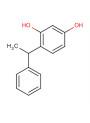
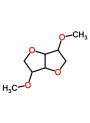
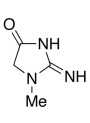
I have an existing cream formula that I previously ordered for production. The formula is as follows: 1. Sym-White™ (Phenylethyl Resorcinol): 0.50 % 2. Snail Secretion: 5.00 % 3. Disodium EDTA: 0.20 % 4. Light Lotion Maker: 3.00 % 5. Xanthan Gum (Clear gel type, smooth non-stretchy texture): 1.00 % 6. Mild Preserved Eco™ (Preservative-Free): 1.00 % 7. GlucoBright™ (Acetyl glucosamine): 4.00 % 8. Safe-B3™ (Vitamin B3, Niacinamide): 5.00 % 9. Sterile Distilled Water: 76.30 % 10. Dimethyl Isosorbide (DMI): 3.00 % 11. Odor-Kill™ (Water-soluble): 1.00 % (This ingredient has not been added yet) I have some additional questions: 1. If I remove Sym-White™ from the formula, are there any other whitening ingredients that offer similar properties to Sym-White™ but are not too expensive? (Your team's opinion is welcome). 2. I saw a comment from your team regarding the Stabilized Vitamin C Serum formula mentioning some whitening ingredients that focus on achieving a "pale white" skin tone. Could you please provide the names of these ingredients? (Please list several if possible). 3. If I remove Sym-White™, can I use Luxury Cream Maker alone to create the cream texture? 4. If I change Snail Secretion 5% to Shea Butter Light Oil 5%, will the moisturizing and skin smoothing properties decrease? Will it make the formula sticky? 5. If I change the penetration enhancer from Dimethyl Isosorbide (DMI), which has a strong odor, to Reservoir-Tech, would that be suitable? Or do you recommend any other alternatives? 6. Between CosmoWhite™ (1-Methylhydantoin-2-Imide) 1.5% and WhiteCumin™ (Tetrahydrodiferuloylmethane) 0.2%, which one would be more suitable to add to the formula (focusing on achieving a "pale white" skin tone)? I apologize if any of these questions have been asked before. Thank you.
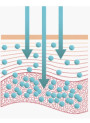
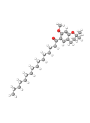
I currently mix L-ascorbic acid into my sunscreen and apply it before makeup. I would like to know: * Can I mix DMAE and Acetyl Hexapeptide-8 (Argireline) into a face cream and apply this mixture *before* the sunscreen containing L-ascorbic acid? * If not, what is the recommended application order for these ingredients? * Is using them (DMAE and Acetyl Hexapeptide-8 in cream, and L-ascorbic acid in sunscreen) in both the morning and night routines too frequent?
I am looking for basic formulations for the following makeup products: * Lipstick * Liquid Lipstick * Eyeshadow * Blush on Do you have any recommended basic formulas?
I ordered a product with the following date labels: * `หมดอายุประกันคุณภาพ / .....` (Quality Guarantee Expiry) * `กรุณาใช้ให้หมดภายใน 180 วันหลังเปิดใช้ / ........` (Please use within 180 days after opening) * `อายุบรรจุภัณฑ์ กรุณาใช้ให้หมดภายในวันที่ / ........` (Packaging Shelf Life Please use by date) I understand the first two labels (Quality Guarantee Expiry and Use within 180 days after opening) as the date the company guarantees quality and the period after opening, respectively. However, I don't understand the third label (`อายุบรรจุภัณฑ์ กรุณาใช้ให้หมดภายในวันที่`) and which date I should prioritize, especially if the packaging shelf life expires before the quality guarantee. Please explain if my understanding of the first two labels is correct and clarify the meaning of the 'Packaging Shelf Life' and which date should be the governing factor.
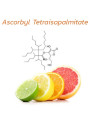
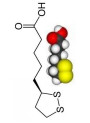
I would like to create a face oil serum with a lightweight oil texture, not too heavy. The formula includes the following active ingredients: * Ascorbyl Tetraisopalmitate 10% * Vitamin E (dl-alpha tocopherol) 2% * Ethyl Ferulate 2% * Alpha Lipoic Acid 1% * Stearyl Glycyrrhetinate 1.5% * Ceramide 2 2% * Phytosphingosine 2% * Phytosterols Ester 3% * Palmitamide MEA 5% * Tea Tree Oil 0.5% The total active ingredient percentage is 29%. For the remaining 61%, I am interested in using Sunflower Oil + LipidSoft Lite as the base, with Sunflower Oil as the main component. I want to know how much LipidSoft Lite should be added to make the texture lighter. I want Sunflower Oil to be the main oil but don't want the texture to be too heavy. I am aiming for a lightweight facial oil texture, similar to lighter counter brand facial oils (but not fractionated coconut). Regarding the active ingredients, which ones are likely to cause thickening or precipitation? Please advise on how to reduce these issues. I am trying to avoid adding water to this formula for longer shelf life and to avoid preservatives.

Can regular drinking water be used for mouthwash production, given that product labels only list "Water"?
What colorants can be used to mix with Fragrance (perfume) that will not stain clothes?
I have the following formulation and procedure for a skin product. Can I make it this way? **Ingredients (100%):** 1. Rose Water (Rosa Damascena) 76.5% 2. Water 13.50% 3. Hyaluronic Acid (Japan) 1% 4. Aloe Vera Extract (อัตราสกัด 10:1 FullAssay™) 5% 5. WaterLock™ 2% 6. Shiso Extract 3% 7. Pure-Adenosine™ 0.50% 8. Pure-Naringin™ (Grapefruit Extract, 98% Naringin) 2% 9. Pure-EGCG™ (Green Tea Extract, 98% EGCG) 1% 10. Pure-Phloretin™ 0.50% 11. Perfect-C™ (Ascorbyl Tetraisopalmitate) 5% 12. Repair Activator™ 5% 13. Light Cream Maker™ 1% **Procedure:** A: Mix water part 1 together (1+4+5+6). Stir until dissolved. B: Mix water part 2 together (2+3). Dissolve in room temperature water, blend for about 15 minutes. C: Then mix water part 1 and 2 together. D: Then combine ingredients (7+8+9+10+11) together. E: Gradually add mixture D into C, stir well until combined. Then gradually add 12 and mix until homogeneous. Then add Light Cream Maker™ and stir continuously. The cream texture will form in 1-5 minutes. Can I do it this way? Thank you very much.
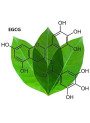

I purchased Poly-Conditioner Pro to use as an ingredient in a shampoo formulation. This shampoo formula uses Potassium Soap Base dissolved in water. I would like to know if the recommended usage percentage of Poly-Conditioner Pro (0.1-0.5%) is calculated based on: * The total weight of the finished shampoo? * Only the weight of the Potassium Soap Base? * Only the weight of the water used to dissolve the Potassium Soap Base?
Hello team, I recently purchased ingredients from myskinrecipe to experiment with a lip butter formulation based on a sample image. However, the texture of the lip butter is good, but the glossiness is not satisfactory compared to the sample. I would like to ask for advice on what ingredients I should add to achieve the desired glossiness. The formula I have tested is as follows: * Water Balm 5% * Microcrystalline Wax 20% * sheabutter 5% * white oil 5% * Bee wax 15% * Sweet Almond Oil 10% * Coconut Oil 10% * Jojoba Oil 10% * water 3% * Mild Preserved Eco 0.5% * Glycerin 4% * Glyceryl glucoside 1% * Panthenol 2% * lipid soft 1% Total: 91.5% (Note: The percentages provided sum to 91.5%, not 100%.) Could you please advise on which ingredients to add to increase the glossiness of this lip butter formulation?
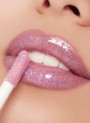
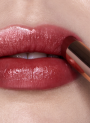
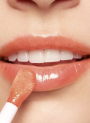
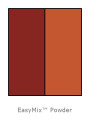
Hello, I would like advice on the formula below. I plan to custom manufacture a stain stick that can be used on the lips, eyes, and cheeks. I would like the color and texture to be similar to the attached picture (picture not provided). Here is the formula: * Olive CLEAR (Hydrogenated Olive Oil) - 20.00% * Fractionated Coconut Oil - 10.00% * Jojoba Oil (Clear) - 10.00% * Rose Hip Oil (Extra virgin organic) - 2.00% * Sunflower Oil - 10.00% * Tocopheryl Acetate (Vitamin E) - 0.50% * Rosemary Extract (ROE) - 0.05% * Babassu Oil (Organic) - 2.00% * Red Iron Oxide Easy Mix - 20.00% * Peppermint Oil - 0.50% * shea butter - 10.00% * White Iron Oxide Easy Mix - 4.95% * Candelilla Wax (Refined) - 10.00% Thank you.
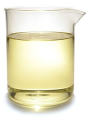
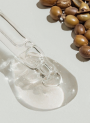
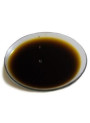
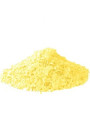
1. I have a sunscreen formula containing WaterGuard Lite at 3%. If I want to increase water resistance for swimming, can I add WaterGuard Ultra 6% to the formula and just stir it in? 2. How many grams is 6% of WaterGuard Ultra?
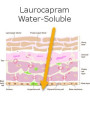
Please help analyze the ingredients in this formula. I'm not sure if all ingredients can be mixed together in the same formula. I am particularly concerned about Pure-Adenosine™ which has pH limitations. Is this formula compatible? Can Pure-Adenosine™ tolerate the pH in this formula? What adjustments should be made to the formula? Here is the formula: * Galactomyces Ferment Filtrate: 70.5% * AppleCell: 3% * DMAE: 6% * Ethyl Ascorbic acid: 5% * Rosa Hybrid Cell Extract: 2% * RETINAT™ (Starfish Extract): 2% * Plankton GP4G™: 2% * Pure-Adenosine™: 1% * Ectoine: 1% * Alpha Arbutin: 2 % * Hyaluronic Acid (Small Molecule): 0.5 % * Laurocapram: 1% * 1,2-Hexanediol: 1% * Dimethyl Isosorbide (DMI): 3% Total: 100 %



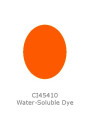
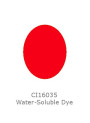
Regarding water-soluble red colors: 1. What is the difference between color names like "red color" and "D&C red color"? The information provided doesn't specify the difference. 2. Is it correct to dissolve the color in water and then add a preservative?


I'm trying to make a skin gel using Glycerin Gel instead of other Gel Makers. My formula is: * Glycerin Gel 10% * Water to 100% I mixed the two until uniform, then added EDTA 0.2%. The resulting gel immediately turned liquid, not just less viscous. * How can I fix this? * Is the gel from Glycerin Gel tolerant to electrolytes? Thank you.
What is the charge of Sodium Lauroyl Methyl Isethionate?
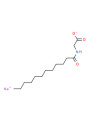
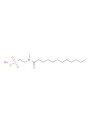
I am trying to formulate a liquid, water-based acne spot treatment with the following ingredients: * Salicylic Acid (BHA) 2% * Sugarcane Extract (Policosanol) 3% * Tea Tree Oil (Extra Grade) 0.5% What other ingredients are recommended to help these active ingredients dissolve in the water phase, given that I want a liquid texture? Also, are there any additional ingredients you recommend for use on inflamed acne, considering my skin type is combination to oily?