Browse Questions and Answers
Avg response: 24 HrsFilter Questions
20 of 14228 results
I plan to purchase `Polyglyceryl-4 Caprate` and want to create a simple makeup remover/cleansing solution. * Is it possible to mix `Polyglyceryl-4 Caprate` solely with water and glycerin to effectively create a cleansing water and remove makeup? * I am concerned that the HLB value of `Polyglyceryl-4 Caprate` might be too high, potentially causing irritation for my sensitive skin. * Could you confirm the estimated HLB value for `Polyglyceryl-4 Caprate`?
I am developing a sunscreen formulation and need to achieve water and sweat resistance. I am currently reviewing **Ammonium Acrylates Copolymer** (a pigment disperser for water-based formulas). How should Acrylates Copolymer be correctly used in a sunscreen formulation to create a robust water and sweat-resistant film? Should I use this specific grade, and what are the recommended usage rates and mixing methods for achieving water resistance claims?

I am inquiring about the usage method for the product **Hydro Gel (Biosaccharide Gum-1)** (Product ID 481). The product description states it should be used in formulations mixed with water at 1-20%. I tested it at 4% and 20%, and the result was quite liquid/watery. I need clarification on two points: 1. Does this product require time to swell and thicken, or is it supplied as a ready-to-use active ingredient that only needs other active ingredients added? 2. If this product is supplied ready-to-use, does the company offer a powdered form of Biosaccharide that can be used to prepare a gel base myself?
Regarding pilling in cosmetic formulations, which product seems to be more problematic between Lift-Now™ and FlashTenser™? Pilling refers to the product balling up or rolling off the skin. Both are skin tightening agents designed for the area around the eyes. Here are the details of the two agents: * **Lift-Now™:** Biotechnology extracted from algae and pullulan. * **FlashTenser™:** A quick skin tenser lasting 6-12 hours, suitable for use with makeup. Which of these agents poses a higher risk of causing pilling?
# Preventing Oxidation and Yellowing in Vitamin C Cream I am developing a cream containing Vitamin C and need advice on which ingredients to add to prevent the product from oxidizing and turning yellow. To provide the most accurate recommendation, please consider the following formulation details: * What specific form of Vitamin C is being used (e.g., L-Ascorbic Acid or derivatives)? * What is the concentration of Vitamin C in the formula? * What are the main components of the cream base formulation? * What is the current pH of the formula? * Are there any specific constraints, such as the need for natural or vegan raw materials?
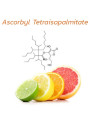
What is the recommended method for dissolving Capryloyl Salicylic Acid (LHA)? Specifically, is it possible to dissolve Capryloyl Salicylic Acid in Glycerin?
# Stability Concerns for Liquid Enzyme Formulation (1-Year Shelf Life) I am formulating a liquid solution containing Stabilized Protease Enzyme and aiming for a 1-year shelf life. I have concerns regarding ingredient compatibility: 1. **Surfactant Compatibility:** Does the combination of the following four ingredients cause the Stabilized Protease Enzyme to "denature" (lose its three-dimensional structure), leading to enzyme inactivity, especially considering the 1-year shelf life? * `Decyl Glucoside` * `Sodium Lauroamphoacetate` * `Cocamidopropyl Betaine` * `Phenoxyethanol` 2. **Zinc Ricinoleate Interaction:** Does `Zinc Ricinoleate`—where the $\text{Zn}^{2+}$ ion complexes with the amino acid groups of the enzyme—result in reduced activity of the Stabilized Protease Enzyme? 3. **Alternatives:** If incompatibility is confirmed, what ingredients can be used to replace the Stabilized Protease Enzyme, or what substitutions should be made for the incompatible ingredients listed above to ensure the enzyme remains active?
I am formulating a product using **MYFerment™ Barrier (Lactococcus Ferment Extract)**. The recommended usage rate for this ingredient is listed as 100%. I need confirmation on whether this 100% rate is correct. Furthermore, I plan to use this ingredient at approximately **40%** to replace a significant portion of the water phase in my formulation. Is using 40% an appropriate and effective concentration for achieving the desired results?
I am formulating a shower gel using Acrylates Copolymer (ThickClean™). I have two main questions regarding the process and troubleshooting: 1. **Dissolution Temperature:** Can Acrylates Copolymer be dissolved in water at 35°C, or does it require high heat, such as 70°C, for proper dissolution? 2. **Low Viscosity Issue:** In a test batch, I used a ratio of approximately 9 grams of Acrylates Copolymer per 350 ML of water and adjusted the water's pH to around 6.5. Although a gel formed, the viscosity is too low (it is still quite liquid). What adjustments should I make to increase the thickness?
We are using Stabilized Mixed Enzyme (liquid with stabilizer) at 1% in a water-based laundry detergent formula. We have three main questions regarding diluting this finished product 1:1 with water: 1. Will the washing performance remain the same if the formula is diluted 1:1 with water, and we instruct the customer to double the usage amount (from 1% of the original formula to 2% of the diluted formula)? 2. Does dilution with water significantly shorten the shelf life of the Stabilized Mixed Enzyme product? 3. Should the bottle be shaken well before every use?
What is the recommended usage percentage (%) of the active ingredient `Safe-B3` (Niacinamide) when formulating products specifically for the delicate skin around the eye area?
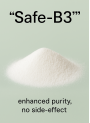
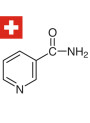
I have sensitive and oily skin, and I aim for moisture and brightness. I use several serums and need guidance on application: 1. Can I pre-mix AKA Pitera (Galactomyces Ferment Filtrate) directly into the Hyalu B3 Serum (Specialist Serum B3) bottle by shaking them together for use? 2. What is the recommended layering order for the following four serums to achieve moisturizing and brightening results for sensitive and relatively oily skin? * ANR Serum Base * Specialist Serum B3 * Hyalu B5 Serum * H.A Filler Serum 3. Which of these four serums should be avoided around the delicate eye area?
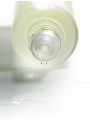
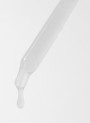
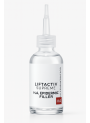
I am formulating a cosmetic product using a silicone base (such as `Dimethicone` or `Cyclomethicone`). I plan to use **Tocopheryl Acetate (Vitamin E)** (Product ID 65). I have two main questions regarding this ingredient: 1. What is the typical **color and clarity** of the Tocopheryl Acetate (Vitamin E) product? Is it clear and non-tinted? 2. Is Tocopheryl Acetate **miscible or soluble** in common cosmetic silicones like `Dimethicone` or `Cyclomethicone`? I need confirmation that this specific Vitamin E solution is suitable for mixing well into silicone-based formulations.
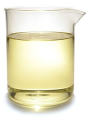
I need a detailed formulation for a lightweight, fast-absorbing facial serum (batch size 20-30g) suitable for **sensitive and oily skin**, focusing on **hydration, brightening, and skin repair**. The formulation must use the **Silky Serum Base** and incorporate the following active ingredients at appropriate percentages: * Specialist B3 Serum (Niacinamide) * Galactomyces Ferment Filtrate (AKA Pitera) * Repair Activator (Bifida Ferment Lysate) * Ready Mineral (Mn+Zn+Cu) *Constraints:* * Texture: Lightweight, fast-absorbing, non-sticky. * Must be fragrance-free. * Target pH range: 5.0-6.0. Please provide the recommended percentage for each ingredient, the mixing procedure, necessary precautions, and stability considerations.
I need advice on incorporating the lipophilic substance, **β-Sitosterol (Certified Reference Material)**, into an aqueous fungal culture medium. Since β-Sitosterol is not water-soluble and requires emulsification, please recommend: 1. An effective method and suitable solvent (e.g., Ethanol or DMSO) for initial dissolution to create a stock solution. 2. An affordable and generally non-toxic emulsifier suitable for use in fungal culture media to stabilize the compound in the aqueous phase.
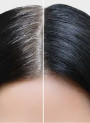
I previously inquired about using GreyReverse™ (Palmitoyl Tetrapeptide-20 or PTP20) for home formulation. Based on clinical studies, the effective dose requires only 2% of the raw material (achieving 10ppm of the active peptide PTP20). # GreyReverse™ Usage Guidelines 1. Why does the company recommend using GreyReverse™ at 5% (the maximum recommended rate) when the clinical dose is achieved at 2%? 2. Regarding the application method, what type of product format is suitable for application directly onto the scalp? Should I use a **Scalp Spray** or a **Scalp Serum/Tonic**?
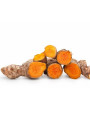
I would like to inquire about the color characteristics of WhiteCumin™ 2x (ID: 721). If this extract is incorporated into a cosmetic formulation, will it cause a color change in the final product? Specifically, will the product develop a red color?
What is the solubility profile of β-Sitosterol (a phytosterol)? Specifically, can it be dissolved in water for use in cosmetic or food formulations? If it is not water-soluble, how should it be incorporated into the following product types: 1. Cosmetic products (e.g., creams, lotions, oil serums)? 2. Water-based food/nutraceutical products (e.g., beverages)?
What are the most effective active ingredients that can help nourish hair, strengthen hair roots, and increase overall hair density and volume?

HC Blue 15 is extremely difficult to dissolve. Could you recommend a suitable dissolving aid (co-solvent) and provide the specific method required to achieve complete solubility for this semi-permanent hair dye?