Browse Questions and Answers
Avg response: 24 HrsFilter Questions
20 of 14228 results
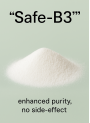
I've recently researched the compatibility of Vitamin C and Niacinamide. My understanding is that `L-Ascorbic Acid` should not be directly combined with `Niacinamide`, but they can be applied in layers, or one can use Vitamin C derivatives that are stable at a 'neutral pH'. Could you confirm if this research is accurate? Specifically: * Is it true that many brands are successfully combining `VitC` with `Niacinamide` in a single product based on this scientific understanding? * What is the specific 'neutral pH' range that allows for stable combination of these ingredients? * Will combining them impact the long-term stability of either ingredient, and what measures can be taken to maintain their stability?

I mistakenly ordered `CycloSorb™ Cream (Non Water-Soluble)`. Can this product be used as a partial substitute for a clear water-soluble ingredient (like `CycloSorb™ Clear`) in a body mist spray formulation that requires shaking before use?
I am looking for the best method to create a stable serum blend using `17D Hyaluronic Acid` and `Silky Serum Base`. My goal is to achieve a `2% active HA content` in the final product. Given that `17D Hyaluronic Acid` has an approximate `10-12% active HA content`, I have calculated that `18-20%` of `17D Hyaluronic Acid` will need to be added to the `Silky Serum Base`. Could you please advise on the optimal method for incorporating these two components to ensure a stable and homogeneous blend?
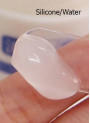
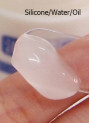
I am interested in formulating a facial gel that incorporates `Acetyl Octapeptide-3 (SNAP-8)` and `Pep®-GHK2CU1-10000 (Bis Tripeptide-1 Copper Acetate, 10000ppm)` using a Hyaluronic Acid (HA) base. My goal is to achieve a gel texture that is not too liquid. Could you please provide detailed recommendations on how to formulate this product, including guidance on selecting appropriate HA types for the desired viscosity and ensuring the stability of the active ingredients?

Can the `Silky Serum Base (Face/Eye)` be used without the addition of water, or with a minimal amount such as 10-15%?
When formulating stick products like lip balms or lipsticks, it is stated that waxes must be melted to a certain temperature (e.g., 55°C) for the formulation to work. Could you explain in detail why waxes need to be melted before being poured into tubes, and why it is not possible to simply pour solid wax directly into the tubes?
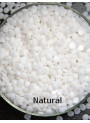

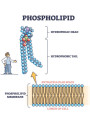
Can `Glass Moist™` (Oil-Free Glass Skin, 3 Day Fast Action) be used in conjunction with `PhosCare™` (Water Soluble 15% Phospholipid) in a cosmetic formulation?

I am currently formulating a balm using `Paraffin WAX 10%` and `PETROLATUM 33%` as the base. I would like to achieve a harder and more emollient/oily texture. Can I use Microcrystalline Wax and Carnation 70 to achieve this?
Regarding the `Salmon DNA (PDRN, Polydeoxyribonucleotide, 5000ppm Solution)` product, I would like to inquire about its suitability for specific applications. * Is this solution suitable for use with **microneedling** procedures? * Is this solution a **sterile solution**?
I am conducting research and require a specific strain of *Lactobacillus casei*. Could you please provide information on the availability of particular strains, such as `LB81` or `TISTR 1463`?

What are the considerations for formulating an oral spray using `Lactoferrin (95%)`, specifically regarding its solubility, dispersion, and heat sensitivity?
What is the HLB value of `Glyceryl Stearate Citrate`?
I would like to inquire about the emulsifying properties of the following Carbomer products: * `Carbomer 2020` * `Carbopol Ultrez 20` * `Carbopol Ultrez 21` Can these gels emulsify water and oil, or are they solely gelling agents? I am also seeking recommendations for polymers that can bind oil with water, even if they are not traditionally classified as emulsifiers. Any suggestions would be greatly appreciated.
What red colorants are recommended for use in glycerin soap formulations, specifically those that exhibit high alkali resistance to maintain color stability in an alkaline environment?
I am seeking guidance on formulating a **tinted, transfer-proof, and waterproof cream or lotion** suitable for both **face and body application**. Could you provide detailed suggestions on the key ingredients and formulation considerations necessary to achieve these properties, specifically focusing on: * **Tinting and Coverage (Waterproof Titanium Dioxide):** What types of treated Titanium Dioxide are recommended for waterproof and long-lasting makeup, and what are their typical usage rates and dispersion methods in a cream/lotion? * **Transfer-Proof and Waterproof Film Formation:** Which high molecular weight polymers are effective for creating a long-lasting, waterproof, and sweat-resistant film, and what are their recommended usage rates and integration considerations, especially if they are alcohol-soluble? * **Skin Adherence and Water Retention:** What ingredients can improve skin adherence and prevent trans-epidermal water loss (TEWL), while also contributing to a smooth application and long-lasting wear? What are their recommended usage rates and solubility? * **General Formulation Considerations:** What emulsion types are preferred for waterproof and transfer-proof products? How should pigment dispersion and film former integration be managed? What factors should be balanced for texture and feel, and what stability testing is recommended for such a product?
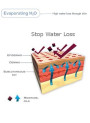
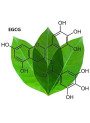
I need to determine the precise quantity of `Hi-EGCG™` required to achieve specific EGCG concentrations in a 1 kg product. Given that `Hi-EGCG™` contains at least 3% EGCG, please provide the amount needed to formulate a product with: * 1% EGCG concentration * 2% EGCG concentration This information is crucial for calculating the raw material quantity for ordering.
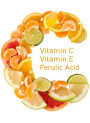
Could you please explain the differences between `Vitamin C 12% Serum (Compare to Cellular RX)` and `Vitamin C E Ferulic`? Specifically, I would like to know: * What are the key differences in their formulations, such as the concentration of L-Ascorbic Acid and other active ingredients (e.g., Vitamin E, Ferulic Acid)? * How do their stability, absorption into the skin, and intended uses (e.g., anti-aging, whitening, photoprotection) compare? * Which product offers better results for specific skin concerns, and why?
Could you please clarify the properties of Cera-Flux V? Specifically: * Is Cera-Flux V a ceramide encapsulated product? * Is it directly comparable to Croda's DS-Ceramix V?
What is the recommended usage rate for bovine gelatin in formulations? Please provide guidelines based on: * Desired texture (e.g., lightly set gels/thickening, standard jellies/gummies, firm gels/chewy textures) * Different Bloom values (e.g., 160, 180, 200, 250, 300 Bloom) * Specific applications like soft gel capsules.
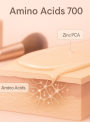
I am developing a cosmetic formulation and would like to inquire about the compatibility of the following ingredients. Are there any known incompatibilities or specific considerations I should be aware of when combining these components? * `QuikBlur™` * `Azelaic Acid (Liquid Azelaic™, e.q. Azeloglicina)` * `Micromul™ 10HDA` * `Natural Make-Up Amino Acids (e.q. Prodew 700)` * `Mineral Ready™` * `Hexylresorcinol AF (e.q. Hentowhite)` * `AcnePLEX™` * `Licorice Extract (Licochalcone A 1%, Water-Soluble)` * `Mild Preserved Eco™` * `Tea Tree Water`