Browse Questions and Answers
Avg response: 24 HrsFilter Questions
20 of 14228 results
What parameters should be measured weekly for long-term stability testing, and what equipment is required for a comprehensive analysis? Additionally, I have the following questions regarding sample preparation: * What is the recommended sample volume? * Can I use a single bottle, taking it out for measurement and then returning it to storage, or should I prepare separate bottles for each weekly measurement until the study is complete?
# Using Sodium Bicarbonate in Mouthwash Can `Sodium Bicarbonate` be used in a mouthwash formulation? If so, what is the recommended percentage to stay within the Thai FDA's regulations, especially when considering its use alongside `Sodium Fluoride` as previously discussed?
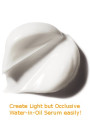
How can I develop an `Emulsion` formula with a `Water Drop` effect? * What are the specific techniques or mixing methods required when using single ingredients instead of ready-made mixtures? * How much more complex and difficult is this manual approach compared to using ready-made ingredients? Please provide a detailed explanation. * What are the specific advantages of using ready-made mixtures for this effect?
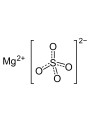
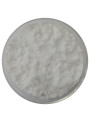
Hello, Which option is better for formulation between these two? * `Astaxanthin powder` * `Astaxanthin Liquid (Stabilized, Crystal Clear)`
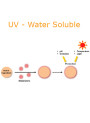
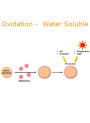
Which preservative is suitable for a herbal decoction (Cassumunar Ginger, Turmeric, Kaffir Lime Peel, and *Tinospora cordifolia*) intended for use in a water-based cosmetic formulation? * The formula includes fragrance incorporated using a `solubilizer`. * The preservative must not alter the light brown color of the decoction. * I have tried several options previously but haven't found a suitable one yet.
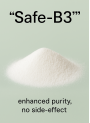
I want to create a clear anti-aging serum that is stable and low-irritation. I am unsure about the formula's compatibility and whether the gelling agent can withstand the ingredients. Do I need to add an emulsifier to the formula? The ingredients are as follows: * `2NA EDTA` 0.1% * `Vit b3` 3% * `Vit b5` 1% * `pentylene` 3% * `propylene` 2% * `Aristerflex AVC` 0.3% * `dmi` 3% * `Odor kill` 1% * `HPR Retinol` 1% * `Bakuchiol` 0.5% * `Cica` 1% * `protec uv` 0.1% * `protec ox` 0.05% * `microcare PHC` 0.8% * `Water` Please advise.

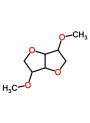
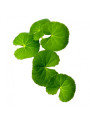
Does `Tannin` require temperature control?
If I want to reverse-engineer a cosmetic product formula, such as a lotion or scrub, without an ingredient label: * Is it generally possible to do so? * What are the typical methods or steps involved? * To what extent can the original formula be accurately replicated?
I would like to formulate 100 grams of spray perfume using the following ratio: * **Concentrated Fragrance Oils:** 20 grams (e.g., `Agarwood Fragrance Oil`, `Allure`) * **8 Hours Fragrance Spray Base (Musk-Free):** 80 grams * *Base INCI:* `Ethyl Alcohol` 90%, `Dipropylene Glycol` 5%, `Propylene Glycol` 5% Please advise on the following: 1. Is this ratio suitable for making an EDT spray perfume? 2. Does it require additional distilled water, `DPG`, or any other ingredients?

Are the concentrations of the following active ingredients in my formula effective for visible results and safe for use in the eye area? * Peptides * Biotin * Hydrolyzed Keratin * Hyaluronic Acid * Panthenol * `Camellia Sinensis Extract`
I would like to ask about `Aluminum monostearate`: * How is it used? * Should it be dissolved in water or oil?
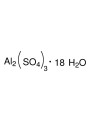
I am planning to use `Hexylresorcinol AF` in a formulation with a pH of 3.0-3.5. * Will this active ingredient remain stable and effective when used in a formula with this pH range?
I am making a `Hair Oil Serum` with the following formulation. The mixture is clear before adding the fragrance, but once the fragrance is added, it becomes cloudy and the fragrance separates from the formula. Is there a way to fix this or an ingredient I can add to keep the formula clear and stable? **Formulation:** * `Isododecane (Germany)`: 25.00 % * `Isopropyl Myristate (IPM)`: 5.20 % * `Dimethiconol (Cyclopentasiloxane Base)`: 9.50 % * `Cyclopentasiloxane (Low-Oder Cyclomethicone)`: 35.00 % * `Silicone Shine 15 (Phenyl Trimethicone, Low Viscosity)`: 6.00 % * `Dimethicone 1Secs`: 7.60 % * `Dimethicone (Light/50, Low-Odor)`: 1.80 % * `Amodimethicone`: 4.70 % * `Fractionated Coconut Oil`: 1.00 % * `Olive Oil L19474`: 0.30 % * `Jojoba Oil A`: 0.30 % * `Fragrance SUM ONE`: 2.80 %
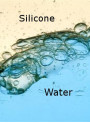
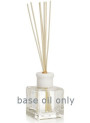
If I add `DiffuseFix` to a **diffuser fragrance** formula, do I still need to add alcohol?
I'm looking for the following ingredients for my skincare formulation, but I could not find them on your website: * `Symbiosolv clear plus MB` * `Olivem 2090` * `Sapogel Q` or `Sucragel AOF Bio` Do you have any recommendations for natural substitutes for these ingredients?
* Can **PDLLA** or `Poly(D,L-lactide)` be used as an ingredient in skin creams? * How should it be used in a formulation?
Please provide a formulation and the required percentages for a body sunscreen with the following specifications: * **SPF 30** * **Tone-up effect:** Slight skin brightening. * **Texture:** Lightweight **Sun Serum** feel. * **Properties:** **Water-resistant**. * **Filters:** Incorporate **Chemical filters** to ensure a non-greasy, light texture. * **Ingredients:** Affordable and available for purchase at MySkinRecipes.
I am making a Reed Diffuser with the following formulation: * `Dipropylene glycol`: 50% * `Ethyl alcohol`: 30% * `Essential oil`: 20% I found that the solution is still cloudy and experiences separation. Can I use `Polyglyceryl-6 Caprylate` and `Polyglyceryl-4 Caprate` to help solubilize the mixture?
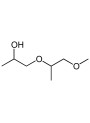

I have some questions regarding `QD-365 Anti-Acne Complex`: * What is the recommended pH level for the formulation? * Does it require an acid-resistant base?
I am developing an anhydrous body oil formula with the following ingredients: * Natural oils * `White Oil` However, I am experiencing issues with the separation of the oil and the fragrance. Are there any ingredients that can help prevent separation in this type of formulation?