Browse Questions and Answers
Avg response: 24 HrsFilter Questions
20 of 14228 results
I am producing a blend of Rosemary Oil and Coconut Oil. I plan to add Vitamin E, specifically either `Tocopheryl Acetate` or `dl-alpha tocopherol`, at a concentration of 1% to act as an antioxidant and enhance stability. I need confirmation on the following points: 1. Are both `Tocopheryl Acetate` and `dl-alpha tocopherol` oil-soluble and compatible with Rosemary Oil and Coconut Oil? 2. Does the addition of either type of Vitamin E at 1% concentration help facilitate the FDA (อย.) approval process, similar to the practice used for Moringa oil?
I am reviewing the product information for `ThickClean™ (ID: 7994)`. The technical information page lists the ingredient as **Acrylates Copolymer**, but the INCI information or product description mentions **Acrylates Crosspolymer**. Could you please confirm the correct official INCI name for this specific thickening agent? Is the difference between `Acrylates Copolymer` and `Acrylates Crosspolymer` purely a naming difference, or does it reflect a fundamental difference in the polymer structure (e.g., cross-linkage)?
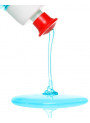
We are planning to create a commercial cosmetic cleansing balm line in Australia using one of the following bases: 1. Cleansing Balm (Colorless, Fragrance-Free) (ID 31507) 2. Cleansing Balm (Soft, Colorless, Fragrance-Free) (Compare to Elemis) (ID 33477) * Do these base formulations already have established stability testing data? * If we customize the base by adding ingredients such as fragrance, color, or other active ingredients, will the final product remain stable? Is additional stability testing required for the customized formulation? * What regulatory requirements and documentation (e.g., stability proof, Product Information File (PIF)) are necessary to launch this customized product line commercially in Australia?
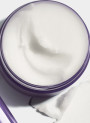
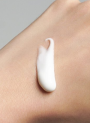
I am planning to formulate a serum using **ANR Serum Base (Compare to Estee)** as the primary base. I want to incorporate the following active ingredients at high concentrations: * `Syn-Ake` (Dipeptide Diaminobutyroyl Benzylamide Diacetate) at **4%** * `Matrixyl 3000` (Pal-GHK, Pal-GQPR) at **3%** * `Niacinamide` (Safe-B3™) at **5%** * `Ectoin` at **2%** I need advice on the following points for a small experimental batch: 1. Can these ingredients be mixed together, and are they compatible with the `ANR Serum Base`? 2. What are the critical considerations regarding **pH** and overall **stability** of the final serum? 3. What is the recommended **mixing method** (procedure) for combining these actives into the base? 4. Are there any recommendations for adjusting the percentages or adding other components to ensure the formula is suitable for a stable cosmetic serum?
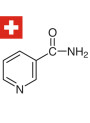
What is the exact mixing ratio of the 6 probiotic strains in the product `6-Strains Probiotic (10billion/g) (Freeze-dried)`? Is the ratio 1:1:1:1:1:1?

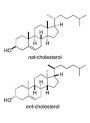
I am looking for the specific protocol and required materials to create liposomes using **Hydrogenated Lecithin (95% Phosphatidylcholine)**. What are the essential materials needed, such as stabilizers like **Cholesterol (95%, NF, Fine Powder)**, and what are the general steps involved in the preparation process (e.g., lipid film formation, hydration, and sizing techniques like sonication or extrusion)?
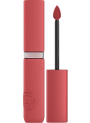
The customer is using the product base **Infallible Matte Resistance Lip** (ID 127663), which is intended to be a long-lasting, matte, non-sticky, and unscented liquid lip formulation. The current formulation is highly viscous and thick, making it impossible to fill into a dip tube container. We require recommendations on methods or ingredients (including appropriate percentages or an example formula adjustment) to significantly reduce the viscosity of the base, making the texture more liquid, while strictly maintaining the following characteristics: * **Matte texture** * **Not sticky** * **Long-lasting durability** * **Unscented base** The solution must be suitable for an independent formulation adjustment.
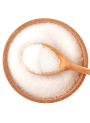
When purchasing Isomalt to make hard candy or lollipops, which form is recommended for better results: Isomalt (Granule) (ID: 9002) or Isomalt (Powder) (ID: 125729)?
What type of **talc** should be used in combination with a **facial scrub powder** to ensure both ingredients are cosmetic grade and safe for skin application?
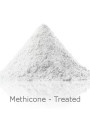
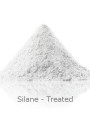
I am experiencing issues using **Skin-Barrier™** in fully water-based serum or toner formulations, specifically phase separation. When I attempted to resolve the separation by adding an external solubilizer, the formula became cloudy and developed an undesirable oily/sticky texture. Skin-Barrier™ specifications state: * Dispersible in water (will be cloudy but won't settle). * Add last, below 40°C. * Usage concentration: 1-15%. * pH range: 2.5-7.0. Could you recommend the correct method of use, suitable bases/solvents, pH, temperature, or other suggestions to ensure the product dissolves well, results in a clear/translucent, non-separating formula, and avoids a sticky texture?
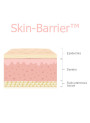
I am using Raspberry Ketone (FEMA-2588) which is categorized as an RM Fragrance/Flavor/Aroma Chemical (CAS 5471-51-2, FEMA 2588) for use in fragrance or flavor formulations. Is this specific product considered a **natural flavour**?
I am developing a matte, pore-blurring, and anti-aging SPF product. My previous attempt caused eye irritation later in the day, which I suspected might be due to `AquaForce™ BEMT (BEMT Water-Dispersion, Non-Sticky)`. I have since replaced it with `Titanium Zinc NanoLiquid™ DEC (non-white, low viscosity)` to potentially reduce irritation. I also considered adding chamomile oil for scent, but I am concerned it might be an eye irritant. Could you please review the following formula for potential eye irritants and stability issues, and advise on any necessary changes to ensure it does not cause eye stinging or burning? **Formula for Matte Anti-Aging SPF (25 g batch):** | Phase | Ingredient | % | g (25 g batch) | Notes | | :--- | :--- | :--- | :--- | :--- | | A | Silky Serum Base Plus | 14.0 | 3.50 | Slightly reduced to stay under 30 % oil | | A | Titanium Zinc NanoLiquid™ DEC | 12.0 | 3.00 | Still gives solid SPF 45–50 | | A | Quick Blur | 3.0 | 0.75 | | | A | Cyclopentasiloxane | 1.0 | 0.25 | | | A | Pure-Sclareol™ | 0.2 | 0.05 | Oil-soluble firming – safe level | | | **Total Oil/Silicone Phase** | **30.2 %** | **7.55 g** | Compliant | | B | Purified Water | 52.9 | 13.23 | | | B | Chamomile Water | 10.0 | 2.50 | "Soothing, no eye sting" | | B | Propanediol | 4.0 | 1.00 | | | B | X-Glycerin (Polyglycerin-10) | 1.0 | 0.25 | | | B | Genistein EZ™ | 2.0 | 0.50 | Antioxidant boost | | B | Amino Matte | 2.0 | 0.50 | | | B | Disodium EDTA | 0.1 | 0.025 | | | B | Sepimax Zen | 0.6 | 0.15 | | | C/D | SiliSilk™ 5H | 0.5 | 0.13 | | | C/D | FlashTenser™ | 1.5 | 0.38 | Instant matte lift | | C/D | Syn-Ake eq. | 3.0 | 0.75 | Botox-like wrinkle relaxation | | C/D | NaturePreserve™ Ultra | 1.0 | 0.25 | | | C/D | Bisabolol | 0.2 | 0.05 | | | C/D | Magnesium Sulfate | 0.2 | 0.05 | | | | **TOTAL** | **100.0 %** | **25.00 g** | |

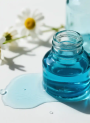

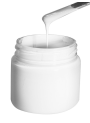
WhiteCumin™ powder is known to be soluble in oils and glycols. When dissolving WhiteCumin™ powder in Glycol (such as Propylene Glycol or Butylene Glycol), is it necessary to apply heat (e.g., 40-50°C) to achieve complete and rapid dissolution?
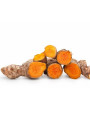
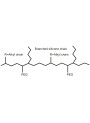
I am developing an **anhydrous body oil** formulation consisting of a blend of various **oils and silicones**. The current mixture is experiencing phase separation. I would like to know if the emulsifier `Lauryl PEG-9 Polydimethylsiloxyethyl Dimethicone` is suitable for stabilizing this oil/silicone blend in an anhydrous system to prevent separation. Alternatively, what specific gelling agents or stabilizers does MySkinRecipes Expert recommend for creating a stable, single-phase texture in an oil and silicone body oil?
I am currently formulating a water-based serum to treat hyperpigmentation, but I am having trouble achieving the desired texture and feel. I would like the finished product to be similar to Korean serums, providing a glowing and hydrating "glass skin" effect without leaving a sticky, greasy, or heavy feeling. The current formulation components are: * Water: 80.9% * Allantoin: 0.2% * Disodium EDTA: 0.1% * Propanediol 1,3: 2% * Glycerin: 3% * Hyaluronic Acid (Low Molecule): 0.2% * Hyaluronic Acid (High Molecule): 0.1% * Salagum AX: 0.5% * Extreme-B3™: 5% * Tranexamic Acid (Trans-White™): 4% * Alpha Arbutin: 2% * N-Acetyl Glucosamine: 1% * Preservative: 1% Can you help me choose the right thickener and suggest any other ingredients I can add to achieve this non-sticky, light texture suitable for a high-active serum?
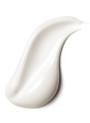
I am developing a cushion foundation formulation that aims for a **matte finish** with **high coverage** and a **smooth texture**, yet still provides a subtle **dewy glow** (ฉ่ำโกล). The product must also be **long-lasting** and **non-chalky** (ไม่วอก). Could you recommend suitable pigments, functional powders, and Titanium Dioxide options for this formula? Specifically, which types of colorants, powders, and Titanium Dioxide would ensure: * Fine, smooth texture and application * Excellent adherence and long-wear * Non-chalky appearance (non-waxy/white cast)
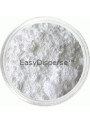
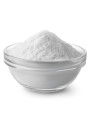
I am developing a 100g personal-use cosmetic serum combining Galactomyces and Vitamin C. I require guidance on the complete formulation, including: * Which type of Galactomyces should I select (e.g., `Galactomyces Ferment Filtrate`)? * Which type of Vitamin C should I select for optimal stability (e.g., `Ascorbyl Glucoside` or `L-Ascorbic Acid`)? * What are the appropriate percentages for the active ingredients? * What base ingredients should be used? * What is the recommended mixing method? * What is the expected stability and shelf life of the final product?
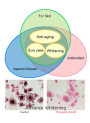
Could you please analyze the following ingredient list for a cosmetic formulation? I would like to understand the function of the key components, the type of product, and the overall formulation structure. **Formulation Ingredients:** `AQUA-GLYCERIN TRIETHYLHEXANOIN- CYCLOPENTASILOXANE PROPYLENE GLYCOL-CETEARYL OLIVATE- SORBITAN OLIVATE BUTYROSPERMUM PARKII-HAMAMELIS VIRGINIANA WATER-NIACINAMIDE-DIMETHICONE-SODIUM POLYACRYLATE TRIDECETH-6-PEG/PPG-18/18 DIMETHICONE-TOCOPHERYL ACETATE- TETRAHYDRODIFERULOYLMETHANE BIOSACCHARIDE GUM-1-XANTHAN GUM ACRYLATES/C10-30 ALKYL ACRYLATE CROSSPOLYMER- TRIETHANOLAMINE PHENOXYETHANOL CHLORPHENESIN PERFUME BHT-BENZOIC ACID`
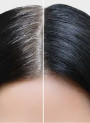
Adding GreyReverse™ to Commercial Hair Products: Stability, Compatibility, and Preservation Concerns
Is it possible to add the active ingredient `GreyReverse™ (Palmitoyl Tetrapeptide-20)` to existing commercial hair care products? If so, what potential effects or issues might arise? Specifically, what precautions should be taken regarding compatibility, pairing with other substances, stability, and maintaining efficacy, considering the recommended usage rate of 1-5% (5% is recommended for a head spray)?
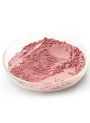
I am formulating a skincare cream that includes an oil phase. I want to incorporate **Rose Powder extra fine 12 microns (ID 6934)** into this facial cream. 1. Is it suitable to use this specific fine powder in a cream emulsion? 2. What is the recommended method for mixing and incorporating this powder, considering the formula contains both water and oil phases?