Browse Questions and Answers
Avg response: 24 HrsFilter Questions
20 of 14228 results
I am looking for alternatives to `PPG-3 Myristyl Ether` to mix with perfume for volcanic rock diffusers and scented sachets. Are there any suitable substitutes? Also, can `DPG Dipropylene Glycol` be used for this purpose?
I have several questions regarding cosmetic formulation and product information: * **Ingredient Compatibility:** * Which sulfur compounds are compatible with `Bakuchiol`? * Which sulfur compounds are considered electrolytes? * Which sulfur compounds are suitable for low-irritation acne treatment formulations, minimizing the risk of irritation or allergic reactions? * **Formulation Concentration and Irritation:** * Is using 20% active ingredients with 8 different actives generally considered too high, or does it depend on the specific formulation? * Does `4-Hexylresorcinol` cause irritation, as some external sources suggest? * When irritating ingredients like `Salicylic Acid` or other `salicylic acid` group substances are used with `DMI` or other penetration enhancers, will it increase irritation? * Does `Niacinamide` at 4% combined with `Acetyl Glucosamine` still retain its oil-controlling properties for the face? * **Texture and Sensory Properties:** * Is there comparative information available on the skin feel of emollient esters, specifically comparing `Propylene Carbonate` and `Lipidsoft Lite` regarding their lightness, slipperiness, and ease of spreading? Or is self-experimentation the best approach? * **Information Resources & Feedback:** * Are there recommended external cosmetic information sources beyond MySkinRecipes website and scientific journals? * How can I report incorrect or potentially misleading information on product detail pages (e.g., conflicting data, inclusion of food-related benefits for cosmetic products, broken document links, etc.)? Can I provide feedback or suggest additional missing details?

I would like to use Frangipani Absolute in a massage balm. Is Frangipani Absolute soluble in oil or water?
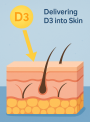
I'm interested in using Vitamin D3 in a cream formulation. Can Vitamin D3 be directly incorporated into cream, or is there a preferred form or precursor for better stability and effectiveness? What are the key benefits of using such an ingredient in skincare, and what specific formulation and storage considerations should I be aware of?
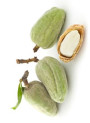
Is `Mandelic Acid (DL-Mandelic Acid)` considered vegan? Please provide details on its source and suitability for various skin concerns and product types.
What is the maximum percentage of fragrance oil or essential oil that soy wax with melting points of 68°C and 52°C can hold for candle making? Additionally, can essential oils be used with soy wax, and what specific considerations, such as flash point, potency, and testing, should be taken into account when doing so?
I am looking for a cosmetic formulation for sensitive skin that addresses multiple concerns. I plan to develop this product for commercial sale and require a formula using high-quality ingredients. Specifically, the formulation should target: * **Very dry skin** (intense hydration) * **Enlarged pores** (improvement in appearance) * **Anti-aging** (reducing signs of aging) * **Dull skin** (improving skin radiance/brightness) Could you please provide a suitable formulation and recommend high-quality ingredients for these specific needs?
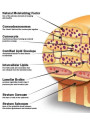
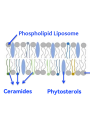
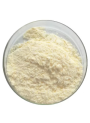
Regarding the `Powder To Coconut Oil Cream Base`, what is the correct procedure or stage for adding oils to the formulation?
Regarding the product `HyaOil`, I would like to inquire about the Hyaluronic Acid particle sizes. * Is it possible to choose a mix of nano and normal size kDa for the Hyaluronic Acid within `HyaOil`? * If a mixed size is not an option, what are the standardized sizes of Hyaluronic Acid used in this oil-dispersed product?
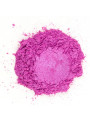
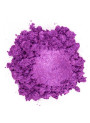
I want to create a **Mineral Makeup blush** in a **Barbie Pink** shade with a slight purple tint. I'm looking for a product with: * **High, clear pigmentation** that doesn't leave a white cast or look chalky. * A **matte or semi-matte finish** that **doesn't emphasize pores**. * A **non-comedogenic** formula suitable for **oily skin with large pores**. I am open to either a **loose powder** or **pressed powder** form. I'm currently considering using `Barbie Pink Mica` but need recommendations for other ingredients to achieve these properties.
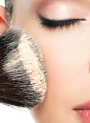
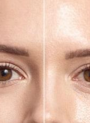
I want to create a modern cream with Shea Butter that is non-sticky, leaves no white cast, and absorbs quickly. I'm aiming for a cream-jelly texture that is bouncy like yogurt, feels lightweight and comfortable on the skin, but still looks dense and beautifully whipped like whipped cream. It should apply smoothly and allow active ingredients to penetrate the skin well. To achieve this texture, the formulation needs to combine a water phase, an oil phase, and a gel phase. I have the following questions regarding the formulation: * Which gelling agent should I choose? For example, can I use `Carbomer`? * How can I ensure compatibility with the pH of the active ingredients, which include `Vitamin C` (Ascorbic Acid), `Niacinamide`, `Kojic Acid`, `Alpha Arbutin`, `Tranexamic Acid`, and a small amount of soothing agents and `Mulberry Extract`? * What percentage of water and oil should I use to create this specific cream texture, especially when incorporating high, full dosages of the mentioned active ingredients? How can I formulate this product?
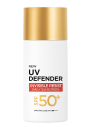
I have questions regarding the Light Invisible Sunscreen (SPF50+, PA++++): * Is this product waterproof? If not, what ingredients can be added to enhance its water resistance? * At which stage of the formulation process should Tinosorb M be incorporated?
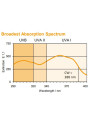
I am planning to use BioSulfur EQ (topical) in my formulations, specifically in shampoos and lotions, aiming for a final sulfur concentration of 10%. To accurately measure and add the product, could you please provide the following information regarding BioSulfur EQ: * What is the volume in milliliters (ml) per gram of the product? * Do you have data on the purity level (percentage of active sulfur) of your BioSulfur liquid?
I would like to inquire about the typical fragrance oil concentrations in ready-to-use perfumes. Could you please provide information on the standard percentage of fragrance oil for different types, such as: * `Eau de Cologne (EDC)` * `Eau de Toilette (EDT)` * `Eau de Parfum (EDP)` * `Parfum/Extrait de Parfum`
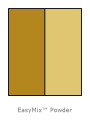
I am formulating a BB cream and have encountered an issue with the texture. After mixing the color ingredients at approximately `20,000-23,000 rpm` for `20-25 minutes`, the final product still contains small, dispersed white pigment particles, and the texture is not smooth. I would like to inquire about the appropriate steps, mixing speed, and necessary adjustments to the ingredients or their percentages to achieve a smooth and uniform texture. My current ingredient list is as follows: * Water * Glycerine * Hydagen® Aquaporin, UltraMild Aquaporin™ * Titanium Dioxide 250nm Pigment (Non-Treated) * Beige Iron Oxides EasyMix™ * Yellow Iron Oxides EasyMix™ * Black Iron Oxides EasyMix™ * Polyhydroxystearic acid * LipidSoft™ Cyclo (e.q. Cetiol Ultimate) * CocoSilk™ (Coco-Caprylate/Caprate) * Hemisqualane (C13-15 Alkane) * Isododecane * Silicone 5225C * Mirasil Balance * Hectorite Gel™ (Dicaprylyl Carbonate Base) * Caprylyl Glycol * PEG-10 Dimethicone * Silicone Film * SUNCAT MTA * MatteSilica 5™ (5 Micron)
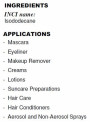
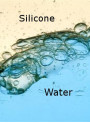
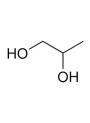
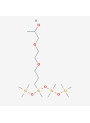
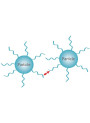
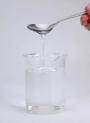
I would like to inquire about the suitability of `Zinc Oxide 40nm Dispersion (Water Base)` for use in soap formulations. Could you please provide detailed information on its compatibility, recommended mixing procedures, potential benefits (beyond UV protection, given it's a wash-off product), any relevant FDA regulations regarding its concentration (e.g., maximum 25% limit), and its stability within a soap matrix?
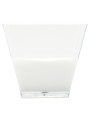
I am formulating with `Reshape Gel™`. After the gel has formed, I'm encountering an issue where the added oil and color do not integrate well, even after incorporating emulsifiers. I used `Lauryl PEG-10 Tris(Trimethylsiloxy)silylethyl Dimethicone` at 5% and `Cetyl PEG/PPG-10/1 Dimethicone` at 3%. What could be the reason for this incompatibility?
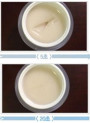
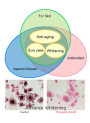
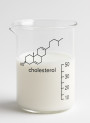
I would like to request a cream formulation using the following ingredients I have purchased: * `Safe-B3™ (Vitamin B3, Niacinamide)` * `Natto Gum (Nutto Gum)` * `Ascorbyl Glucoside (AA-2G Stabilized Vitamin C)` * `Ceracare™ Cholesterol (Water Dispersible Cholesterol)` - 50 gram * `Alpha Arbutin (Switzerland)` - 10 gram
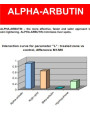
What are the applications and usage guidelines for Natural PHA (Gluconolactone) and MOIST72™ in skincare formulations? Please detail their benefits, recommended usage rates, and optimal pH ranges for different skin types and conditions.
Could you please provide a breakdown of the `Stabilized Mixed Enzyme` product, which is a liquid blend for laundry, including the specific enzymes it contains, their recommended usage percentage for concentrated detergent formulas, and the CAS numbers for each component?